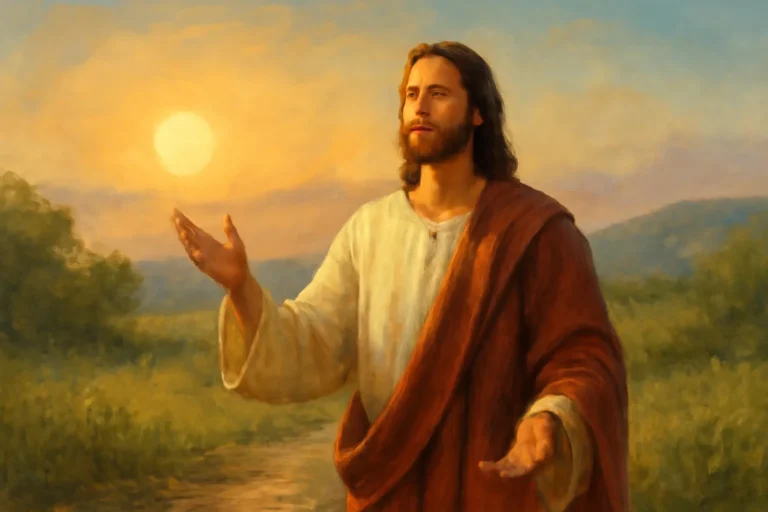
Christian Beliefs on Life After Death: What the Bible Says About Heaven, Hell, and Eternal Life
The question of what happens after death has been a central concern for Christians across centuries and cultures. Across traditions, the Bible is often read to affirm a hopeful trajectory—from death to an eternal life in God’s presence, through a final judgment, into a new creation. Yet within Christianity, there are meaningful differences in how Heaven, Hell, and eternal life are understood, especially when it comes to the timing of rewards or punishments, the nature of the afterlife, and the ultimate fate of all beings. This article surveys core beliefs, biblical foundations, and the major variations found in Catholic, Orthodox, and Protestant contexts. It also highlights how these beliefs shape worship, ethics, and everyday faith.
Foundational Concepts: What the Bible Typically Affirms About Life After Death
Most Christian traditions begin with a cluster of core ideas that appear throughout Scripture. These include the reality of death as the present human condition, the promise of a future resurrection, final judgment, and the assurance of eternal life for those united to Christ. While interpretations vary, several phrases recur across the New Testament and Christian creeds:
Death is not the end. Christians often speak of death as a gateway into a future state in God’s presence, whether immediately after death or at the time of Christ’s return.
Resurrection of the body. The apostle Paul argues in 1 Corinthians 15 that the dead will be raised with transformed, imperishable bodies.
Judgment and accountability. The Bible presents a final reckoning where individuals are judged by God based on their life, faith, and response to Christ.
Eternal life as both present and future. In John’s gospel and elsewhere, eternal life begins now in relationship with God and is consummated in the age to come.
Across traditions, Heaven and Hell are often described in experiential terms—presence with God, or separation from God—though the precise nature, duration, and dynamics of those states are debated. A third major element is the resurrection of the dead, which the Bible grounds in Jesus’ own resurrection as the firstfruits of a broader New Creation. The following sections explore these themes in more detail and with attention to different Christian voices.
Heaven: The Biblical Vision of God’s Presence and the New Creation
In Christian usage, Heaven is commonly understood as the dwelling place of God and the home of all who are in a reconciled relationship with Him. But the biblical concepts of Heaven can be nuanced, and different traditions emphasize various aspects of the exact state after death.
Heaven as God’s Presence and Beatific Vision
One central thread is the promise of close communion with God and the experience of the “beatific vision”—seeing God as He is. In the Gospel of John and in Pauline letters, eternal life is described as knowing the Father and the Son (see John 17:3). For many Christians, Heaven is primarily a place or state where believers behold and enjoy God’s presence, love, and truth without the distortions of sin and death.
New Creation and the Fulfillment of God’s Promises
Several biblical passages point to a future where Heaven and Earth are united in a renewed creation. The climactic vision in Revelation 21–22 presents a new heavens and a new earth in which God dwells with humanity—the divine presence fills every corner of the new creation, and sorrow, death, and pain are no more. In this framing, eternal life is not merely life after death in a neutral space but life inside God’s eternal plan fulfilled.
Catholic Emphasis: Beatific Vision and Communion of the Saints
Within the Roman Catholic tradition, the beatific vision—seeing God face to face—is the ultimate end of human longing. Catholics also emphasize the Communion of the Saints, meaning that those who are living and those who have died are united in the body of Christ through the Church. The Catholic view often includes a role for purgatory as purification for some souls before entering Heaven, distinguishing temporal purification from eternal punishment.
The Eastern Orthodox view highlights the transformative process of theosis (deification or union with God) as the path to eternal life. Orthodox believers stress a direct experiential participation in God’s presence and a view of Heaven as participation in the divine life, while also acknowledging a mystery about the exact arrangements of afterlife states. The Orthodox tradition tends to resist overly legalistic or punitive models and emphasizes healing, communion, and transformation.
Hell: Final Judgment, Separation, and Debates About Punishment
“Hell” is a term used for the state or place of ultimate separation from God and, for some, conscious punishment. Christian writers and communities differ on whether Hell is eternal conscious punishment, annihilation, or some combination of justice and mercy in the end.
Traditional View: Eternal Conscious Punishment
In many classic Protestant and Catholic formulations, Hell is an eternal state of conscious separation from God and punishment for unrepented sin. Texts like Matthew 25:46 (where Jesus speaks of “eternal punishment”) and Revelation imagery of judgment have been read as indicating perpetual consequences for the unfaithful. The emphasis is often on the seriousness of moral choice and the reality of divine justice.
Annihilationism and Conditional Immortality
Some theologians and Christian groups argue that Hell does not involve eternal conscious torment but rather annihilation—the idea that the wicked will eventually cease to exist. Proponents point to biblical language about perishing, destruction, and the defeat of death, as well as Jesus’ statements about being “cast into outer darkness” as not necessarily indicating endless conscious suffering. This view seeks to maintain divine justice while avoiding an eternally unending torment for finite beings.
Universal Reconciliation and Theosis of All
There are Christians who hold to universalism, the belief that God intends to bring all rational beings to salvation and restored relationship with Him. In this view, hell is temporary or corrective, ultimately leading to the repentance and reconciliation of every creature. Most traditional denominations do not affirm universalism as their official doctrine, but several notable theologians and communities have explored its biblical and theological plausibility, especially in light of God’s love and the scope of Christ’s atonement.
The Intermediate State: What Happens Between Death and Resurrection?
Many Christians hold that, between death and the final resurrection, souls experience a foretaste of their ultimate destiny. Terminology and details vary by tradition, but the idea of an intermediate state is a common feature in Catholic and Orthodox teaching and is acknowledged to be mysterious in many Protestant circles as well.
Paradise, Hades, and Abraham’s Bosom
Scriptural passages such as Luke 16:19–31 (the parable of the rich man and Lazarus) have historically shaped the language of an intermediate state where the righteous enter into blessedness and the unrighteous experience separation or agony. In Catholic and Orthodox thought, terms like paradise or Abraham’s bosom (from Luke’s depiction) have been used to describe the state of blessed souls awaiting the final resurrection. The exact nature of this state—whether it is a conscious, ongoing experience of God’s presence or something more nuanced—remains a topic of theological reflection rather than a formal dogma in some traditions.
Purgatory and Purification
The Catholic Church teaches the doctrine of purgatory, a temporary state of purification for those who die in grace but still require cleansing from the effects of sin before entering Heaven. Purgatory is not a second chance at salvation but a process of holiness that aligns the soul more fully with God’s sanctifying grace. In Orthodoxy, there is a strong emphasis on ongoing healing and transformation in the afterlife, though not with the same formalized doctrine of purgatory as in Catholic theology. Protestant traditions, in turn, typically affirm that upon death a person enters an immediate heavenly or hellish state based on faith in Christ, with the final resurrection and judgment following at the return of Christ.
The Resurrection and the Final State: The Biblical Horizon
A central scriptural motif across Christian traditions is the resurrection of the dead at the end of the ages. This is not merely a spiritual continuation but a transformative restoration of the entire person—body and soul—in a newly created order.
Paul’s Exposition: Bodily Resurrection and Immortality
In 1 Corinthians 15, Paul wrestles with the paradox of mortality and immortality. He likens the current body to a seed that will be raised in a transformed, imperishable form. This passage supports a belief in a literal, bodily resurrection, though the resurrected body is described as glorious and different from the present one. The resurrection of the body affirms the goodness of God’s creation and the eventual renewal of all things.
The New Creation: Heaven, Earth, and Divine Dwelling
Revelation 21–22 presents a climactic vision where God makes His dwelling with humanity in a renewed cosmos. The language emphasizes healing, justice, and peace, with “no more death or mourning or crying or pain.” For many believers, this is the consummation of the promises of eternal life—an eternal existence inside the gracious reign of God, where righteousness and life flourish in full harmony with God and others.
Variations Across Christian Traditions: How Denominations Shape Eschatology
Christian eschatology—the study of last things—offers a spectrum of perspectives. While all mainstream branches affirm some form of Heaven, Hell, and the resurrection, the emphasis, language, and doctrine differ.
Roman Catholic Perspective
Heaven and Hell are final states, with the possibility of cleansing in purgatory for some souls before entering Heaven.
The Communion of Saints ties the dead and living in mutual intercession within the Church.
The eschatological horizon includes the bodily resurrection, the Final Judgment, and the creation of a new Heaven and new Earth.
Eastern Orthodox Perspective
Emphasis on theosis—becoming partakers of the divine nature and sharing in God’s life through grace.
Less formalized doctrine about purgation; more focus on healing and transformation after death as part of the ongoing story of salvation.
Heaven and Hell are real states in the presence or absence of God, within the broader mystery of the final reconciliation and renewal of creation.
Protestant Perspectives
Many evangelicals stress personal faith in Christ as the decisive factor in determining whether a person enters Heaven or Hell at the time of death.
Views on purgatory are typically rejected, though some denominations accept or tolerate a notion of a temporary purgatorial process in different forms.
There is often an emphasis on the imminence of Christ’s return and the bodily resurrection at the final judgment.
Anglican and Methodist Perspectives
Anglicans often hold to a middle way, balancing scriptural basis with tradition and reason. They affirm a personal judgment and a future hope in God’s promises.
Methodists frequently stress eternal life beginning now through faith and sanctifying grace, with a future consummation of God’s kingdom.
Scriptural Anchors: Key Passages and Their Interpretive Roles
To understand Christian beliefs about life after death, it helps to consider a set of foundational scriptures. While no single verse settles every nuance, these passages have shaped doctrinal development and pastoral practice across traditions:
John 3:16 and John 17:3 — The central aim of eternal life is knowing the Father and the Son; life is deeply relational and experiential.
John 14:2–3 — Jesus promises to prepare a place for believers and to return to bring them to Himself.
1 Corinthians 15 — The foundational doctrine of the resurrection of the dead and the transformation of the body at the end of the age.
2 Corinthians 5:1–8 — A tension between earthly tent and heavenly dwelling; believers “long to be clothed with our heavenly dwelling.”
Revelation 21–22 — A vision of the new heaven and new earth where God dwells with humanity in perfect peace and justice.
Matthew 25:31–46 — The final judgment involving the separation of the righteous and the unrighteous.
Luke 16:19–31 — The parable of the rich man and Lazarus, often cited in discussions of the intermediate state and justice after death.
Romans 8:18–25 and Romans 8:28–30 — Creation’s longing for liberation and the secure hope of future glory for God’s people.
Different traditions emphasize certain passages more than others, which helps explain divergent emphases—whether on the immediacy of Heaven after death, the reality of a final resurrection, or the nature of judgment.
Theological Themes That Shape Belief and Practice
Beyond specific doctrines about where souls go after death, several themes recur across Christian communities. These beliefs influence how Christians live, pray, and minister to others.
Grace and judgment—God’s mercy is foundational, but human freedom and responsibility are real, and final judgment reflects the integrity of God’s justice and love.
Hope and comfort—Belief in life after death provides consolation to mourners and shapes pastoral care in times of grief and loss.
Communion of the saints—The living and the dead are connected in Christ, which informs prayer, remembrance, and intercession.
Resurrection hope—The bodily resurrection grounds the Christian hope in a tangible, transformative reality that renews both body and creation.
Ethical living in light of eternity—Belief in final accountability motivates concrete ethics, mission, and care for the vulnerable in the here and now.
Practical Implications: How Beliefs About Life After Death Shape Faithful Living
Beliefs about Heaven, Hell, and eternal life are not abstract; they influence worship, community life, and personal piety. Here are ways these doctrines commonly inform practice across traditions:
Worship and prayer—Songs, creeds, and liturgies often lift God’s glory, the hope of Heaven, and the mercy expressed through Christ’s cross and resurrection.
Pastoral care—Funeral rites, memorial prayers, and counseling reflect the belief that life continues in God and that loss can be processed within the hope of resurrection.
Mission and evangelism—Belief in eternal outcomes motivates sharing the gospel and demonstrating the love of Christ to the poor and marginalized here and now.
Ethics and social justice—Concerns about judgment and justice lead many Christians to pursue righteousness, care for the vulnerable, and advocate for a just creation order.
Questions and Common Debates: Navigating a Complex Topic
Even within a shared Christian framework, believers often ask questions that lead to nuanced positions. A few representative questions and brief notes on how different traditions respond:
Is Hell eternal? Most traditional theologians affirm some form of enduring consequence, but some Christians advocate annihilationism or universalism as alternatives.
What exactly is Heaven like? The Bible uses symbolic language; traditions differ in how literally to take imagery of streets of gold, the tree of life, and God’s throne. The common refrain is that Heaven is a place of perfect communion with God and ultimate justice realized.
What about purgatory? This is a distinctive Catholic teaching about purification before entering Heaven, while Orthodox and Protestant traditions offer other approaches to purification or transformation after death without the same formal doctrine.
Do people know about God in Hell? Some theologians hold that knowledge of God’s justice is pervasive in Hell, while others emphasize the experience as a withdrawal from God’s presence rather than a cognitive torment.
Putting It Together: A Cohesive View for Today’s Readers
Though Christian traditions differ in emphasis and nuance, several concordant strands run through most accounts. A cohesive, cross-tradition understanding might emphasize the following:
God’s gracious initiative—Life after death is never earned by human merit; it is a gift received through faith in Christ and sustained by grace.
The central place of the Resurrection—The event of Jesus’ rising from the dead grounds the future hope of all who are in Him, giving shape to both present faith and future hope.
Ultimate renewal of all things—Heaven and Earth are reconciled in the final act of creation, a restoration of all that is broken by sin and death.
Moral seriousness with pastoral hope—Belief in final judgment reinforces moral seriousness while offering consolation to those who mourn and insecure souls who long for justice.
Frequently Asked Questions about Life After Death in Christian Thought
To aid readers who want quick clarity, here are succinct replies to common questions, followed by pointers to biblical or theological sources for further study:
What happens immediately after death? In many traditions, the soul enters an intermediate state awaiting the final resurrection and judgment, though the exact nature of that state varies. Some traditions emphasize an immediate entry into Heaven or Hell based on faith in Christ.
Will we recognize loved ones in Heaven? Many believers affirm that relationships and memory will be transformed but blessed in the new creation; the specifics are mystery, but the biblical pattern is one of restored life in the presence of God.
Is annihilationism Biblically justified? Advocates cite phrases about perishing and destruction and the justice of God; critics argue that biblical images often illustrate eternal consequences; both sides appeal to Scripture and tradition.
Do all people eventually go to Heaven? Universalism holds that all will be saved, while more traditional positions affirm eternal separation for the unrepentant. The question hinges on readings of Scripture, God’s justice, and the scope of grace.
Trusting the God Who Holds Life, Death, and Eternity
Across centuries and denominations, Christians have repeatedly turned to Scripture, tradition, and lived faith to interpret life after death. The Bible presents a robust hope: eternal life that begins in relationship with God here and now and culminates in a restored creation where God dwells with humanity in a state free from pain, death, and tears. It also calls believers to serious consideration of how we live today—how we treat the vulnerable, how we practice mercy, and how we share the good news of Christ’s victory over sin and death.
In reflecting on Heaven, Hell, and eternal life, Christians are invited to hold intention: to acknowledge the gravity of moral choices and the mystery of God’s redemptive work, while embracing the comfort and courage that comes from the gospel of Jesus Christ. The Christian hope is not merely a future forecast but a present transformation—by grace, through faith, for the life of the world to come.
Note: This article presents a broad overview and acknowledges that there is legitimate diversity in how Christian communities articulate life after death. Interested readers may consult catechisms, confessions, and theological commentaries from particular traditions for more precise formulations, such as the Catholic Catechism, Orthodox patristic writings, and Protestant theological summaries fromReformed, Lutheran, Anglican, and evangelical perspectives.
The question “where did Jesus go after the resurrection?” has fascinated readers for centuries. The Bible presents a layered timeline in which Jesus is first seen alive by individuals and groups, then gathers his followers for teaching, then returns to the Father in heaven in a moment we call the ascension. This article surveys the…
stepping into a practical path toward lasting happiness Welcome to 57th heaven, a concept crafted for readers who want more than a fleeting mood boost. This article frames happiness as a practical, repeatable practice—an approach you can integrate into daily life rather than something that happens by accident. Whether you call it the fifty-seventh heaven,…
Meaning and Significance of Fifty Seven Heaven Fifty seven heaven is a concept that invites readers to imagine a vast, multilayered space of inspiration, growth, and possibility. It is not a single doctrine or a fixed belief, but a flexible metaphor you can adapt to your own life. When people encounter the phrase 57 heaven,…