Bible Revelation Timeline — A Clear Guide to the End Times
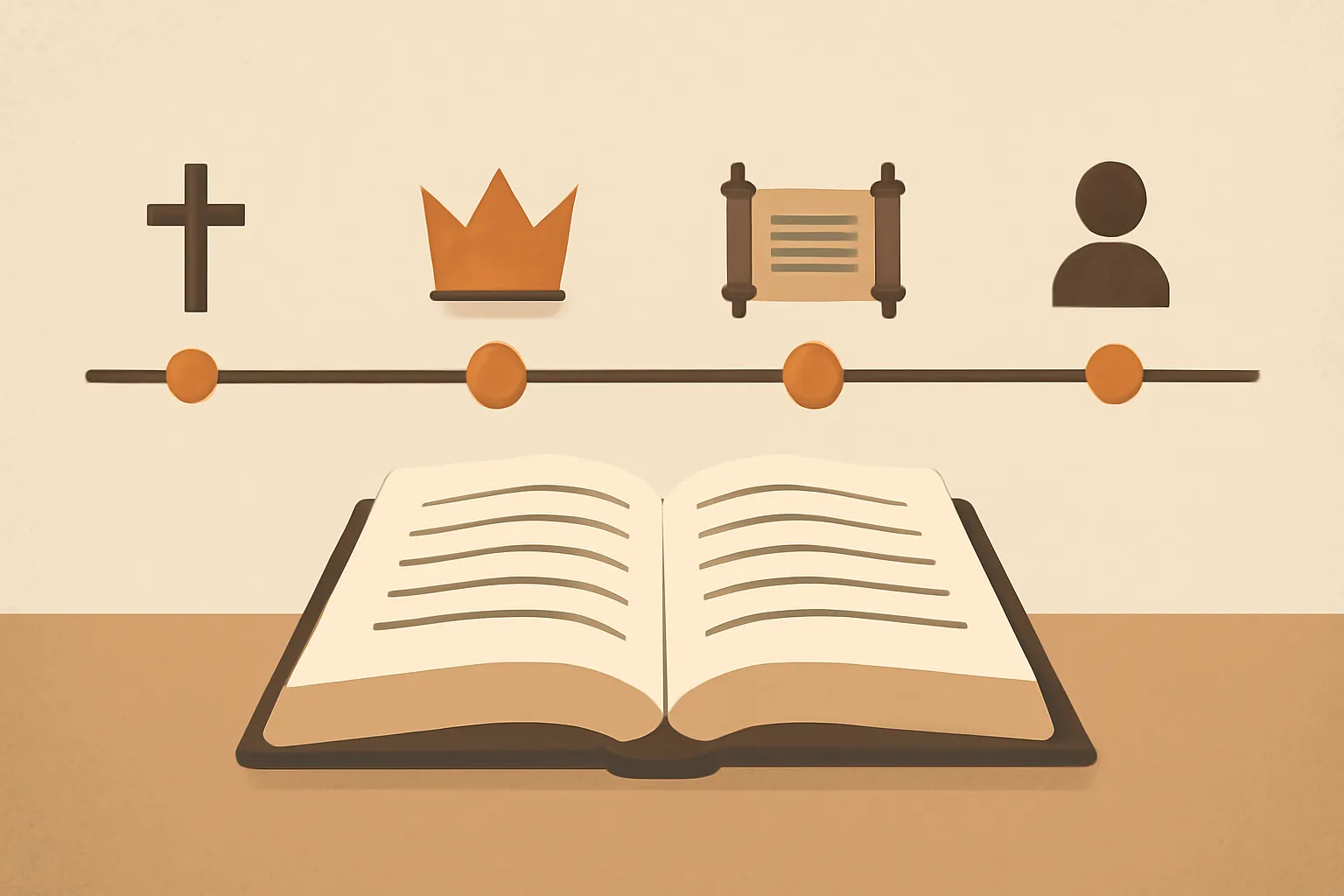
The final book of the Bible, often referred to as the Book of Revelation, presents a sweeping view of the end times and the ultimate victory of God. Because it uses vivid apocalyptic imagery and symbolic numbers, readers have long sought a coherent eschatology timeline or, in other words, a clear end-times chronology. This article offers a comprehensive overview of the bible revelation timeline in a way that is accessible for beginners and helpful for thoughtful readers who want to compare different interpretive approaches. We will explore the main blocks of the sequence, some common viewpoints, key symbols, and practical tips for studying these chapters with care and humility.
Core Concepts of the Revelation Timeline
Before looking at the specific events, it helps to anchor our understanding around a few core ideas. The Revelation timeline is not simply a list of dates; it is a narrative that blends prophecy, history, and divine judgment. Different Christian traditions read this narrative through different lenses, but several elements recur across most approaches:
The Church Age and the call to faithful witness. The letters to the churches (Revelation 2–3) highlight issues of faith, endurance, and obedience that frame the broader how-to-live-while-waiting theme of the book.
The Rapture (as understood by some traditions) or an anticipatory anticipation of Christ’s return. Variations include pre-tribulation, mid-tribulation, and post-tribulation timing, reflecting different beliefs about when Christians are taken up or when Christ returns in relation to tribulation.
The Tribulation period, a time of upheaval, judgment, and spiritual warfare that occupies a central place in the chronology for many readers. The nature and duration of this period vary by interpretation, but it is commonly linked to the opening of seven seals and the ensuing trumpet and bowl judgments.
The Second Coming of Christ and the closing battles, often described in terms of Armageddon or a decisive confrontation between good and evil.
The Millennium — a thousand-year reign of Christ in some views, a symbolic era in others. This is the most debated phase in the lineup and shapes how readers understand the long arc of redemptive history.
The Final Judgment and the purifying work that precedes the creation of a new heaven and a new earth.
The New Heaven and New Earth, culminating in eternal communion with God in the New Jerusalem.
Across these elements, you will encounter key terms such as Beast, False Prophet, Babylon the Great, and the New Jerusalem. In most traditional readings, these terms point to a drama of spiritual warfare, deception, judgment, and redemption. By examining the sequence and the relationships between events, readers gain a framework—an accessible outline called the bible revelation timeline or end-times chronology.
Common Views on the End Times and How They Shape the Timeline
There are several main interpretive families that shape how people understand the end-times chronology and the overall bible revelation timeline. The key difference often centers on questions like when the Church is taken up, how literal or symbolic the numbers are, and whether events unfold in a single sequence or across a broad sweep of history.
Pre-tribulation Premillennialism
In this view, the Rapture occurs before a 7-year period of tribulation. The timeline then proceeds as follows: the rise of the Antichrist and the Beast, a drastic period of judgment (often depicted through a sequence of seven seals, seven trumpets, and seven bowls), the return of Christ at the end of the tribulation, the Millennium (a literal thousand-year reign of Christ on earth), the final judgment, and the creation of a New Heaven and New Earth.
A variant of the above places the rapture somewhere in the middle of the tribulation, after the initial distress has begun but before the most intense judgments. The rest of the sequence remains similar: the return, the physical reign of Christ, and the final state. Proponents often argue that this view aligns with certain scriptural signals about timing and spiritual endurance.
Post-tribulation Premillennialism
In this approach, there is no distinct pre-tribulation rapture. Rather, Christians endure the entire tribulation and are gathered to Christ at his visible return. The sequence then includes the millennial reign, final judgment, and the creation of a new order. This perspective emphasizes continuity—God’s people remain steadfast through trials.
Amillennialism
Amillennialists typically interpret the millennium symbolically rather than as a literal future 1,000-year reign. They view the church age itself as the present fulfillment of the millennium, with Christ’s reign occurring in a spiritual sense from heaven. The end-times timeline, for them, moves directly from Christ’s ascension and present rule to the final judgment and the new creation.
Historicist and Futurist Variations
Some traditions follow a historicist line that maps the events of Revelation onto successive eras of church history. Others adopt a strict futurist approach, which confines most prophetic events to a future, literal fulfillment. Still others blend elements of multiple views, producing a hybrid or partial-fulfillment pattern. Regardless of the lens, readers typically agree on the broad arc: revelation of Christ’s ultimate victory, judgment of evil, and the establishment of God’s eternal kingdom.
A Step-by-Step Revelation Timeline (By Symbolic Sequence)
The following outline presents a commonly taught bible revelation timeline from a futurist perspective. It is offered to illuminate the flow of events in a way that is easy to discuss, while acknowledging that other traditions read the same text differently.
The Seven Seals (Revelation 6–8:1). In many readings, the opening of the seals begins a cascade of judgments:
Seal 1: The Rider on the White Horse (Conquest) appears, representing victory or conquest by force.
Seal 2: The Rider on the Red Horse (War) signals bloodshed and upheaval.
Seal 3: The Rider on the Black Horse (Famine) points to scarcity and economic disruption.
Seal 4: The Rider on the Pale Horse (Death) represents widespread mortality.
Seal 5: The souls of martyrs under the altar cry out for justice, highlighting divine patience and the call to endurance.
Seal 6: A cosmic upheaval—earthquakes, a great sun turning black, stars falling from the sky—signals the intensity of the divine judgment to come.
Seal 7: There is silence in heaven as the stage is set for the trumpet judgments.
The Seven Trumpets (Revelation 8–11). The trumpet judgments intensify the drama:
Trumpet 1–4: Natural and supernatural disturbances that affect land, sea, rivers, and celestial bodies.
Trumpet 5–6: Demonic and cosmic intensifications that test humanity’s response to divine warnings.
Trumpet 7: Introduces the final set of judgments and precedes the rise of the Beast in some readings.
Note: In some interpretive schemes, the trumpets overlap with or illuminate the period of tribulation described elsewhere; in others they unfold in a strict sequence after the seals.
The Seven Bowls (Vials) of God’s Wrath (Revelation 16). The bowls represent the most intense phase of divine judgment:
Each bowl brings plague, pollution, or suffering to the earth, culminating in dramatic upheaval that prepares for Christ’s return.
The final bowl precedes the climactic invasion of evil and the return of the King.
The Return of Christ and the Final Battle (often described as Armageddon in popular discourse). Jesus returns with the heavenly army to strike down the forces of evil and establish the domain of righteousness.
The Millennium (the interpretation of this phase varies). In many traditional readings, Christ reigns on earth for a literal 1,000 years, bringing healing, justice, and harmony. In other views, this reign is understood symbolically as the present era of Christ’s spiritual rule in the church and in the world.
The Final Judgment (the Great White Throne judgment). The dead are judged according to their deeds, and the book of life is opened. Justice is executed, and the wicked are removed from the sight of God’s presence.
The New Heaven and New Earth and the New Jerusalem. The cosmos is renewed, mourning ends, and God dwells with humanity in perfect fellowship.
Important caveat: not all readers treat these stages as a single, linear sequence. Some traditions see overlaps, others emphasize interconnections across the entire prophetic landscape. The key point of the end-times chronology is that God remains sovereign at every moment, guiding history toward the ultimate restoration of all things.
Practical notes on reading the sequence
Cross-reference with the book of Daniel and Jesus’ Olivet Discourse for fuller context.
Pay attention to symbolic numbers like 7, 12, and 1000, recognizing they often convey completeness or fullness rather than a precise literal count.
Distinguish between the narrative’s symbolic language and the historical or future events it is meant to illuminate.
Key Symbols and Their Interpretations in the Revelation Timeline
The drama of the bible revelation timeline hinges on powerful symbols that convey spiritual realities. Understanding these symbols helps readers grasp both the lessons and the expectations embedded in the prophecy.
The Beast (often called the Antichrist in popular parlance) represents oppressive political or religious power aligned against God’s people. In many readings, this figure embodies ultimate human defiance and the source of systemic wickedness in the end-times sequence.
The Dragon symbolizes Satan—the cosmic power behind rebellion and deceit, working through earthly systems and personalities to oppose God’s purposes.
The False Prophet and The Beast from the Earth point to deceptive religious influence and the counter-witness that mimics true worship while leading people away from God.
Babylon the Great is a symbol of worldly systems that oppose God—economic, political, and cultural powers that enthrone themselves against divine authority.
The 144,000 sealed servants, though understood differently by traditions, often symbolize a faithful remnant chosen to endure and witness during the crisis.
The New Jerusalem represents the consummation of God’s presence with humanity—a dwelling place where God’s people experience perfect fellowship, healing, and peace.
Armageddon is the climactic gathering for battle between ultimate good and evil. In many readings it signifies a final, decisive conflict rather than a single geographic location.
Readers should note that symbolic language invites a spectrum of legitimate interpretations. The same symbol can function differently depending on the interpretive framework (futurist, historicist, idealist, or preterist). The important aim is to extract enduring spiritual truths—justice, faithfulness, perseverance, and hope—rather than to extract a precise map of every event.
Practical Ways to Study the Revelation Timeline
Studying the bible revelation timeline thoughtfully involves careful reading, cross-referencing, and humility about interpretive differences. Here are practical steps you can take to deepen your understanding:
Read Revelation in Context. Start with Revelation 1 and note how the vision begins, the letters to the churches, and the purposes behind the visions.
Compare with Old Testament Prophets. Look for echoes of Daniel, Ezekiel, Joel, and Isaiah to see how prophetic language is reused and reinterpreted in light of Christ.
Identify the Major Sections. Separate the book into the sequence of seals, trumpets, bowls, the Beast narrative, the Millennium, and the New Creation. Recognize where each section fits in a general timeline and where it reflects symbolic truths.
Note Differences Among Traditions. Understand what distinguishes pre-tribulation, mid-tribulation, post-tribulation, amillennial, and other schools. This helps you read debates about timing with clarity rather than fear.
Use a Reading Plan. Create or follow a plan that allows you to read Revelation alongside Daniel and Jesus’ teaching about the end-times to see the larger arc.
Apply the Messages* to practical life. The book’s tone is not merely predictive; it is exhortational—calling readers to endurance, holiness, and steadfast faith.
By approaching the end-times chronology in this way, you will gain a more balanced perspective. You may also find value in consulting scholarly resources, trusted commentaries, and thoughtful church teaching to broaden your understanding while remaining faithful to biblical text.
Tips for Engaging with Difficult Passages
Take note of the literary genre—Revelation blends prophecy, poetry, and vision storytelling rather than straightforward history.
Be cautious about assigning a single national or historical fulfillment to every symbol.
Ask what the passage reveals about God’s character, justice, mercy, and sovereignty—and how believers should respond today.
Frequently Asked Questions About the Revelation Timeline
Here are some common questions readers ask when navigating the bible revelation timeline. The goal is to clarify, not to confine, the discussion.
Is the rapture described in Revelation?
Not as a single word-to-word event in Revelation itself, but many readers connect the idea of a gathered people to scriptural sections in Revelation and other New Testament passages (e.g., 1 Thessalonians 4). Different traditions place the rapture before, during, or after the tribulation, which is a major point of debate.
Are the Seven Seals literal or symbolic?
Most scholars see the seals as symbolic representations of major phases of judgment and human history. In some readings, they unfold in a sequence, while others treat them as symbolic indicators of ongoing spiritual conflict.
What is the Millennium?
The Millennium is interpreted in several ways: literally as a thousand-year reign of Christ on earth (premillennial), symbolically as the present reign of Christ in heaven and earth (amillennial), or as a long era of Christian influence until Christ’s final return (postmillennial). The differences shape how one reads the conclusion of the timeline.
Is Revelation primarily about future events or past events?
Historically, some readers emphasize a preterist approach (events fulfilled in the first centuries). Others emphasize a strict futurist perspective (future, still to come). Many readers hold a hybrid view that sees layers of fulfillment across history.
What practical lessons come from the Revelation timeline?
Across traditions, key lessons include steadfast faith, discernment in a deceptive world, readiness for Christ’s return, and hope in God’s justice and victory over evil.
Reading the Revelation Timeline with Care and Hope
The bible revelation timeline offers a framework for understanding how the biblical narrative converges on the return of Christ and the creation of a new order. While different Christian traditions disagree over timing and sequence, they share a conviction about the ultimate sovereignty of God and the certainty of Christ’s victory. This article has presented a structured overview of the end-times chronology, highlighted essential symbols, and offered practical guidance for study. Whether you articulate a end-times chronology as a futuristic map, a symbolic drama, or a blend of interpretations, the central message remains the same: God invites faithfulness, hope, and active love as history unfolds toward the fulfillment of all things in Christ.
If you approach the revelation timeline with humility, you will be better equipped to discuss, teach, and live out its truths in a way that honors God and serves others. By engaging the material thoughtfully, you contribute to a richer, more nuanced conversation about Christian expectations, responsibilities, and the joyous promise of a restored creation.
Introduction to the Fourth Horseman Revelation The Fourth Horseman of the Apocalypse, often called the fourth rider, is one of the most discussed figures in eschatology and end times prophecy. In the biblical narrative found in the Book of Revelation, this rider is linked with the pale or ashen horse and is associated with Death…
Introduction to the Four Horsemen Revelation The Four Horsemen Revelation is one of the most enduring and debated images in the Christian scriptures. Commonly referred to as the Four Horsemen of the Apocalypse, these symbolic riders appear in the final book of the New Testament, the Book of Revelation (also known as the Apocalypse of…