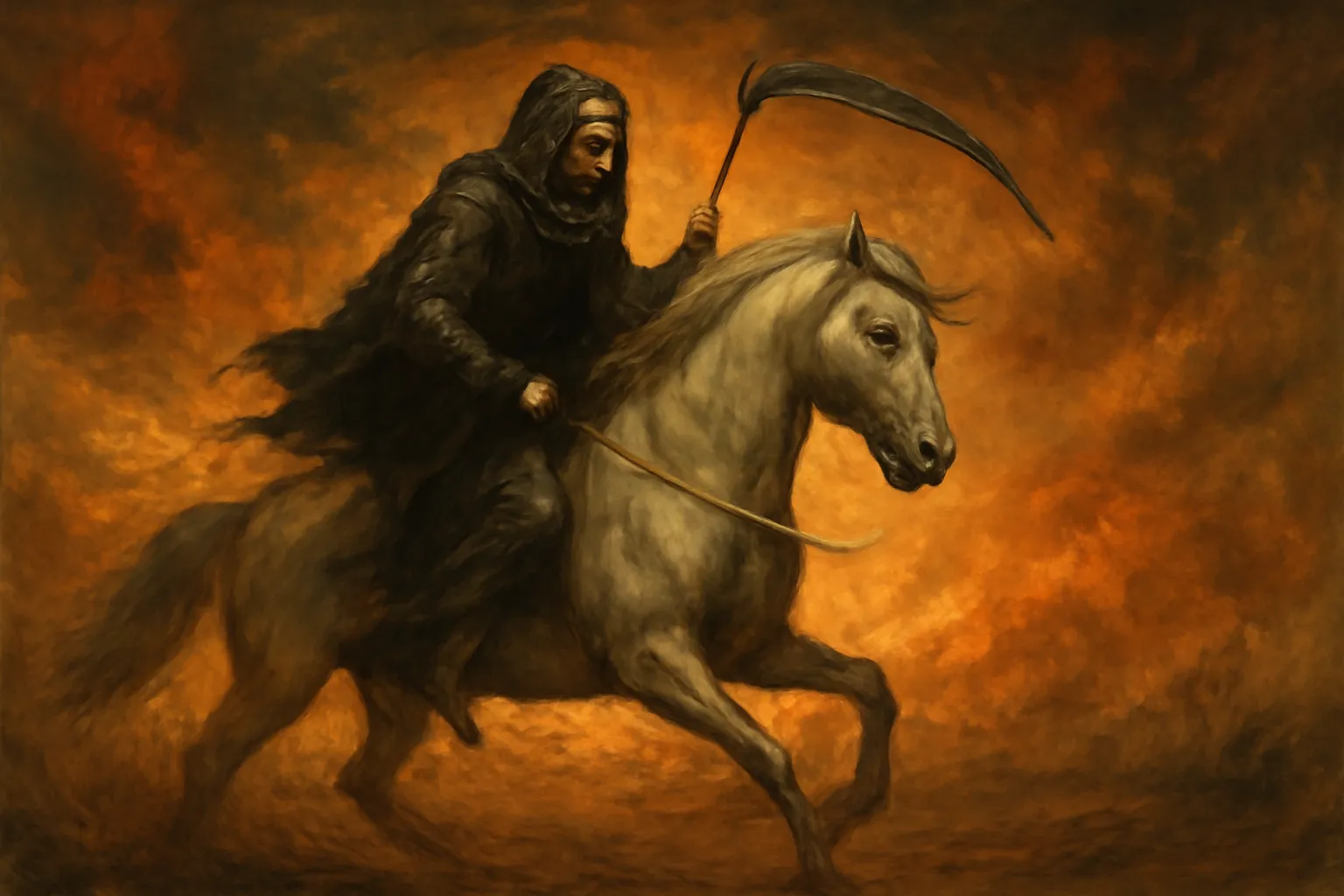
The Fourth Horseman of the Apocalypse, often called the fourth rider, is one of the most discussed figures in eschatology and end times prophecy. In the biblical narrative found in the Book of Revelation, this rider is linked with the pale or ashen horse and is associated with Death as a primary agent of mortality, followed closely by Hades. This article looks at the Fourth Horseman Revelation from multiple angles: its biblical meaning, the symbolic language used in Revelation, the range of interpretations developed by scholars, and the way contemporary readers think about the end times signs connected to this prophetic figure. We will explore how this *fourth seal* has been read across history, and how modern readers might approach its prophetic significance with care and nuance.
Biblical Basis: Where the Fourth Horseman Appears
The original image of the fourth rider comes from the vision given to the apostle John in Revelation, chapter six. According to the text, when the Lamb opens the seals, a sequence of four riders takes the stage, each signaling a form of judgment or testing that sweeps across the earth. The passage concerning the pale horse reads that its rider was named Death, and Hades followed after him. The mission of this rider is described with stark imagery: “power was given unto them over the fourth part of the earth, to kill with sword, and with hunger, and with death, and with the beasts of the earth.” (Revelation 6:7–8, King James Version; wording varies slightly among translations).
In the immediate literary context, the fourth horseman revelation is inseparable from the preceding three riders, who symbolize conquest, warfare, and famine. Together, they depict a world undergoing extraordinary disruption and judgment. The wording emphasizes a precise scope—“a fourth part of the earth”—which has invited diverse exegetical questions about meaning, measurement, and geographic reach across history. Interpreters have asked: Does this refer to a literal fraction of the world’s population, to a symbolic quarter of the earth’s domains, or to a period state of affairs? Across centuries, readers have offered a spectrum of answers, often shaped by their historical moment and theological commitments.
Meaning and Symbolism of the Fourth Horseman Revelation
To understand the fourth horseman prophecy, it helps to unpack the symbolic layers present in Revelation. The color of the horse—described as pale, pale-green, or ashen—conveys something beyond mere aesthetics. In ancient symbolism, pale tones often signified decay, death, or a world in disarray. The rider’s name, Death, situates this figure within a long tradition of personified mortality in literature, art, and theology. The companion figure, Hades, represents the realm of the dead and the ongoing consequence of mortality for those who die and are not spared in the tribulations of the end times.
Several core themes emerge in scholarly discussion of the meaning of this rider:
Judgment and consequence: The fourth horseman often appears as a culmination of the cumulative judgments unleashed by the preceding seals, suggesting that the world undergoes a process of testing and accountability.
Mortality and universal reach: The rider’s authority is described as sweeping across a substantial portion of the earth, highlighting the fragility of life in times of upheaval.
Balance of justice and mercy: Many readers see the fourth rider not only as punishment but as part of a larger divine plan that includes opportunities for repentance and ultimate restoration in the prophetic sequence.
Interplay with other symbolic figures: The rider does not act in isolation; he appears within a network of judgments that together convey a larger eschatological drama.
In terms of eschatology—the study of end times—the fourth horseman revelation is often interpreted as a culmination or intensification of crisis. Some readers frame it as a warning: human systems—military, political, economic—can break down under pressure, revealing the limits of human power and the need for humility before transcendent purposes. Others view it as a cosmic motif that transcends a single historical moment, inviting ongoing reflection on how communities respond to fear, loss, and upheaval.
Symbolic dimensions and interpretive lenses
Beyond the literal reading, scholars emphasize multiple symbolic layers:
Cosmic order: Revelation uses vivid symbolism to describe a universe governed by divine sovereignty, even as it undergoes trials.
Social critique: The imagery has often been used to critique cycles of violence, oppression, and moral deterioration in human societies.
Pastoral caution: The text invites communities to endure with faith and to seek resilience through hope and ethical action.
Literary intertextuality: The figure of Death has connections to other biblical and apocalyptic traditions, enriching the way readers understand mortality and judgment.
Interpretations of the fourth horseman revelation have varied dramatically across historical periods and theological traditions. Four broad frameworks are frequently identified in scholarly and popular discussions:
Futurist interpretation — The fourth rider is viewed as a future, literal event to occur near or during the end times. This perspective often places the sequence of seals, trumpets, and bowls in an imminent timeframe and tends to connect the horseman with global catastrophes that will unfold in the last days.
Preterist interpretation — The imagery is understood as largely fulfilled in the first centuries of the Christian era, with Revelation speaking to the contemporaries of John and the early church. The fourth rider is seen as emblematic of historical processes that affected the Roman world or the early Christian community.
Historist interpretation — The symbols are mapped onto major historical events through the long arc of church history, from the early church through the Reformation and beyond. The fourth horseman might be linked to leaders, movements, or crises that symbolically represent mortality and crisis across eras.
Idealist (symbolic) interpretation — The imagery is viewed primarily as timeless archetypes of conflict between good and evil, suffering and endurance, without tying the figures to specific historical timelines. This approach emphasizes spiritual lessons applicable to any age.
Each framework brings meaningful insights while also inviting critique. For example, futurist readings can yield a pressing sense of urgency and ethical motivation, but they may risk misapplying ancient symbols to modern political events. Preterist and historicist readings can illuminate historical contexts and pastoral applications, but they may be forced to make the text fit historical narratives. Idealist readings emphasize moral instruction and faithfulness but can risk obscuring concrete eschatological claims in the text. A prudent approach often involves engaging with multiple viewpoints, recognizing their strengths, and staying attentive to the text’s literary and theological aims.
Signs and End Times Prophecy: The Fourth Horseman in Contemporary Thought
Many readers ask how the fourth horseman revelation translates into observable signs today. While the Book of Revelation is a work of apocalyptic literature with symbolic language, it has inspired generations to consider how crisis and mortality intersect with human history. The discussion below highlights common areas where contemporary readers seek to relate the fourth rider to present realities, while maintaining careful distinction between symbolic interpretation and speculative sensationalism.
Physical and ecological signs
The imagery associated with Death on a pale horse invites reflections on questions of mortality, disease, and ecological disruption. Some readers point to:
Global health challenges such as pandemics, outbreaks, and evolving diseases that affect human life on a large scale.
Natural disasters including earthquakes, floods, droughts, and extreme weather, which can threaten livelihoods and cause mass displacement.
Environmental degradation and climate-related stress that impact food security, water access, and ecosystems.
Some interpreters connect the fourth rider with broader social dynamics that produce instability, violence, and upheaval. Potential themes include:
Conflict and persecution that push communities to the margins or trigger mass movements of refugees and displacements.
Economic volatility and inequity, which can worsen despair and hardship for vulnerable populations.
Crises of trust in institutions, leadership, and shared norms, which may appear in regard to governance, media, and civil society.
Spiritual and ethical readings
From a religious and ethical standpoint, readers often ask what it means to respond morally under pressure. In this vein, the fourth horseman revelation can be read as a call to:
Perseverance in faith, hope, and charitable action even amid loss and fear.
Care for the vulnerable who suffer during crises, including the sick, the poor, and the marginalized.
Accountability for systems and choices that contribute to human suffering, while seeking justice and mercy.
Practical Ways to Read Revelation 6:7–8 Today
Scholars and spiritual leaders often offer practical guidelines for reading prophetic texts like the fourth horseman revelation responsibly in a contemporary setting. Here are several principles that can help readers maintain a balanced approach:
Contextual reading: Consider the historical, literary, and theological context of Revelation, including the genre conventions of apocalyptic literature and the situation of the early Christian communities.
Textual humility: Recognize the limits of human interpretation and avoid over-claiming precise predictions about specific dates or places.
Pastoral focus: Emphasize the text’s ethical and spiritual exhortations—how believers can respond to crisis with courage, mercy, and faithful witness.
Interdisciplinary dialogue: Engage with history, theology, literary analysis, and even science to understand how prophetic imagery interacts with real-world phenomena.
Approaches for study groups and education
When studying the fourth horseman revelation in a group setting, consider these practices:
Read Revelation 6:7–8 in multiple translations to notice how wording shapes interpretation.
Compare the fourth seal with the other three seals to appreciate the cumulative narrative arc.
Explore historical contexts where communities faced crises and reflected on mortality and divine sovereignty.
Invite diverse perspectives from within your faith tradition, as well as from other traditions that discuss mortality, justice, and hope.
Common Misconceptions and Clarifications
As with many apocalyptic topics, there are misconceptions that frequently surface around the fourth horseman revelation. Clarifying these can help prevent sensationalism while preserving the text’s educational and devotional value:
Not every disaster is the Fourth Horseman: The imagery is about a specific prophetic framework, not a one-to-one catalog of all misfortunes that befall humanity.
Literalism vs. symbolism: Many readers recognize that Revelation uses symbolic language; even within a traditional Christian framework, the message is often more about spiritual realities and ethical exhortations than about predicting the exact shape of future events.
Historical expectations: The presence of the rider does not negate the possibility of revival, mercy, and divine intervention in history. Some readers see the sequence as pointing toward renewal rather than only destruction.
Ethical responsibility: Focusing on the death imagery should not detour readers from pursuing justice, care for the vulnerable, and the cultivation of compassion in the present world.
The Fourth Horseman in Culture and Art
Throughout history, artists, writers, and filmmakers have drawn on the image of Death riding a pale horse to explore themes of mortality, temptation, and moral choice. This section surveys how the fourth horseman revelation has been represented in culture:
Literary allusions: Novels and poetry often deploy the symbol to analyze human resilience in the face of catastrophe, or to critique political and social systems that fail vulnerable people.
Visual arts: Paintings and sculptures sometimes depict the rider with stark realism or with allegorical details that invite contemplation about life, death, and the afterlife.
Film and media: Movies and documentaries may use apocalyptic imagery to frame debates about disease, war, and environmental catastrophe, while prompting viewers to reflect on ethical choices in crisis.
Popular discourse: The figure appears in sermons, podcasts, and educational resources as a gateway to discuss resilience, hope, and communal responsibility.
Beyond the immediate textual reading, the Fourth Horseman Revelation invites deeper theological reflection on how communities understand time, history, and a transcendent purpose. The figure is often used as a catalyst for discussions about:
Divine sovereignty: The narrative presents God as sovereign over the sequence of judgments, even when the world appears to be unraveling.
Hope amid suffering: The presence of Death and Hades is balanced by the larger arc of revelation, which Christians interpret as pointing toward ultimate renewal, even if the process is difficult.
Ethical living: In light of mortality and existential risk, believers are encouraged to practice mercy, justice, and steadfast faith.
Community resilience: The text can inspire communities to build solidarity, support the vulnerable, and foster ethical leadership during times of upheaval.
Interfaith and comparative perspectives
Scholars sometimes examine apocalyptic themes across religious traditions to understand how different faith communities perceive mortality, suffering, and salvation. While the particulars of the Fourth Horseman are rooted in Christian apocalyptic literature, comparable motifs appear in other religious and mythological traditions, which can illuminate how humans grapple with fear, death, and the hope of restoration. Readings that engage respectfully with other traditions can deepen understanding without diluting the specific theological claims of Revelation.
Whether you approach the fourth horseman revelation as a theological symbol, a historical pointer, or a literary archetype, several practical takeaways emerge for thoughtful readers:
Study with care: Approach Revelation with attention to literary genre, historical context, and the diversity of interpretive traditions.
Avoid sensational framing: Try to distinguish between symbolic meaning and sensational claims about imminent catastrophe.
Focus on ethical living: Use the themes of mortality and crisis to motivate compassion, community support, and justice.
Encourage dialogue: Invite voices from different faith traditions and scholarly perspectives to enrich understanding and reduce polarization.
The Fourth Horseman Revelation as a Lens on Time and Hope
The Fourth Horseman Revelation, often described as a rider named Death mounted on a pale horse, is one of the most potent symbols in apocalyptic literature. Its power lies not only in its capacity to evoke fear but in its invitation to reflect on the human condition, divine sovereignty, and the call to live courageously in the face of mortality. Across centuries, readers have approached this figure through different interpretive lenses—futurist, preterist, historicist, and idealist—each offering distinct insights and limitations. What remains constant is the text’s invitation to consider how a community endures crisis, cares for the vulnerable, turns toward justice, and remains hopeful about a future beyond hardship. The end times prophecy embedded in this fourth seal is not merely a forecast of doom; it is a prompt to contemplate lived faith, responsibility, and the possibility of redemption within a troubled world.
Ultimately, the fourth rider is a prompt to explore questions that matter in every era: How do we respond when life is disrupted beyond measure? What does it mean to pursue truth, mercy, and peace when fear abounds? And how can communities stand firm in faith while remaining compassionate toward those who suffer? By engaging with the fourth horseman revelation in a careful, thoughtful, and historically informed way, readers can transform an ancient text into a resource for ethical reflection, spiritual growth, and constructive action in contemporary life.
Bible Revelation Timeline — A Clear Guide to the End Times The final book of the Bible, often referred to as the Book of Revelation, presents a sweeping view of the end times and the ultimate victory of God. Because it uses vivid apocalyptic imagery and symbolic numbers, readers have long sought a coherent eschatology…
Introduction to the Four Horsemen Revelation The Four Horsemen Revelation is one of the most enduring and debated images in the Christian scriptures. Commonly referred to as the Four Horsemen of the Apocalypse, these symbolic riders appear in the final book of the New Testament, the Book of Revelation (also known as the Apocalypse of…