Christianity Virtues: A Practical Guide to Core Virtues
Christian virtues shape not only personal character but also the way individuals relate to God, neighbors, and the world. This guide offers a comprehensive exploration of the major and minor virtues that have guided Christian life for centuries. It moves from foundational, transcendent goods to practical, lived expressions, and it highlights how these virtues intersect with daily decisions, relationships, work, and worship. Whether you are new to the language of virtue or seeking to deepen your practice, this article provides a structured roadmap for growth and reflection.
In Christian thought, virtue is not merely a list of moral rules but a forming of the soul toward goodness as an end in itself. The language of virtue appears in different registers: the theological virtues, which orient us toward God; the cardinal virtues, which organize moral living; and the fruits of the Spirit, which blossom as a result of life in Christ. Together, these threads weave a unified vision of character transformation that is both personal and communal.
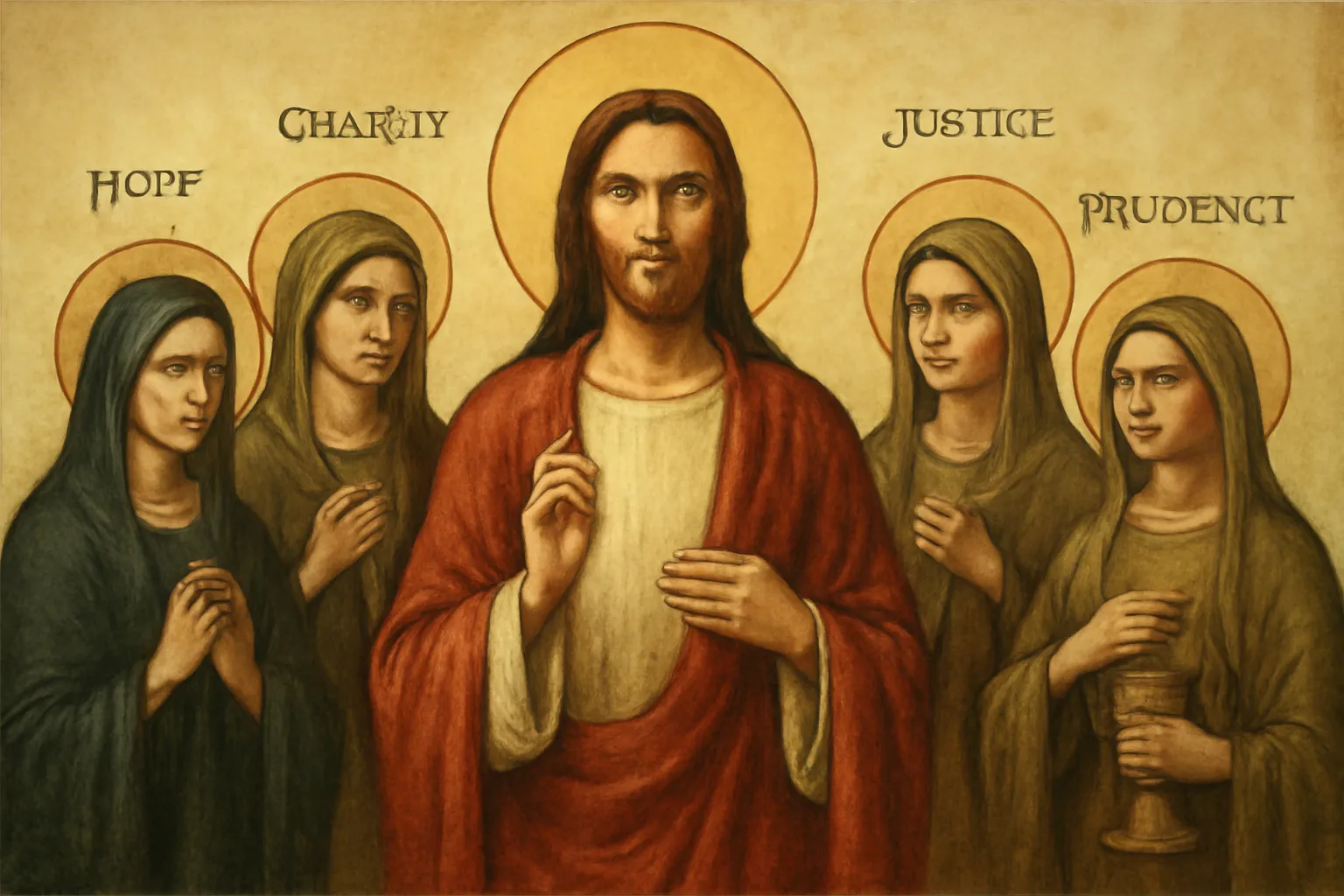
Theological virtues: Faith, Hope, and Love
The theological virtues are foundational in Christian doctrine because they orient the believer toward God Himself. They are not earned by human effort alone but are gifts received in grace, often practiced and strengthened through prayer, discipleship, and participation in the life of the church.
Faith
Faith is more than assent to doctrinal propositions; it is trust that God is real, present, and active in one’s life. It involves a confident commitment to God’s revealed truth and to the motion of God in daily life. Faith invites curiosity and humility, because it acknowledges mystery while exposing the believer to grace in concrete ways. In practical terms, faith informs how one faces uncertainty, suffering, and opportunity:
Relying on God’s promises during unsettled seasons rather than insisting on total control.
Seeking guidance through prayer, Scripture, and wise counsel rather than relying solely on personal instincts.
Acting on what one understands to be good, even when the outcome is uncertain.
Hope
Hope anchors the spiritual life in the conviction that God’s future goodness is trustworthy here and now. It is not mere optimism but a theological posture that looks beyond present circumstances to God’s redemptive purposes. Practically, hope sustains endurance, fosters resilience, and frees the heart from despair. It shapes how one grieves, celebrates, and plans for the future:
Holding intention toward eternal life while remaining engaged with the duties of this life.
Persevering with patience during trials, knowing God’s timing is trustworthy.
Encouraging others by pointing to promises of restoration, reconciliation, and new creation.
Love (Agape)
Love is the summation of the Christian life. In Christian theology, love is the divine motive behind moral action and the standard by which all virtues are measured. It is self-giving, others-centered, and rooted in the example of Christ. The greatest commandment invites believers to love God with all their heart, soul, mind, and strength, and to love their neighbor as themselves. In practice, love expresses itself in various ways:
Acts of mercy toward the vulnerable, the lonely, and the marginalized.
Forgiveness that releases bitterness in favor of reconciliation and peace.
Hospitality and generosity that welcome strangers into community.
Often described as the cardinal virtues, these four dispositions structure moral reasoning and action in human life. They are “hinge virtues” that help a person translate belief into behavior in daily contexts.
Prudence
Prudence is the virtue of practical wisdom. It involves discernment—seeing clearly what is good, choosing the right means to achieve it, and timing actions with prudence. It is the ability to anticipate consequences, weigh options, and act with prudence when faced with ambiguity. A prudent person asks questions like:
What is the good I am aiming for in this situation?
What are the possible options, and what are the likely outcomes of each?
Which action will least harm and most honor God and neighbor?
Justice
Justice concerns fairness, rights, and the provision of what is due to others. It involves recognizing the dignity of every person and seeking to establish social structures that reflect God’s justice. In personal life, justice means fair dealing and honoring commitments; in community life, it means advocating for the voiceless, loving mercy, and pursuing the common good. Key expressions include:
Keeping promises, paying debts, and honoring agreements.
Honoring the equal dignity of workers, neighbors, and the vulnerable.
Participating in civic and church life to promote systems that protect human flourishing.
Fortitude
Fortitude, often translated as courage, enables a believer to endure difficulty with steadfastness and to act rightly under pressure. It is not reckless bravery but steady perseverance in truth and love, especially when it costs us personally. Fortitude emerges in moments of:
Persevering in faith when doubt or persecution arises.
Taking small, consistent steps toward moral goals despite obstacles.
Standing up for others who are vulnerable or voiceless.
Temperance
Temperance is the virtue of self-control and moderation. It guards against excess and helps align desires with higher goods. In modern life, temperance invites mindful consumption, healthy boundaries, and the cultivation of interior peace. As a practical discipline, temperance helps individuals:
Moderate appetites—whether for food, drink, or digital distraction—so that they do not dominate moral life.
Balance ambition with rest, and achievement with contemplation.
Preserve energy for service to others, rather than being driven by impulse alone.
The Fruits of the Spirit: Living out virtue in daily life
In Galatians 5:22-23, the apostle Paul lists the fruits of the Spirit, qualities that blossom as believers stay connected to Christ through faith, prayer, and obedience. These fruits are better understood as outcomes of a life lived in the Spirit rather than as separate moral virtues to be earned by effort alone. They illuminate how Christian virtue takes shape in real time.
Love that seeks the good of others even when it costs us something.
Joy that persists through circumstance because it rests in God’s unchanging love.
Peace that calms the inner life and fosters harmony with others.
Patience or long-suffering in the face of delay, offense, or hardship.
Kindness expressed through considerate actions toward neighbors.
Goodness that aligns motives with justice and mercy.
Faithfulness expressed as reliability, steadfastness, and loyalty to commitments.
Gentleness that treats others with courtesy, humility, and strength under control.
Self-control enabling disciplined living and guard against temptation.
Each of these fruits reflects a broader character pattern. They are not isolated traits but interwoven dispositions that influence speech, decisions, and relationships. A life marked by the fruits of the Spirit often reveals a person who embodies a holistic virtue culture—where desire, will, and action align toward the good.
Other virtues central to Christian life
Beyond the traditional lists, there are several additional virtues that Christians frequently highlight as essential for mature discipleship. These may be emphasized differently across traditions, yet they consistently contribute to a coherent moral vision.
Humility
Humility is the healthy recognition of one’s dependence on God and the equal dignity of others. It resists self-exaltation and pride, opening space for truth, learning, and reconciliation. Humility is often expressed through:
Willingness to learn from others and admit mistakes.
Grace toward those who are less powerful or less informed.
Refraining from moral posturing and seeking the good of the community over personal status.
Mercy and Forgiveness
Mercy and forgiveness reflect God’s own posture toward humanity. They involve extending pity and compassion to the suffering and offering reconciliation when wrong has been done. Practical applications include:
Forgiving others even when justice seems slow or incomplete.
Showing mercy to those who are marginalized, hurting, or stigmatized.
Practicing restorative approaches in conflict, emphasizing healing over punishment.
Generosity and Stewardship
Generosity is the disposition to share resources out of gratitude to God and care for others. Stewardship expands this virtue into a more holistic ethic—recognizing that all life and resources belong to God and should be managed for the common good. This can include:
Giving financially and with time to support others and causes that reflect righteousness and mercy.
Caring for creation, using resources responsibly and avoiding waste.
Sharing talents and gifts for the flourishing of the community.
Gratitude and Wisdom
Gratitude honors God as the source of every good gift and cultivates contentment rather than envy. Wisdom integrates knowledge with discernment and prudence, guiding moral choices with spiritual depth. Together, gratitude and wisdom shape decisions in family life, work, and public life through:
Recognition of blessings amidst trials, transforming attitudes and actions.
Careful judgment that weighs consequences for self and others.
Discerning times and seasons in ministry, service, and personal growth.
Courage and Perseverance in Faith
Courage in the Christian sense involves more than boldness in outward circumstances; it includes moral bravery—standing for truth, defending the vulnerable, and resisting compulsion toward harm. Perseverance in the faith is the daily, long-term commitment to belong to Christ even when the path is hard.
Speaking truth with love in hostile environments.
Enduring years of faithful service in mission, family, or community work.
Maintaining integrity under pressure and avoiding brittle or reactive responses.
Love in Action: Service and Community
Service and community-oriented virtues emphasize outward-facing love in concrete deeds. They involve recognizing that character is proven not by private virtue alone but by outward acts that bless others and build up the common good. Expressions include:
Volunteering, mentoring, and mentoring younger believers.
Building inclusive communities where diverse gifts are welcomed.
Advocating for justice, peace, and the dignity of every person.
How to cultivate Christian virtues in daily life
Virtue cultivation is a lifelong project. It requires intentionality, grace, and community. Below are practical, time-tested methods to grow in virtue, organized into actionable steps you can apply today.
Grounding in prayer and Scripture
Virtue begins with a transformed heart, and a transformed heart is shaped by God’s Word and Spirit. Establish daily rhythms that nurture virtue:
Begin and end each day with brief prayers asking for grace to grow in specific virtues.
Read Scripture with a virtue focus—notice where the text calls for mercy, humility, or courage.
Use a short meditation or reflection on one virtue per week, journaling insights and challenges.
Disciplines and practices
Spiritual disciplines are not legalistic chains but liberating practices that form character. Consider these disciplines as regular exercises for virtue:
Fasting or fasting from distractions to cultivate self-control and clarity.
Regular confession and accountability with a trusted mentor or friend.
Gratitude journaling to cultivate contentment and generosity.
Community and accountability
Virtue grows in community. Surround yourself with people who model the virtues you seek and who will gently challenge you. Practical steps:
Join a small group or circle for spiritual accountability.
Seek mentors who embody a mature integration of faith and virtue.
Practice mutual encouragement, confess harms, and celebrate progress together.
Mercy, forgiveness, and reconciliation in practice
Forgiveness liberates both the forgiver and the forgiven. Cultivate a habit of mercy by actively seeking reconciliation in relationships and resolving conflicts with humility and care.
Address offenses directly and respectfully, aiming for restoration rather than punishment.
Offer forgiveness before it is requested, when appropriate, as a practice of grace.
Reflect on how living out forgiveness changes your heart and your community.
Stewardship and ethical decision-making
Every decision has moral weight. Use a simple decision-making framework rooted in virtue:
Identify the good you aim to achieve and the persons affected by the decision.
Consult Scripture, tradition, and wise counsel for discernment.
Choose the action that upholds justice, mercy, and the common good, and be willing to adjust if new information arises.
Applying Christian virtue in different life domains
Virtue at home and family life
Home is a primary school for virtue. Families cultivate character through routines, modeling, and shared service. Consider these patterns:
Practicing humility by apologizing when wrong and learning from mistakes.
Teaching forgiveness and reconciliation after conflicts among siblings or parents.
Exercising patience with children’s rhythms and needs, and showing kindness in daily interactions.
Virtue in work, leadership, and public life
Workplaces and leadership settings provide fertile ground for practicing moral virtues. Key approaches include:
Leading with prudence, making well-considered decisions that honor stakeholders.
Promoting justice by addressing inequities and acknowledging the dignity of colleagues.
Demonstrating fortitude under pressure and modeling temperance in ambition and consumption.
Ethics, conflict, and peacemaking
In conflicts, virtue calls for a posture of gentleness, patience, and mercy, paired with prudent discernment. Practical steps:
Seek common ground and avoid escalation where possible.
Address harm directly and seek restorative outcomes rather than punitive ones.
Guard against cynicism by continuing to cultivate hope in the possibility of change and reconciliation.
Virtue and church life: how communities cultivate character together
Christian virtue is often learned and reinforced within a community. The church, as a gathered people, provides practices and norms that shape character over time. Consider:
Worship, liturgy, and sacraments as nurture for faith, hope, and love.
Contextual teaching that connects ancient virtue language with contemporary life.
Mutual accountability structures—confession, pastoral care, and small groups—that encourage ongoing virtue formation.
Variations across Christian traditions
Across Catholic, Orthodox, and Protestant traditions, the framework for virtue shares core commitments while emphasizing different emphases. For example:
In Catholic and Orthodox communities, the theological virtues and cardinal virtues are central anchors for moral formation in formation programs and catechesis.
In many Protestant settings, the fruits of the Spirit are highlighted as the experiential evidence of a life aligned with Christ, with a strong emphasis on personal faith and the authority of Scripture.
Ecumenical dialogue often centers on shared commitments to love, justice, mercy, and the sanctity of life, while allowing for diverse expressions of spiritual practice.
Challenges and growth on the virtue journey
Growing in virtue is seldom straightforward. It often involves confronting internal patterns, social pressures, and competing desires. Here are common challenges and ways to respond in a healthy, constructive manner.
Common obstacles to virtue
Routines that suppress reflection or discourage change.
Pride that interprets correction as personal threat rather than growth.
Fear that leads to withdrawal or aggression rather than measured discernment.
Strategies for ongoing virtue formation
Engage in regular self-examination, perhaps through guided questions or journaling.
Invite constructive feedback from trusted peers and mentors.
Practice gentle, incremental steps toward a virtue rather than attempting sudden transformations.
Celebrate progress and learn from setbacks with grace.
Virtue as a lifelong, hopeful formation
Christian virtue is not a finished product but a lifelong apprenticeship under grace. The core virtues—theological virtues like faith, hope, and love; the cardinal virtues of prudence, justice, fortitude, and temperance; and the fruits of the Spirit—offer a comprehensive framework for character formation. They guide believers in worship and service, shaping not only private devotion but also public witness. By cultivating humility, mercy, generosity, courage, and peace, Christians become instruments through which God’s kingdom advances in ordinary life.
As you engage with these virtues, remember that growth is a communal and spiritual process. Seek accountability, lean on grace, and participate in practices that reinforce virtue in everyday moments. In this way, the message of Christianity—one that centers on love for God and neighbor—becomes a lived reality in homes, workplaces, and communities. The journey toward virtue is ongoing, hopeful, and deeply transformative.