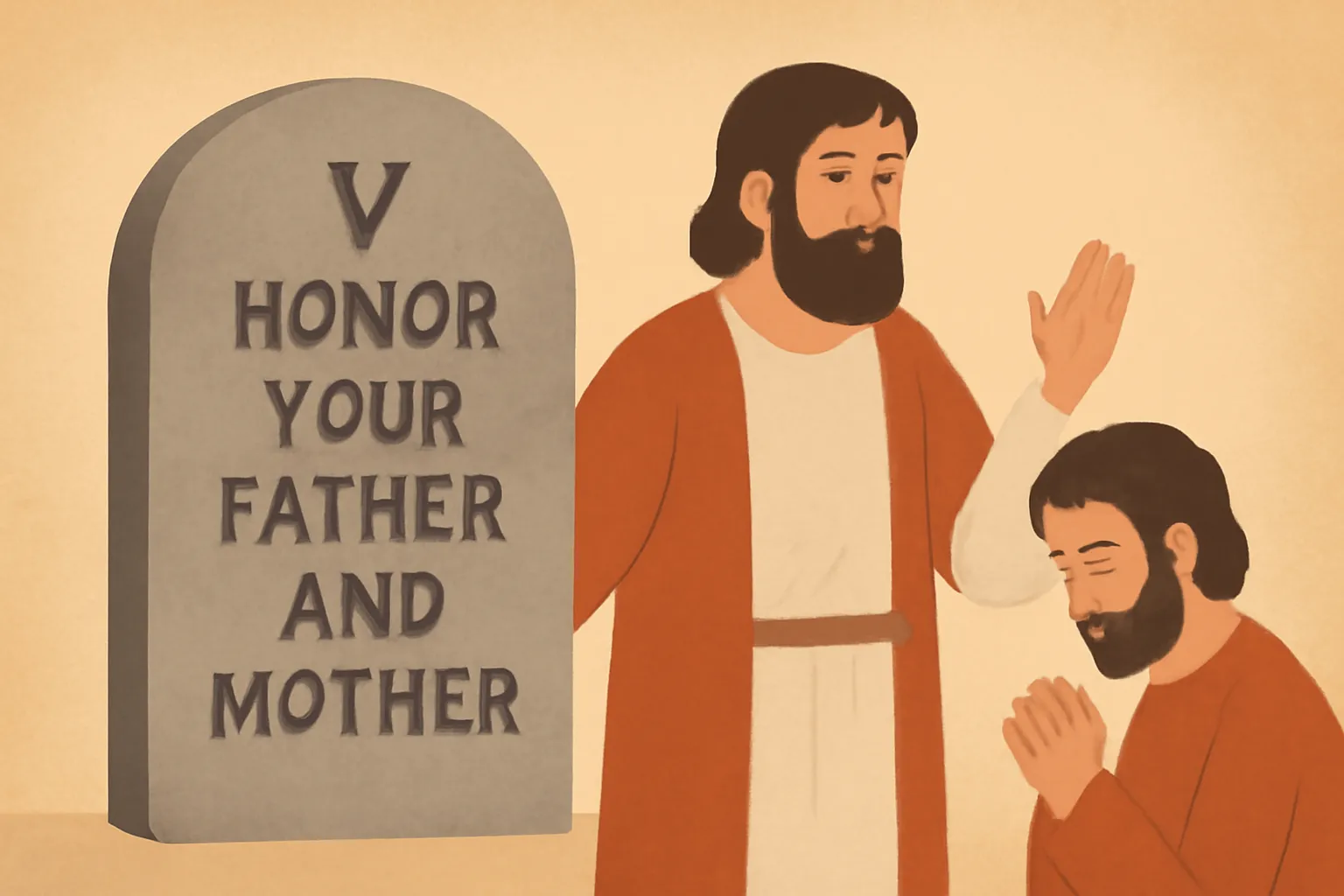
Fifth Commandments Explained: Meaning, History, and Modern Relevance
The idea commonly known as the Fifth Commandment sits at a crossroads of personal ethics, family life, and social order. In many religious traditions, this commandment is summarized as “Honor your father and your mother.” Its simple form belies a long and complex history of interpretation, application, and debate. Some traditions place this instruction as the fourth commandment, others as the fifth, and still others treat it as a foundational principle that travels beyond liturgical numbering. What remains constant across texts and ages is the assertion that family relationships—especially the relationship between children and their parents—are a moral focal point, capable of shaping character, community cohesion, and how a society understands duty, gratitude, care, and justice.
In this article, we will explore the meaning of honoring parents, trace its historical development across different religious traditions, and examine its modern relevance in contemporary families, communities, and public life. We will also consider variations of the commandment’s wording, its cultural echoes, and the tensions that arise when filial obligations meet individual autonomy, safety, or changing social norms.
Origins and textual foundations
The core injunction appears in two canonical biblical passages: Exodus 20:12 and Deuteronomy 5:16. In both, the commandment forms part of the Decalogue, a list of laws given to the people of Israel. The wording is remarkably similar across translations, though nuances emerge in the original languages and subsequent interpretive traditions.
Exodus and Deuteronomy: parallel lines
In the Exodus version, the directive is embedded among other duties that govern how humans relate to one another within the community: worship of God, honesty, and respect for life and property. The Deuteronomy retelling, often seen as a reiteration to a new generation entering the promised land, preserves the imperative while situating it within the broader motif of covenant fidelity and social responsibility.
Honor (often rendered as “to give weight to”) implies more than mere obedience; it indicates a posture of respect, gratitude, and recognition of the parents’ contributions to one’s life and well-being.
Father and mother acknowledges both parental figures, expanding beyond a single parent to encompass the full parental pair when possible.
The commandment is frequently paired with a promise—a future of wellbeing or long life—interpreted by many commentators as a social reciprocity: families that nurture and honor their elders sustain the well-being of the wider society.
Language and meaning: kavod, honor, and weight
The Hebrew term commonly translated as honor is kavod, derived from roots that connote weight, significance, and respect. The idiom suggests that honoring a parent is to grant them their rightful weight within the home and the community—through listening, care, and acknowledgement of their experience. This linguistic nuance helps explain why the commandment is not merely about obedience but about recognizing a parent’s role in shaping personal identity and social continuity.
Meaning and interpretation across traditions
Rabbinic and Jewish understandings
In rabbinic literature, the parental honor commandment becomes a cornerstone of social ethics and family law. The sages expand the concept beyond filial obedience to include practical duties such as providing for elderly parents, avoiding humiliation, and speaking to them with respect. Some classical rulings outline specific acts that demonstrate honor—standing when a parent enters the room, addressing them with proper titles, or accommodating their needs.
Care and support for aging parents is framed as a duty that aligns with communal justice, not merely private sentiment.
Speech and demeanor toward parents—speaking gently, avoiding harsh or dismissive language—are emphasized as outward signs of inner respect.
Respect for parental authority is grounded in the belief that elders carry the experiential wisdom essential for communal memory and continuity.
Christian interpretations
In Christian tradition, the commandment is frequently framed within the larger call to love and honor others. Jesus cites the commandment, and many Christian theologians interpret it as a prototype for honoring authority in general, including civil authorities, elders in the church, and leaders within the household. The emphasis often shifts from mere obedience to a broader ethic of reverence, gratitude, and care for those who shaped one’s life.
Honor as relational fidelity—emphasizing ongoing respect rather than a one-time act.
Care in old age—the expectation that children will provide for their parents as a reciprocal form of love, if possible, aligning with Christian calls to charity and hospitality.
The commandment becomes a lens for examining intergenerational dynamics, forgiveness, and gratitude within Christian families and communities.
Islamic perspectives
In Islam, the obligation to treat parents with kindness and respect is repeatedly stressed in the Qur’an and the hadiths. Muslims are urged to show patience, gratitude, and assistance to their parents, especially in old age. Like the Judeo-Christian tradition, the emphasis is on compassionate care and dignity, while also recognizing the complexities that can arise in modern family life.
Respect and obedience subject to moral boundaries—the underlying principle is reverence, though compliance with parents’ wishes does not excuse harm or injustice.
Practical care—financial support, daily attention, and facilitating the well-being of aging parents.
Intergenerational harmony is framed as part of a broader ethical responsibility to family and community.
Confucian and East Asian echoes: filial piety
Outside the Abrahamic traditions, many cultures foreground filial piety as a central virtue. Confucian ethics emphasize duties to one’s parents and ancestors as foundational to social harmony and moral development. While the wording differs, the spirit—respect, gratitude, and care for elders—intersects with the Biblical commandment in meaningful ways. In many East Asian societies, filial piety informs family norms, elder care policies, and social expectations about generational roles.
Theological and moral pluralism: common ground and distinction
Across traditions, the core values associated with honoring parents—respect, gratitude, care, and responsibility—often converge, even as the theological frame and the scope of obligation diverge. The Fifth Commandment, in its various forms, functions as a moral anchor for how individuals relate to the past, to family continuity, and to the wider society that depends on stable intergenerational ties.
Cross-cultural parallels and the idea of filial duty
Although the exact commandment appears within the Bible, the ethical import of honoring parents resonates in many world traditions. The universal themes include:
Gratitude for parental sacrifice and the debt of care owed to those who nurtured us.
Respect for elders as a social glue that supports family stability and intergenerational knowledge transfer.
Caregiving as virtue—the active responsibility to assist aging parents or guardians in practical, emotional, and spiritual ways.
Variations exist, of course. Some cultures emphasize more explicit obedience to parents’ authority, while others foreground autonomy and personal development. The common thread, however, is a recognition that family relationships—especially the bond between兒 children and their parents—are foundational to character and to the moral fabric of a community.
Historical trajectory: from ancient law to modern ethics
The commandment’s influence has waxed and waned as societies shifted from agrarian to urban, from extended families to nuclear households, and as state structures absorbed some responsibilities previously shouldered by households. Understanding this historical arc helps us see why the Fifth Commandment remains a living part of debates about family policy, elder care, and civic virtue.
Ancient social order and the role of parents
In many ancient societies, family and lineage were the primary units of social organization. Respect for parents reinforced kinship lines, inheritance practices, and the transmission of cultural and religious identity. The commandment functioned as a moral enforcement mechanism—an explicit moral boundary that helped ensure harmony within the household and, by extension, within the larger tribe or nation.
Medieval and early modern reformulations
In medieval Christian Europe, the commandment was often linked to obligations to education, religious upbringing, and social obedience. The family became a training ground for virtue, with parents as first teachers and authorities. The evolving concept of individual rights began to reframe obedience, introducing the possibility that a child might resist parental demands if they conflicted with higher moral or legal norms.
Modern liberal democracies and changing family dynamics
In contemporary societies, the Fifth Commandment intersects with debates about individual autonomy, gender equality, and aging populations. As families change—through divorce, blended families, migration, and longer life expectancy—interpretations of “honor” adapt to new realities:
Respect without coercion—honor can be a moral attitude rather than blind obedience.
Caregiving as public duty—societal support systems, healthcare, and social services help families meet their obligations.
Boundary setting—healthy relationships require boundaries to prevent harm and to protect the well-being of all members.
Modern relevance: how the Fifth Commandment translates today
The idea of honoring parents remains deeply relevant in modern life, but it is often reframed to fit current realities. Here are some key dimensions of contemporary application, along with practical guidance for individuals and families.
Meaning in today’s families
Respect and gratitude as daily practice—polite communication, appreciation, and recognition of parental sacrifices.
Support in aging—planning for elder care, financial preparations, and emotional availability as parents age.
Shared decision-making—including parents in important family choices when appropriate, while honoring evolving independence of adult children.
Care across borders—in immigrant or transnational families, honoring parents often involves navigating physical distance and cultural expectations.
Practical guidance: ways to honor parents today
Maintain regular contact—calls, messages, visits, and meaningful conversations help sustain the relationship over time.
Provide practical assistance—help with daily tasks, medical appointments, and transportation to ensure well-being.
Offer financial support when feasible—to cover healthcare costs, housing, or other essential needs, without compromising your own stability.
Respect boundaries and autonomy—recognize that aging parents may want independence, while balancing safety and care concerns.
Preserve dignity—honor their preferences, include them in family narratives, and avoid diminishing their role or opinions.
Create rituals of remembrance—keep family stories, traditions, and values alive across generations.
When honoring is complicated: ethics, safety, and limits
The commandment invites a nuanced conversation when relationships are fraught with conflict, abuse, or neglect. In such situations, honor does not mean blind obedience or tolerating harm. Ethical frameworks emphasize:
Protection from harm—prioritize safety of oneself and other family members, including seeking help from professionals or authorities when necessary.
Boundaries—establish clear, respectful limits on what is acceptable in interactions and caregiving roles.
Restoration and accountability—where possible, pursue processes that repair relationships while acknowledging past harms.
Seeking support—use external resources such as counseling, social services, or community groups to navigate difficult dynamics.
Public life and policy implications
The ethical impulse to honor parents intersects with public policy in ways that shape elder care, healthcare, and social welfare. Societies grapple with questions such as:
Care infrastructure—how to support families doing the heavy lifting of caregiving through subsidies, paid leave, and accessible healthcare.
Legal responsibilities—laws that govern guardianship, representation, and the protection of vulnerable elders.
Cultural pluralism—how diverse families reconcile differing norms about elder care and parental authority within a shared civic space.
Case studies: hypothetical scenarios illustrating contemporary application
Scenario A: An adult child balances a demanding job with weekly visits to an ailing parent. The question is how to maintain dignity, provide meaningful support, and avoid burnout.
Scenario B: A blended family navigates conflicting expectations about step-parents and in-laws. The family works to honor both sides while protecting younger members from coercive pressures.
Scenario C: A family grapples with the decision to relocate an elderly parent to assisted living. The conversation centers on consent, safety, and preserving relationship quality.
Scenario D: A culture-bound expectation to care for aging parents comes into tension with personal aspirations and geographic distance. The family explores creative arrangements and community support.
Frequently asked questions about the Fifth Commandment
Is honoring parents the same as obeying them?
Not necessarily. Honoring often implies respect, gratitude, and care, even when obedience is not appropriate or safe. In modern contexts, honoring may involve advocating for one’s own rights, setting boundaries, and making independent decisions while maintaining a respectful relationship.
How does the Fifth Commandment relate to personal autonomy?
The commandment sits at the intersection of family loyalty and individual autonomy. Healthy interpretations encourage a balance: honoring parents while recognizing one’s own moral agency and the right to make decisions about one’s life course.
What about disagreements or harm in the parent-child relationship?
In cases of abuse or harm, the ethical imperative to protect oneself and others can override filial expectations. The guiding principle remains to seek safety, support, and accountability, while striving for compassion and reconciliation where possible.
enduring relevance through compassionate practice
The Fifth Commandment, at its best, anchors a set of durable values: respect, gratitude, care, and responsibility. Across biblical, rabbinic, Christian, Islamic, and Confucian traditions, the core idea remains consistent: honoring parents is a pathway to personal integrity and social harmony. Yet in a modern world characterized by mobility, diverse family structures, and evolving ethical norms, the commandment is not a rigid rule but a flexible principle. It invites reflection on how we show heed and kindness to the elders who shaped our paths, how we balance obligations with personal dignity, and how communities and states support families in fulfilling these duties humanely and justly.
By exploring the history, meanings, and contemporary applications of the parental honor commandment—the varied expressions of honoring parents across time and culture—we gain not only historical insight but practical guidance for living with grace, responsibility, and mutual respect in every generation.