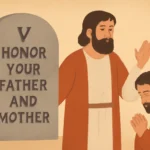
Why Honor Your Father and Mother Remains Central in Biblical Guidance
The phrase “honor your father and your mother” appears in the core moral framework of the Hebrew Bible and is echoed in Christian writings across centuries. It is not merely a call to polite behavior or formality, but a foundational ethical principle that shapes how families function, how elders are valued, and how children learn what it means to belong to a community. In many Bible translations, this directive sits among the ten commandments, and in others it is placed within a broader set of household ethics. Across traditions, the essential idea is that parental figures deserve respect, care, and gratitude as part of a reciprocal social order.
As you study the law of honoring parents, you will encounter a distinction between honor and obedience. The biblical call to honor does not demand blind compliance in every situation, but it does call for a consistent posture of respect, gratitude, and responsibility that can endure through changing life circumstances. This article surveys the commandment’s meaning, its biblical roots, practical applications for contemporary families, and the ways it interfaces with guidance, discipline, and mutual care.
Understanding the Commandment: What Does It Mean to Honor Your Father and Mother?
In biblical terms, honor is more than outward deference; it is an inward disposition that expresses itself in words, actions, and decisions. The commandment invites a person to recognize the paternal and maternal role as divinely entrusted authority and lifelong responsibility. It speaks to the dignity of the elder generation and to the reciprocity that sustains intergenerational bonds. When we say we should honor parents, we are choosing to:
Respect their experience, memory, and intentions—even when you disagree.
Care for them as they age or encounter health and practical needs.
Thank them for the sacrifices they made and the lessons they imparted.
Honor through communication—speaking truthfully, listening, and keeping channels of dialogue open.
Guard the family name by modeling responsibility, integrity, and compassion in your own life.
The breadth of this call means that honor can manifest differently depending on life stage. It might look like obedience in a child’s early years, a respectful disagreement as a young adult, or active support and advocacy for a parent in later years. It could also involve setting healthy boundaries when a parent’s conduct is harmful. The commandment’s aim is not to suppress voice but to situate the relationship within a larger ethical and communal frame.
Scriptural Foundations: Exodus 20:12 and Deuteronomy 5:16
Exodus 20:12 — The Fourth Commandment in One Tradition
In many Christian and Jewish traditions, the directive to honor father and mother appears as a fixed, foundational law. Exodus 20:12 offers a succinct rationale: “Honor your father and your mother, so that your days may be long in the land the Lord your God is giving you.” This verse connects the intimate conduct of the family unit to the broader promise of life and flourishing within a community. The wording emphasizes a cause-and-effect relationship: living with honor toward parents correlates with wellbeing and stability in one’s environment.
The Deuteronomic presentation revisits the commandment with a renewed emphasis on memory and covenant fidelity amid a new generation. Deuteronomy 5:16 urges readers to honor father and mother as part of the people’s ongoing commitment to the covenantal ethos. In this retelling, the directive is framed not only as an individual virtue but as a national practice that sustains social order and continuity with ancestral guidance.
Across translations, you will notice subtle differences in emphasis, but the core message remains consistent: honor is a vital moral and spiritual practice tied to personal and communal well-being.
Translations and Variations: How Wording Shapes Understanding
Translations vary in phrasing—some say “honor your father and mother”, others “honour thy father and thy mother”, and still others phrase it as “the command to honor one’s parents”. The variations reflect shifts in language over time, yet the underlying ethical claim is stable: the parents’ role in shaping the young and guiding the household warrants respect and care. For readers in diverse cultural contexts, the practice of honor might include acts of service, gratitude, intergenerational dialogue, or advocacy for the parent’s dignity—all in ways that fit one’s circumstances and local norms.
Honor Across Contexts: Historical and Cultural Perspectives
The Ancient Near Eastern Setting
In the ancient world, family lines, elder authority, and communal obligations were central to social order. The commandment to honor parents reflects a universal human concern: the transmission of wisdom, values, and survival strategies from one generation to the next. By anchoring youth to their elders, communities fostered continuity, stability, and resilience. The biblical framing respects the dignity of the elder while acknowledging that families are the primary school where moral imagination is formed.
Rabbinic and Christian Interpretations Through the Ages
Jewish sages and Christian theologians have wrestled with how to apply this law in changing circumstances. Some rabbinic voices emphasize the obligation to care for aging parents, including practical implications like shelter and food. Christian interpreters frequently foreground the relational dimension: honor includes listening, reverence, and a commitment to truth-telling in love. Across centuries, the principle has been used to encourage mutual respect within families while challenging power imbalances that harm vulnerable members.
Modern Contexts: Families in Transition
Today’s families take many forms: blended families, adopted children, single-parent households, and multi-generational living arrangements. The ethical core remains: treat parents and elders with dignity, nurture relationships that sustain emotional safety, and offer practical support when needed. The principle is flexible enough to accommodate different family structures while preserving its vital message: intergenerational trust and care are essential for a healthy society.
How does the ancient directive translate into modern family life? Below are concrete, actionable practices that reflect the spirit of the commandment to honor one’s parents in everyday situations.
Communicate respectfully in tone and language, especially during disagreements. Even when you disagree, choose words that preserve dignity and offer space for listening.
Listen with intention—practice active listening when a parent shares memories, concerns, or advice. Acknowledge their perspective before offering your own.
Show gratitude for their sacrifices and the lessons they taught you. Expressions of thanks—even small ones—validate their efforts.
Offer practical care as needs arise: help with errands, medical appointments, or daily tasks. Demonstrating practical support is a tangible form of honor.
Honor boundaries by balancing respect with healthy limits. Recognize when a line must be drawn to protect your own wellbeing or that of others.
Preserve family stories and memories. Document or share stories that connect younger generations to their roots and values.
Practice forgiveness where hurt exists. Reconciliation can be part of honoring rather than pretending the past didn’t affect you.
Support in aging with planning, companionship, and, when necessary, coordinated care. Aging is a natural phase of life that benefits from thoughtful preparation.
Respect parental faith traditions and practices, while maintaining your own integrity and conscience. Harmony respects differences within the family framework.
Model responsibility in your own life, showing how to live with integrity, generosity, and accountability. Your behavior can be a powerful form of honor to parents who taught you by example.
These practical approaches demonstrate that honoring parents is not about stifling individuality but about cultivating a durable bond of responsibility, love, and mutual support that endures across life’s seasons.
Navigating Challenges: When Parent-Child Relationships Are Complex
The call to honor does not require you to endure abuse, manipulation, or harm. In complex situations, honoring wisely may involve protective actions, setting boundaries, or seeking external help. The biblical impulse toward respect can coexist with clear boundaries that protect yourself and others. Consider these considerations:
Distinguish respect from obedience: You can respect a parent while making safe, principled choices that do not enable harmful behavior.
Seek counsel from trusted mentors, counselors, or faith leaders when family dynamics are fraught. External perspectives can illuminate paths forward.
Communicate clearly about limits and needs, using calm language and concrete requests.
Preserve dignity for all involved, including yourself, your parent, and other family members.
Care for your own wellbeing so you can continue to serve and honor others in sustainable, healthy ways.
Honor for Mothers, Fathers, and Other Caring Figures
While the phrase centers on father and mother, many readers extend the ethic of honor to other trustworthy caregivers—step-parents, adoptive parents, guardians, mentors, and elders who have played a formative role. The principle can guide relationships with those who have provided care, discipline, and wisdom, even when biological ties are not in the foreground. This broader application respects:
Stepparents and extended family whose positions entail responsibility and influence.
Mentors and guardians who shape values and offer guidance beyond the immediate family.
Educators whose instruction contributes to personal growth and character formation.
In affirming these relationships, the ethical core remains same: honor is a posture of respect, gratitude, care, and fidelity to the shared life that binds generations together.
Several misunderstandings can blur the meaning of honoring parents. Clarifying these helps readers apply the commandment more faithfully.
Honor does not equal blind obedience. You can respectfully disagree, challenge harmful ideas, and still maintain deep respect for parents’ roles and contributions.
Honor is not guaranteed by status. Respect should be earned through actions that deserve trust, not merely assigned by age or position.
Honor should not enable abuse. If a parent’s behavior is harmful, protecting yourself and others while seeking help is a legitimate form of honoring the reality of the situation.
Honor is a lifelong practice. It begins in childhood but continues into adulthood, often taking different shapes as circumstances evolve.
The Promise Attached: Why Honor Often Comes With a Benefit in the Biblical Text
The biblical formula for this commandment connects honor with a tangible outcome: “that your days may be long in the land.” While many readers interpret this as a direct cause-effect blessing, the deeper meaning lies in the social and spiritual health of a person and community. When families function with trust, care, and mutual respect, a culture of stability and well-being tends to flourish. In the New Testament, Jesus and Paul echo themes of relational harmony and the responsibilities we owe to one another within a community of faith, underscoring that honoring parents is part of a larger ethical grid that sustains society.
For readers exploring broader biblical guidance, consider how this commandment intersects with other principles—how it aligns with justice, mercy, and kindness within family life, and how it informs our duties to neighbors and strangers alike.
Teaching and Studying the Commandment: A Practical Guide for Families and Communities
If you are guiding children, students, or fellow believers in understanding and applying the ethical imperative to honor, here are structured approaches that can be used in family devotions, classroom settings, or small groups.
Study the sources: Read Exodus 20:12 and Deuteronomy 5:16 side by side; compare translations to see how language affects interpretation.
Discuss scenarios: Create vignettes that explore honoring in various contexts—career decisions, education choices, caring for aging parents, and handling conflicts.
Practice reflective dialogue: Encourage participants to reflect on times when they felt honored or dishonored, and what helped restore trust.
Incorporate practical service: Engage in acts of service for elders in the community to bring the principle from theory to practice.
Develop personal commitments: Have each person write a short plan outlining how they will honor parents or guardians in the coming year.
Living the Commandment in a Changing World
The instruction to honor father and mother remains a resilient thread in the fabric of biblical ethics. It anchors younger generations in the wisdom of the elders while inviting elders to model steadfast love, generosity, and humility. In a world of rapid change—where family structures, social norms, and expectations continually shift—the commandment invites us to embody a durable ideal: respect, care, and responsibility across generations.
Whether you are studying this topic for personal growth, teaching it to others, or simply trying to understand its place in a modern faith community, the core message remains clear: to honor your father and your mother is to participate in a long-running project of human flourishing—one that holds families together, transmits wisdom to future generations, and honors the divine trust placed in elders and caregivers.