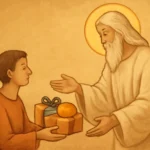
God-given gifts are more than mere abilities. They are endorsements of purpose, nudges toward meaning, and invitations to participate in a larger story. In this article we explore how to discover your inherent talents, embrace them with courage, and use your divine endowments in everyday life. Whether you think of these gifts as natural talents, spiritual gifts, or combinations of both, the guiding idea remains the same: your abilities were placed within you for a reason, and you can steward them to bless others and grow personally. Throughout, the language shifts among variations—God-given gifts, divine endowments, innate talents, spiritual gifts, and natural abilities—to honor the breadth of what people experience when they consider their calling.
The journey begins with discovery. If you want to discover your innate talents and your divine endowments, you will benefit from a multi-angle approach that respects both personal experience and communal observation. Discovering is not a one-time event; it is an ongoing practice of listening, trying, reflecting, and adjusting course as you learn more about how you are wired to contribute.
The Difference Between Innate Talents and Spiritual Gifts
Many people hold overlapping concepts in their minds. Here is a concise way to distinguish among them while embracing both as meaningful:
Innate talents (also called natural abilities) are patterns of thought, behavior, or skill that come naturally. They show up in childhood or adolescence as things you do well with little effort.
Spiritual gifts (often understood in faith communities as divine endowments) may be special capacities given or refined through your relationship with the divine, community needs, or life experiences. They are especially oriented toward serving others and building up the community.
In practice, many people experience a mix of both: strong natural abilities that are powered and clarified by intentional practice, prayer, mentorship, and service.
Think of divine endowments not as a fixed label but as a flexible invitation: you might discover that your leadership abilities become more servant-hearted when aligned with a calling to guide teams or churches; you might find that your creative gifts bloom most fully when paired with a purpose that blesses others. This nuanced view invites humility and curiosity, rather than fixed categories.
Methods to Identify Gifts
There are many practical techniques to help you discover and name your gifts. Below are strategies that work well when used together:
Reflection and journaling: regular prompts can surface patterns you might overlook in daily life. For example, write about moments when you felt energized, effective, and deeply satisfied after helping someone or solving a problem.
Feedback from others: ask trusted friends, family, mentors, or colleagues what they observe as your strengths. Sometimes others see gifts you miss in yourself.
Service experiments: try short-term projects in different domains—teaching, organizing, mentoring, creating art, leading a small group, volunteering in care settings—and notice where you feel most alive.
Pattern recognition: look for recurring successes or positive outcomes across different settings. If people consistently respond well to your communication, you may have a gift in teaching, counseling, or persuasion.
Skill audits: list activities you enjoy and perform well, then sort them by impact: what makes others better, what creates harmony, what brings you energy.
Prayer and contemplation: for many, spiritual discernment is a critical element. Quiet time can help you hear inner guidance about your calling and gifts.
Mentor conversations: a conversation with a seasoned mentor can illuminate the path where your gifts meet real-world needs.
Storytelling and testimony: describe moments when you felt you were “in the zone.” Those narratives often point toward your authentic gifts.
As you engage these methods, keep a running list of what you notice. Over weeks and months, you may begin to see clusters—gifts related to communication, problem-solving, care, organization, or artistry—that point to a core set of divine endowments.
How to Name and Validate Your Gifts
Names matter because they guide your next steps. Try these steps to name and validate your gifts:
Draft a short personal statement that names your key gifts (for example, “I have a gift for listening, teaching, and organizing resources for community impact.”).
Compare your statement with real-world outcomes: where have you helped others grow, or where did a project flow smoothly under your leadership?
Ask two or three people for directional feedback on your gifts in practice: a supervisor, a peer, and someone you mentor.
Record patterns over 90 days: which activities bring you energy, which drain you, and which outcomes sustain others’ well-being?
Refine your gifts statement into a working plan that can guide you for the next season of life.
By naming your gifts clearly, you create a map for embracing them and turning potential into real-world impact.
Embracing Your God-Given Gifts
Embracing your god-given gifts means more than merely acknowledging them. It requires a shift in perspective: from viewing gifts as personal trophies to seeing them as stewardship—endowments entrusted to you to serve others and honor the Source who gave them.
The Mental Shift: Stewardship, Not Ownership
When you adopt a stance of stewardship, several healthy shifts occur:
Humility: gifts are not about self-exaltation but about service and contribution.
Responsibility: you commit to develop and deploy your gifts with care, integrity, and accountability.
Flexibility: you remain open to growth, new contexts, and feedback that can refine how you use your gifts.
Generosity: you look for ways to share your gifts without hoarding opportunities or recognition.
With this mindset, you can navigate difficult seasons—such as when your skills are underutilized or when you face doubt—by grounding your practice in service, prayer, and community input.
Common Barriers and How to Overcome Them
Even with clarity, barriers can block your path. Here are common obstacles and practical responses:
Fear of failure: Start small. Pilot a project with a tight feedback loop, learn, adjust, and expand gradually.
Comparison: Focus on your unique gifts and your personal mission rather than how you measure up to others’ success.
Self-doubt: Build a supportive circle; keep a record of small wins and testimonies from others about the difference your gifts make.
Misalignment: Re-examine contexts where your gifts might be underutilized and look for new outlets that honor your core strengths.
Skepticism or spiritual doubt: Engage with trusted mentors, study spiritual traditions, and seek to understand how your gifts can serve the common good.
Embracing your gifts is a journey of practice, discernment, and disciplined action. It is not a single epiphany, but a pathway you walk with intention.
Using Your Gifts for Good
Once you have identified and embraced your God-given gifts, the next step is using them in ways that bless others and foster growth—within families, communities, workplaces, and faith circles. The goal is to align your gifts with a meaningful purpose and translate inner capacity into outward impact.
Aligning Gifts with Purpose
Purpose acts as an organizing principle that makes your gifts coherent and sustainable. Consider these approaches to align your abilities with a broader aim:
Clarify your mission: Articulate a concise mission statement that links your gifts to the well-being of others.
Match tasks to gifts: In work and volunteer roles, assign responsibilities that directly leverage your strongest gifts.
Seek synergy: Look for opportunities where two or more gifts combine to create greater impact (for example, leadership combined with teaching to mentor others).
Lead with service: Use your platform to serve people, not to showcase yourself; leadership rooted in service tends to endure.
Measure impact: Track outcomes not just activity. What changed for people, organizations, or communities because of your gifts?
In this framing, divine endowments are not optional extras; they are essential resources for building healthier families, more resilient teams, and more compassionate communities.
Practical Ways to Apply Gifts in Daily Life
Putting gifts into action can take many forms. Here are practical avenues to consider:
In the family: Use your gifts to nurture relationships, discipline with kindness, teach values through modeling, or organize routines that bring peace and order.
At work: Leverage your strengths to improve processes, mentor colleagues, communicate clearly, or lead projects that align with your mission.
In your faith community: Serve in roles that your gifts uniquely fit: teaching, hospitality, administration, or outreach to broader society.
In education: Share knowledge in ways that awaken curiosity, adapt to learners’ needs, and empower others to grow in understanding.
Through volunteering: Offer your gifts to nonprofits, charities, or civic groups where the impact of your work is visible and meaningful.
In creativity and innovation: Use artistic, technical, or strategic gifts to solve problems, inspire others, and bring beauty or efficiency into the world.
As you apply your gifts, remain attentive to feedback and to your own sense of alignment—does this work honor your values and serve others well? If yes, you are likely in a healthy zone of stewardship.
Growing and Sustaining Your Gifts
Gifts, like muscles, grow stronger with deliberate practice, regular nourishment, and accountability. Sustaining your God-given endowments requires ongoing development, learning, and community support.
Continuous Learning and Practice
Plan for growth in three intersecting dimensions: skill development, spiritual or ethical formation, and relational maturity. Consider these practices:
Deliberate practice: Schedule focused time to improve specific aspects of your gifts, with clear metrics and feedback.
Mentorship: Seek mentors who can offer wisdom, accountability, and new perspectives on how to use your gifts wisely.
Formal or informal training: Enroll in courses, workshops, or reading plans that deepen your competencies and broaden your horizons.
Cross-disciplinary exploration: Sometimes gifts flourish when applied in new contexts—try applying your strengths in different fields.
Prayerful discernment: Sustain your practice through regular seasons of reflection, gratitude, and alignment with your values.
Growth is not only about increasing proficiency; it is also about deepening character, cultivating empathy, and learning to handle success with humility.
Resilience and Accountability
Seasonal setbacks can test your perseverance. Build resilience and accountability through:
Healthy boundaries: Protect time and energy so you can invest in long-term development without burnout.
Community accountability: Share goals with trusted peers who can encourage you and challenge you to stay on course.
Self-compassion: Treat yourself with kindness when results aren’t immediate, and adjust plans without harsh self-judgment.
Ethical grounding: Keep your use of gifts aligned with ethical norms and the well-being of others, ensuring your actions are sustainable and just.
With resilience and accountability, your gifts can mature into a durable force for good in a complex world.
Real-Life Scenarios: Variations of God-Given Gifts in Action
Fiction can illuminate truth. Here are illustrative scenarios that demonstrate how divine endowments can manifest in diverse ways. While these are not real people, they represent plausible pathways for many readers.
Scenario 1: A Leadership Gift in a Community Organization
A person with a potent mix of leadership ability and empathy notices a gap in volunteers and resources. They begin by listening to volunteers, organizing a simple onboarding process, and clarifying roles. Over time, they cultivate a culture of mutual support, celebrate small wins, and model transparent communication. The result is a more cohesive team, higher retention, and a shared sense of mission. This is an example of leadership as stewardship—not just management, but a form of service that elevates others.
Scenario 2: A Teaching and Counseling Gift in Family Life
Someone with a strong capacity for teaching and compassion uses everyday moments to explain challenging concepts to children or partners, combining clarity with genuine care. They create routines that turn learning into a joyful practice rather than a chore, and they offer a listening ear when someone struggles. The outcome is a home climate where ideas are explored safely, questions are welcomed, and growth is shared.
Scenario 3: A Creative Gift in Community Outreach
An individual with a blend of creative ability and communication talent designs artful campaigns that raise awareness for social issues. They translate complex topics into accessible visuals and narratives that move people to action. Their gifts become bridges—between understanding and action—demonstrating how beauty and truth can intersect for communal good.
Scenario 4: An Administrative Gift in a School or Church Context
Someone with organizational and systems-thinking skills builds effective processes, coordinates volunteers, and ensures resources reach those who need them most. The work is meticulous but deeply relational, because they recognize that behind every process are people seeking worthy outcomes.
Scenario 5: A Mercy and Service Gift in Caregiving
A caregiver with a strong sense of mercy and interpersonal sensitivity creates spaces of comfort for others in distress. They listen well, advocate for needs, and provide practical help. Their gifts translate into tangible relief for families, patients, or clients, and their example invites others into compassionate action.
These scenarios illustrate how innate talents and spiritual gifts can converge in everyday contexts to bless individuals and communities.
A Framework for Ongoing Discovery
Discovery is not a one-off event but an ongoing framework that can guide you through seasons of life. Here is a practical framework to maintain momentum in discovering, embracing, and using your gifts.
30-Day Discovery Plan
Week 1: Listen to yourself and others. Journal daily about moments when you felt energized or particularly effective.
Week 2: Gather feedback. Ask three trusted people what they see as your strongest gifts and invite examples of times you made a difference.
Week 3: Test-drive small projects. Volunteer for quick, low-risk tasks that align with your gifts and observe outcomes and satisfaction.
Week 4: Synthesize and name. Write a concise gifts statement and a 90-day plan to apply them in a real project or role.
Beyond the 30-day plan, consider quarterly reviews that assess impact, alignment with your values, and your personal well-being. Adjust your plan as needed, always returning to the core questions: Whose life is being blessed by your gifts? How can you deepen your service without compromising your health or relationships?
Building and sustaining God-given gifts benefits from supportive resources and communities. The following are commonly helpful anchors for discipleship, discipline, and community involvement.
Mentor networks: Seek mentors who model integrity, growth, and service.
Study circles: Join groups that discuss how gifts intersect with ethics, leadership, and social impact.
Reading plans: Explore books on strengths, vocation, and spirituality to broaden your understanding of gifts and purpose.
Coursework or workshops: Enroll in trainings that build relevant skills and provide practical frameworks for applying gifts.
Journaling and reflection spaces: Maintain quiet spaces for discernment, gratitude, and honest assessment of progress.
Remember that the use of divine endowments is most transformative when it remains connected to a broader ethic of care, justice, and community flourishing.
Every person carries a constellation of innate talents and God-given gifts that, when discovered, embraced, and used with wisdom, can illuminate paths for themselves and others. The journey is not about achieving perfection but about growing in capacity to give generously, serve faithfully, and pursue truth with courage. While your gifts may reveal themselves gradually, your commitment to using them for good can begin today. You have something meaningful to offer: a voice, a skill, a perspective, a touch, or a vision that only you can share in the way you share it. Embrace that truth, nurture it with care, and step into the opportunities before you with confidence, humility, and hopeful faith.
In the end, the measure of your calling is not only in how well you perform a task, but in how your gifts uplift others, how you model integrity, and how you cultivate a life that reflects the beauty of a higher purpose. May your journey of discovering, embracing, and using your God-given gifts be blessed with clarity, courage, and unwavering hope.
Gift the Holy Spirit: A Complete Guide to Receiving and Walking in the Spirit is a comprehensive exploration of how a person can encounter, receive, and live in the empowering presence of God. This guide uses a broad, scripture-grounded perspective to explain what it means to receive the Gift of the Holy Spirit and to…
Understanding the Idea of God Giving Gifts When we speak of God giving gifts, we enter a conversation about how divine blessings appear in human experience. This topic covers more than luck or random chance; it invites us to consider how a benevolent Creator may reach into daily life with purpose and care. Throughout history,…
Anointing Sermon: 5 Keys to Delivering a Spirit-Led, Powerful Message An anointing sermon is more than a well-crafted outline or a polished delivery. It is a message that carries the presence of God into the meeting, stirring faith, hope, and transformation in the hearers. In Christian ministry, many preachers yearn for that moment when the…
Anointed with Holy Spirit: What It Means and How to Walk in His Power Today Throughout biblical history, the phrase anointed with the Holy Spirit carries weighty significance. It signals a distinct moment of divine presence, empowerment, and commissioning for purpose. In the Christian tradition, the idea of being anointed by the Spirit is not…
Baptism Holy Spirit Fire: Understanding Its Meaning and Impact Today The phrase baptism Holy Spirit Fire invites a careful, prayerful exploration of how Christians understand God’s work in a person’s life. Across history and across communities, the language of baptism, the Holy Spirit, and fire has carried rich symbolism—ranging from cleansing to empowerment, from purification…
This article explores the seven gifts of the Holy Spirit and how to recognize and practice them in everyday life. Overview of the Seven Gifts of the Holy Spirit The Christian tradition holds that there are seven gifts of the Holy Spirit that empower believers to live in closer union with God and to respond…