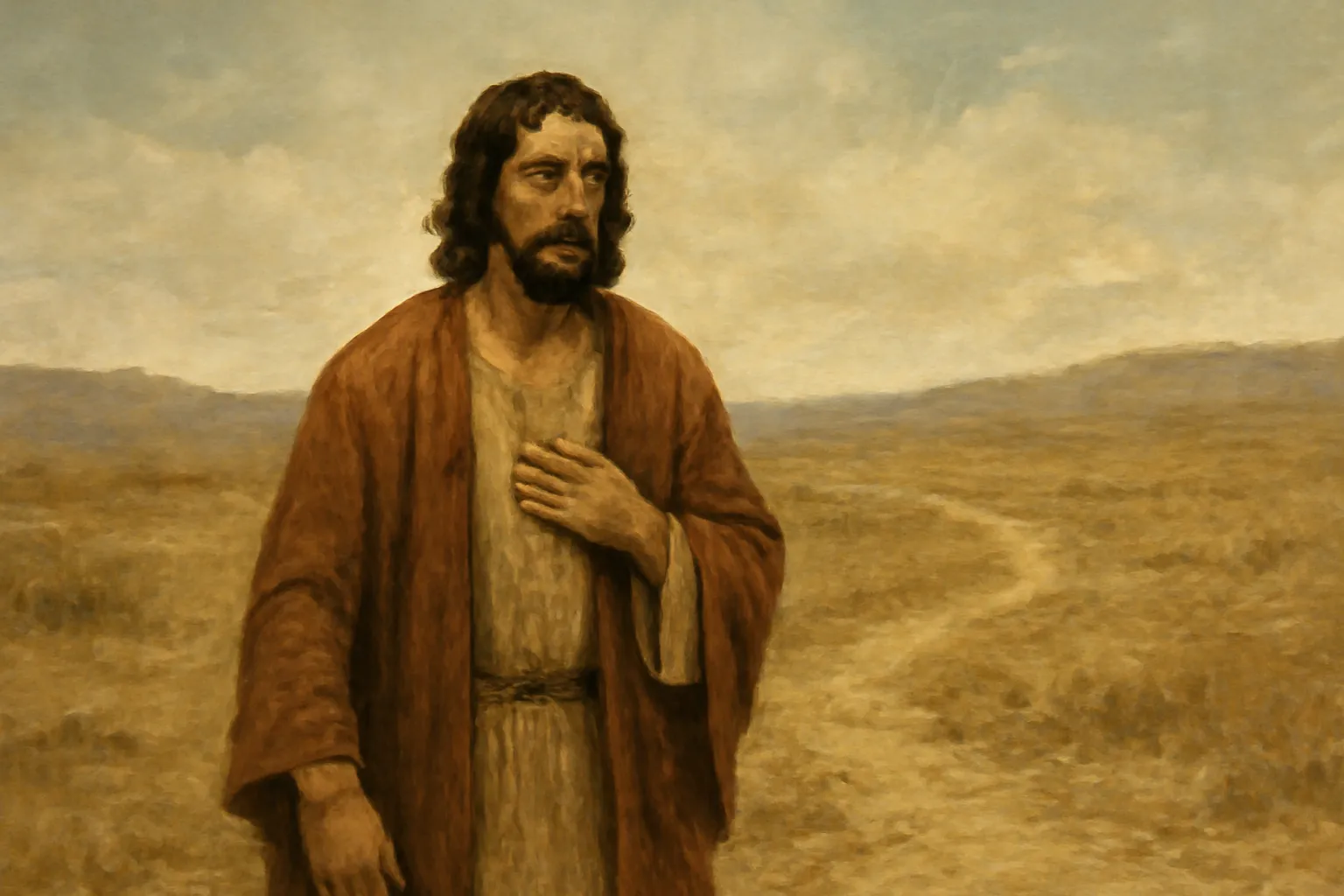
The Lost Jesus and the Mystery of the Missing Years
The phrase lost Jesus or, more precisely, the idea of the missing years surrounding Jesus of Nazareth has long captured the imagination of scholars, theologians, and lay readers. By design, the canonical biographies focus on key moments—birth, baptism, public ministry, crucifixion, and resurrection—while large swaths of Jesus’ early life and youth remain silent in the most authoritative sources of Christian tradition. This absence has given rise to a cluster of competing hypotheses, ranging from scholarly reconstructions of a historical figure to devotional legends that fill the gaps with miracle stories and traveled journeys. In what follows, we survey the landscape of lost Jesus theories, assess the kinds of evidence that commentators bring to bear, and explain why the question of the missing figure continues to matter for historical criticism, theology, and culture.
Where the canonical record ends and the enigma begins
The gap in the Gospels
The New Testament offers two infancy narratives, in Matthew and Luke, that set the scene for Jesus’ birth and early years. After a brief episode in which the twelve-year-old Jesus accompanies his family to Jerusalem and then returns home to Nazareth, the Gospels halt their chronological account for nearly two decades. The gaps in the narrative are not merely empty pages; they are spaces where communities could project interpretations, hopes, and questions about who Jesus was becoming and what his mission would entail.
In practical terms, the essential public portrait of Jesus begins with his baptism by John and his subsequent ministry. The absence of documented events between adolescence and adult ministry invites two kinds of responses: historical speculation about what a first-century Jewish carpenter from Galilee might have experienced, and theological reflection about why early Christians chose to frame Jesus’ self-disclosure and authority at a particular moment in time.
The canonical record and its implications for the missing figure
When scholars speak of the historical Jesus, they distinguish between the Jesus of faith and the Jesus of history. The canons of the New Testament contribute a core set of evidence, but they are not a complete biographical account. The absence of clear, verifiable details about Jesus’ youth and early adulthood means that any portrait of the missing years must navigate both textual constraints and the limits of historical method.
Canonical emphasis: The Gospels concentrate on signals and milestones that convey identity, authority, and purpose—baptism, temptation, call, teaching, miracles, crucifixion, and resurrection—not a year-by-year biography.
Historical method: When historians reconstruct a figure like Jesus, they rely on criteria such as authenticity, contextual plausibility, and independent attestation. The early life portion has very little of those attributes in the surviving sources.
Apocryphal expansions: Non-canonical writings sometimes fill the vacuum with legends about childhood and adolescence, but these texts are not considered reliable historical evidence by mainstream scholarship.
Theories about the missing figure: an overview
The question of the missing years yields a spectrum of theories. Below are the major categories used in scholarly discussions and popular discourse. Each has its own set of claims and a distinct relationship to the available evidence.
1) The Hidden Years hypothesis
One of the oldest and most persistent strands of thought asserts that Jesus spent considerable time in study, travel, or service in lands beyond Nazareth during the period not covered by the Gospels. Popular legend has suggested Egypt, India, Persia, or other parts of the ancient world as destinations. Proponents often appeal to the idea that Jesus’ knowledge of Scripture, language, or philosophy implies extended schooling or exposure to diverse cultures.
Important to notice: this is a theoretical construct rather than a well-evidenced claim. There is no robust, contemporaneous documentation in reliable sources that confirms a multi-year journey for Jesus outside the areas described in the canonical narratives. The theory remains part of the broader cultural imagination about the “lost years” and functions as a heuristic for exploring how early communities might have imagined a growing teacher who would later reveal wisdom and authority.
2) The apocryphal elaborations
A substantial portion of the speculative material about the missing years comes from non-canonical infancy and youth gospels. These texts were produced in various Christian communities in the second, third, and later centuries and often sought to fill gaps left by the canonical record.
Infancy Gospel of Thomas: A later, non-canonical text that depicts Jesus performing miracles as a child and interacting with his elders in surprising ways. While entertaining, it is not considered historical evidence for Jesus’ childhood by mainstream scholars.
Protoevangelium of James (also called the Infancy Gospel of James): Focuses on Mary and the nativity, including details about Jesus’ early life that are not found in the New Testament. It contributes to the broader cultural memory of Jesus’ youth but remains outside the historical core of Jesus’ life.
Other apocryphal infancy materials: Various later writings circulated in different Christian communities; they share a common aim of expanding the story of Jesus’ early years, often weaving in miracles, prophetic signs, and unusual acts of piety. These texts are valuable for understanding how early believers imagined the boy Jesus but should be treated cautiously as historical sources.
3) Editorial and theological framing
Some scholars argue that the apparent “gaps” in Jesus’ life were not simply blank pages but features of early Christian editorial decisions. In this view, the missing years become a rhetorical and theological problem: how to present a figure who is fully human yet divinely commissioned. Editors of the Gospel narratives may have chosen to emphasize certain moments—baptism, temptation, teaching, crucifixion—because these events crystallize the identity and mission of Jesus for first-century readers and believers.
4) The memory-work of early Christian communities
A related position emphasizes that communities remember or reconstruct the life of Jesus within a framework that supports their own theological priorities. The “lost years” become a canvas onto which early Christians projected questions about authority, legitimacy, and messianic expectation. In this sense, the missing figure is less about a claimant to known facts and more about a narrative tool that helps a community articulate who Jesus was and why his ministry mattered.
5) The human-divine tension and the late recognition of authority
Theological reflection often emphasizes the unfolding revelation of Jesus’ identity. The hidden or delayed revelation of his authority allowed early Christians to stage a dramatic turn—from a humble carpenter in Nazareth to a bearer of salvific power. In this reading, the missing years are less about biographical truth and more about the emergence of faith communities that learned to interpret Jesus’ life through the lens of cross, resurrection, and vocation.
Evidence and methods: how scholars approach the missing years
To speak meaningfully about the “missing years” of Jesus, scholars apply a range of evidence and methods. The goal is not to fabricate a biography but to understand how early communities remembered Jesus and how later traditions interpreted his life.
Textual sources: canonical and non-canonical
The canonical Gospels (Matthew, Mark, Luke, John) provide the core tradition about Jesus, but they do not supply a year-by-year account of his youth. The infancy narratives in Matthew and Luke contain birth stories and episodes surrounding Jesus’ upbringing, but they differ in detail and focus. Meanwhile, the non-canonical writings—the apocryphal infancy gospels we discussed—offer imaginative retellings that illuminate early Christian interests, symbols, and devotional concerns, even as they depart from historical plausibility.
Archaeology and historical geography
Archaeology cannot confirm the specifics of Jesus’ daily life as a youth. What it can do is illuminate the places where he lived—Nazareth, Bethlehem, Capernaum, and surrounding Galilean sites—and the cultural, social, and religious context of first-century Judea and Galilee. These data help researchers understand what an adolescent Jesus might have experienced in a world of itinerant rabbis, small-scale farming, carpentry trade, synagogue life, and village networks.
Historical method and criteria of authenticity
When evaluating claims about events in the missing years, scholars apply methods such as the criterion of authenticity, multiple attestation, and contextual plausibility. In practice, detailed, independent attestations about Jesus’ life between the Nativity and public ministry are virtually absent. This scarcity is itself a piece of the puzzle: it guides cautious conclusions and encourages a clear distinction between what is historically plausible and what is theologically or imaginatively compelling.
Cross-cultural and religious perspectives on the missing years
The fascination with the lost Jesus or missing years is not confined to canonical scholarship. Across traditions and storytelling communities, the figure of Jesus as a youth has appeared, reinterpreted, and reimagined in diverse ways.
Christian traditions and liturgical memory
Within Christian literature, the infancy and youth narratives reveal how churches and communities remembered Jesus’ early life. Different denominations emphasize various aspects—humility, obedience to divine will, family life, or the development of wisdom—to shape moral and devotional imagination. The absence in the canonical record is often read as permission for interpretation, not as a mere lack of data.
Non-Christian sources and broader discourse
In the broader religious and literary landscape, the idea of a remarkable youth is not unique to Jesus. Other religious biographies and legends around antiquity also dramatize the formative years of a figure who later emerges as a teacher or savior. These patterns provide a comparative framework for understanding why the missing years narrative resonates in different cultures: it gives readers a sense of a life that grows in private preparation before public mission.
Islamic and Jewish perspectives
In Islamic tradition, Jesus (Isa) is a revered prophet, but his youthful life receives little narrative detail in the Qur’an. Later Islamic literature sometimes expands on Jesus’ early life in ways that echo Christian themes while staying within a distinct theological frame. Jewish historical memory of early Jesus (as a first‑century Jewish teacher in Galilee) tends to view him through the lens of Second Temple Judaism, with attention to sources, scriptural interpretation, and the social world of Galilee. Across these traditions, the conversation about the missing years becomes part of broader questions about memory, authority, and religious identity.
Why the missing figure remains compelling
The enduring appeal of lost Jesus or the missing years is not merely sensational. It touches on fundamental questions about how historical memory works, how communities shape narratives around a figure who is at once intimate and transcendent, and how silence can be as informative as voice. Several forces contribute to the longevity of this topic:
curiosity about origins: People want to know where a pivotal leader came from, what education he received, and how he learned to think in ways that would later astonish listeners.
desire for a complete life story: A coherent biography with a clear arc—birth, development, testing, call—offers a sense of closure that the terse gospel pages cannot provide.
interpretive flexibility: Without exhaustive textual records, readers can exercise creative and critical imagination to test how different values, aims, or communities would present Jesus’ growth.
enduring cultural resonance: The motif of a hidden or private apprenticeship before public mission has become a familiar trope in literature, film, and religious education.
How to read the narratives and legends about the missing years responsibly
For readers who want to understand the topic without sliding into speculation, a careful approach is essential. Here are guiding points to keep in mind:
Differentiate between canonical text and later embellishment: Recognize where the New Testament provides solid historical material and where later writings are purely devotional or legendary.
Identify the source’s genre and aims: Apocryphal infancy literature, hagiography, and doctrinal writings serve distinct purposes from historical biography.
Apply critical scrutiny: Use criteria of authenticity and external attestation to assess claims about the missing years, especially when discussing travel or education abroad.
Respect historical context: Remember that first-century biographies did not follow modern biographical conventions; silence about an event does not automatically imply meaninglessness.
Distinguish scholarly consensus from popular legend: The majority view among mainstream scholars remains cautious about claims of extensive travels or miraculous activities during Jesus’ youth unless supported by credible, independent evidence.
Variations of the phrase: exploring semantic breadth
To cover the topic comprehensively, it helps to employ a range of terms that point to the same issue. In discussions of the lost Jesus, writers often use variations such as:
missing years of Jesus
hidden years of Jesus
silent years of the Christ figure
undocumented youth of Jesus
unrecorded life before the public ministry
Each variant signals a slightly different emphasis—the gap in the record, the sense of secrecy or mystery, or the absence of documentary evidence—while referring to the same broad phenomenon: a lack of detailed, widely accepted information about Jesus’ adolescence and early adulthood.
where the evidence points and what remains uncertain
The question of the missing years surrounding Lost Jesus is not a simple historical crime-scene investigation. It is a complex engagement with ancient sources, late antique literature, and the way communities remember and teach about a figure who, for many, embodies both humanity and divinity. The strongest scholarly position remains cautious: the canonical sources do not provide a reliable, verifiable account of Jesus’ life between his youth and the start of his public ministry. The apocryphal gospels and later legends illuminate the desires and theological concerns of diverse communities, but they do not substitute for independent corroboration.
In the end, the “missing figure” is a window into how early Christians constructed meaning around Jesus’ identity. It is also a reminder that the act of remembering a figure as central as Jesus is never neutral. By examining the lost years in light of historical methods, textual criticism, and cultural imagination, readers gain a more nuanced view of what can be known, what must be inferred, and what must remain speculative. The narrative of the missing years thus becomes less a quest for a biographical tally and more an invitation to explore how memory, faith, and inquiry interact within the broader story of Christian origins.