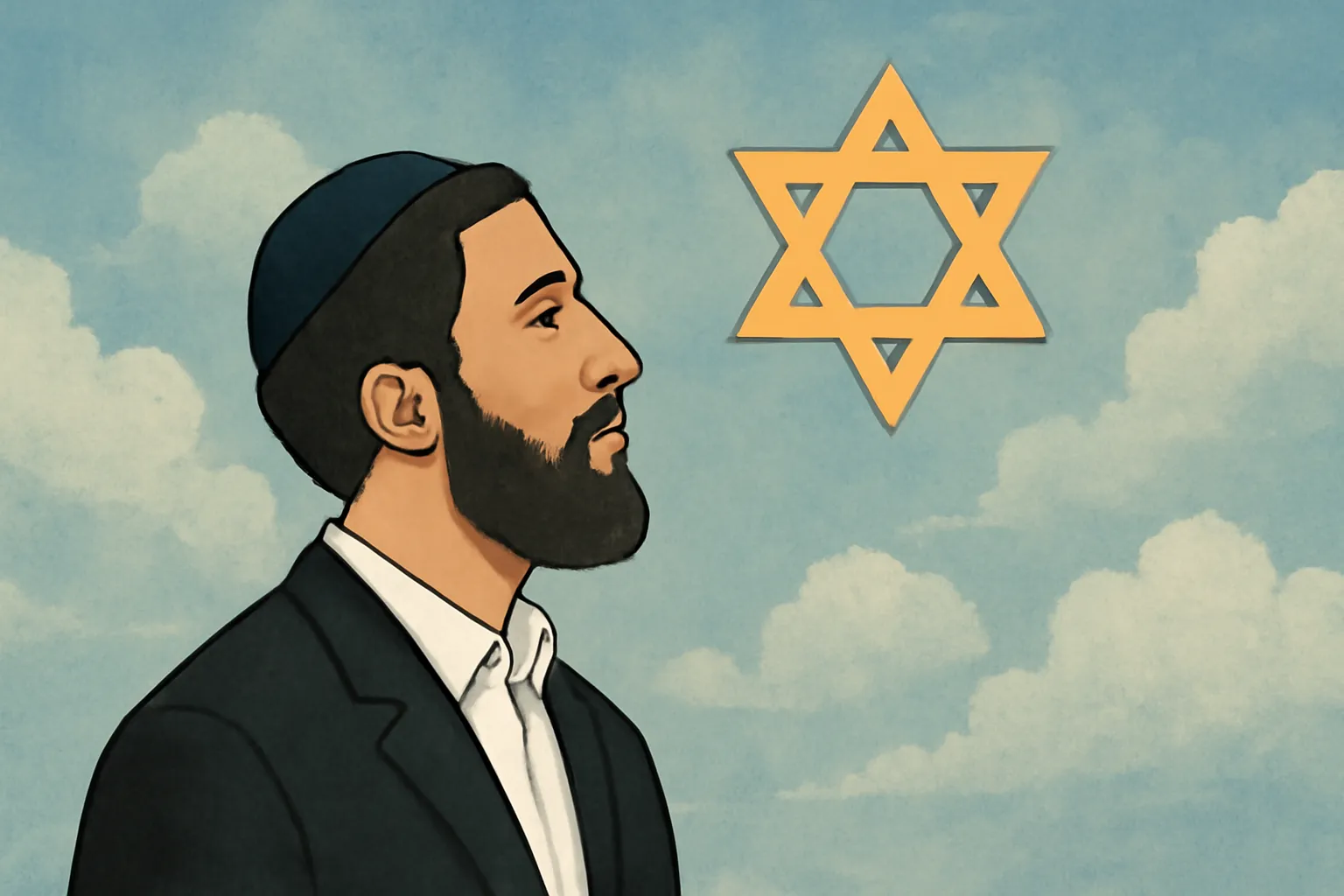
Are Jews still God’s chosen people? This question has echoed through centuries of theology, history, and lived faith. It raises not only doctrinal concerns but also questions about identity, mission, and how a people sustains its covenant in a pluralistic world. This article offers a comprehensive guide to the topic, presenting Jewish perspectives, historical developments, and the way the idea of chosenness has evolved and continues to be understood today. We will use variations of the question—such as Do Jews remain God’s chosen people?, Is the Jewish people still chosen by God?, and Are Jews still the chosen nation in modern times?—to map semantic nuance without losing focus on the core topic.
Foundations: what does it mean to be “chosen” in Judaism?
In Jewish thought, the term chosenness does not imply superiority or privilege in a vacuum. Rather, it connotes a distinctive covenantal relationship with the divine that carries responsibilities. The idea stems from ancient biblical language that describes the Jewish people as a treasured possession and a holy nation called to a particular mission within the history of humanity. The core concept is a covenant with God that began with the patriarchs, was reaffirmed at Sinai, and continued to unfold through the prophetic and rabbinic traditions.
To understand the question “Are Jews still God’s chosen people?” one must distinguish between two aspects: (1) the sense of a particular vocation assigned to the Jewish people, and (2) the interpretation of that vocation in relation to all peoples. In classical sources, the chosen status is tied to obligation: to live according to the commandments, to sanctify daily life, and to be an example of ethical monotheism. In that sense, chosenness is mission-oriented rather than a verdict of moral rank.
Biblical anchors: key passages that shape the conversation
Three biblical strands are frequently cited in discussions of Jewish chosenness:
Gen. 12:1-3 and the Abrahamic covenant: God promises to make a great nation of Abraham’s descendants and to bless all the families of the earth through them. This frames chosenness as a path to universal blessing, not a closed circle.
Exod. 19:5-6 — “you shall be my treasured possession, if you obey my voice.” This language uses imagery of a special relationship but emphasizes responsibility and ethical conduct.
Deut. 7:6-9 and related verses: Israel is described as a holy people set apart for God, chosen not by merit alone but by God’s redemptive initiative, with a promise of steadfast love and keeping the covenant.
Across generations, commentators have debated how to translate these verses into living reality. Some emphasize exclusivity, others highlight inclusivity and ethical obligation. The tensions themselves have helped shape divergent understandings within different Jewish communities about what it means to be the chosen people today.
How major Jewish traditions approach chosenness
Different movements within Judaism interpret chosenness in ways that reflect their theological commitments, liturgical emphases, and responses to modern history. Here is a survey of the main currents:
In Orthodox circles, the covenantal relationship with God remains a live, binding reality. The Jewish people are understood as God’s chosen in a covenantal sense, with a particular obligation to observe Torah, maintain Jewish life, and preserve a unique communal identity. This does not imply moral superiority; rather it signals a serious calling to righteousness, justice, and holiness, both within the community and in the wider world.
Conservative/Traditional perspectives
Conservative Judaism often emphasizes the continuity and dignity of the covenant while engaging in critical historical study and modern religious practice. The idea of chosenness is retained as a sacred vocation—an ongoing relationship with God that invites ethical responsibility and fidelity to tradition, yet it is interpreted with an openness to historical development and communal adaptation.
Reform and Liberal perspectives
In Reform Judaism, the concept of chosenness is frequently reframed as a historical and ethical vocation rather than a claim to absolute special status. Many Reform thinkers stress that the mission of being a “light unto the nations” involves universal ethics, social justice, and interfaith respect. The emphasis shifts from exclusive privilege to a universalist dimension of ethical monotheism and humanitarian obligation.
Reconstructionist and other modern approaches
Reconstructionist and some pluralistic Jewish voices may view the idea of chosenness as a historical phenomenon that reflects a particular people’s covenantal relationship to God. In these circles, the focus might be less on national privilege and more on communal responsibility, cultural continuity, and the ongoing project of living a meaningful Jewish life in a diverse world.
Vocabulary and nuance: what does “am segulah” mean in context?
One frequently cited biblical phrase is “am segulah”, often translated as “a treasured or prized people.” This expression captures the sense of a covenantal designation rather than a statement about inherent superiority. In modern discourse, scholars and rabbis stress that segulah refers to a role or function—being an embodiment of ethical and spiritual ideals—rather than a claim of exclusivity over others.
Another well-worn phrase is “light unto the nations”, drawn from passages like Isaiah 42 and 49, which many commentators read as a responsibility to model justice, mercy, and moral conduct for all peoples. In this view, the chosenness is not a privilege that excuses others from moral law; it is a mandate to elevate the common good in the broader human family.
Are Jews still God’s chosen in the modern era?
The short answer is complex and varies by tradition. In the contemporary Jewish world, many people affirm that the Jewish people remain in a special, covenantal relationship with God. At the same time, there is broad agreement that this relationship entails universal obligations—to pursue justice, to repair the world, and to act with compassion toward all people. The question, Are Jews still God’s chosen? therefore often becomes, What is the nature of the chosen status in a pluralistic, modern society?
Several themes commonly surface in modern discussions:
Continuity of covenant: Many Jews hold that the covenant with God endures, though its expression has adapted to new historical circumstances, including diasporic life, globalized culture, and the modern state of Israel.
Obligations over privileges: The emphasis is frequently on responsibility—to study Torah, to perform mitzvot, to care for others, and to participate in social justice—rather than on a claim of superiority.
Contextual adaptability: Different communities emphasize different features of chosenness. Some highlight ritual purity and law, others ethical monotheism and social impact, others a combination of both in dialogue with modern values.
The modern state of Israel adds a significant dimension to the conversation about chosenness for many people. For some, the existence of a Jewish state is an expression of historical continuity with the covenant, a homeland where Jewish life can flourish and where collective safety and cultural renewal are pursued. For others, the political implications of a Jewish state raise questions about minority rights, the relationship with neighboring peoples, and how the covenantal mission translates into a political project in a diverse region.
Important clarifications often emerge in discussions about Israel and chosenness:
Covenantal simplicity vs. political reality: The covenant is a religious concept; it does not automatically resolve all political questions or guarantee moral perfection in statecraft.
Diaspora participation in the mission: Jewish communities outside Israel see themselves as part of the same covenantal enterprise, contributing to global ethical discourse, philanthropy, and social justice—an example of how chosenness can be linked to universal good.
Interfaith and minority living: In pluralistic societies, the idea of chosenness often expands to include mutual respect among different faith communities and the shared pursuit of human flourishing.
Different faith traditions and the broader conversation
The conversation around chosenness is not limited to Judaism. In Christian theology, for example, the concept of “the people of God” has historically featured debates about the status of Jews in salvation history. Contemporary Christian voices increasingly emphasize respectful, non-supersessionist relationships with Judaism. The Catholic Church’s Nostra Aetate (1965) and ongoing Jewish-Christian dialogues have helped reframe the question in a way that honors Jewish identity while recognizing the distinct paths of faith tradition in the modern world. Other Christian denominations also wrestle with questions about covenantality and election in ways that avoid triumphalism and promote interfaith respect.
In addition, modern secular thought, interfaith movements, and academic study contribute to a broader understanding of chosenness that emphasizes history, ethics, and community rather than absolutist claims. The question Are Jews still God’s chosen people? is sometimes asked by people of other faiths who want to understand how Judaism defines identity and responsibility in a diverse, interconnected world.
Common questions, myths, and clarifications
As with any deeply held religious concept, misconceptions abound. Here are some frequently asked questions and clarifications that help illuminate the topic:
Is chosenness a claim of superiority? No. In traditional Jewish understanding, chosenness denotes a unique covenantal relationship with God and a mission to live according to divine guidance, not an assertion of moral rank over others.
Does being chosen exclude non-Jews? Not at all. Judaism recognizes a broader moral framework (the Noahide laws in some interpretive traditions) and commends righteous conduct by all peoples. The idea of chosenness often accompanies a mandate to share ethical monotheism with the world.
Can a person outside Judaism be part of the covenant? The covenant is traditionally understood as binding primarily on Jews. However, Judaism recognizes the possibility of righteous non-Jews who relate to God through ethical living and, in some traditions, through a special status as “the righteous of the nations.”
How does conversion affect chosenness? Conversion brings a person into the covenantal relationship with God by choice and practice. It does not erase the continuity of the Jewish people’s historic chosenness, but it expands the community who can participate in its responsibilities.
What is the role of the land and nationhood? The land of Israel carries historical and theological significance in Jewish imagination, but the covenantal sense of chosenness is not reducible to political borders. The ethical and spiritual mission remains central in Jewish life wherever people live.
For many Jews, the question Are Jews still God’s chosen people? translates into everyday actions and responsibilities. Here are some practical expressions of that vocation:
Ethical living: A commitment to justice, integrity, and compassion in all spheres—from family life to business dealings and civic engagement.
Tikkun Olam (repairing the world): A guiding principle that motivates charitable giving, social action, and environmental stewardship—efforts that reflect a universalist dimension of the Jewish mission.
Study and learning: Engagement with Torah, Talmud, and rabbinic literature as ongoing formation that strengthens moral imagination and communal cohesion.
Community and hospitality: Building inclusive communities that welcome strangers and support vulnerable members of society, embodying the ethical call of the covenant.
Interfaith respect: Engaging in dialogue with people of other faiths to promote mutual understanding and cooperation on shared values like justice and peace.
How to talk about chosenness respectfully
Conversations about chosenness can easily veer into polemics if one side uses it to claim moral high ground. A constructive approach emphasizes:
Humility: Recognizing that being chosen carries responsibility, not entitlement.
Context: Acknowledging historical circumstances, suffering, and the many ways different communities interpret their own sacred stories.
Common humanity: Focusing on shared ethical commitments, such as human rights, compassion for refugees, and protection of the vulnerable.
Clear distinctions: Differentiating between religious identity, ethnic heritage, and political reality to avoid conflating faith with nationalism or superiority.
a nuanced, living concept
The question “Are Jews still God’s chosen people?” is not a single, static answer but a living dialogue that has evolved across millennia. For many Jews, the answer affirms a continuing covenantal relationship with God that obligates them to strive for justice, righteousness, and ethical leadership in the world. For others, the concept is reframed in more universal terms—emphasizing moral responsibilities toward all people and a commitment to peace, repair, and common good. Across Orthodox, Conservative, Reform, and Reconstructionist communities, the core idea remains that chosenness is about a purpose and a mission—and that this mission calls Jews and non-Jews alike to participate in the betterment of humankind.
In responding to the question Are Jews still God’s chosen people?, readers should weigh both the historical anchors and the contemporary interpretations. The diversity of Jewish thought on this topic reflects a broader truth about how traditional religious claims adapt to new contexts while preserving core commitments. Whether one leans toward a traditional reading that emphasizes covenantal fidelity or toward a modern, universalist reading that highlights ethical action for all, the core message remains: chosenness, in Jewish thought, is a call to responsibility—an invitation to role-model moral vision in a complex, diverse world.
Finally, the conversation around chosenness is inseparable from the broader dialogue about identity, faith, and community. The question Are Jews still God’s chosen people? invites not only theological reflection but a practical examination of how sacred callings translate into daily life, public action, and interfaith cooperation. By exploring the biblical roots, the diverse Jewish perspectives, and the modern realities of diaspora and statehood, this guide aims to provide a comprehensive, respectful, and nuanced understanding of a question that continues to shape faith and culture in meaningful ways.
Bible Verses Supporting Israel: A Biblical Foundation for the Land, the People, and the Covenant This article gathers fifteen key Bible verses that many readers, theologians, and scholars understand as foundational to the biblical case for Israel—the people, the land, and the divine Covenant that God established with Abraham, Isaac, and Jacob. While interpretations vary…
Understanding the Theme of Blessing Israel in Scripture Blessing Israel is a phrase that appears throughout the biblical narrative, from the early promises given to Abraham to the prophetic visions of a future restoration. In this article, we explore not just the verses themselves, but the deeper meaning behind the language of blessing, how it…