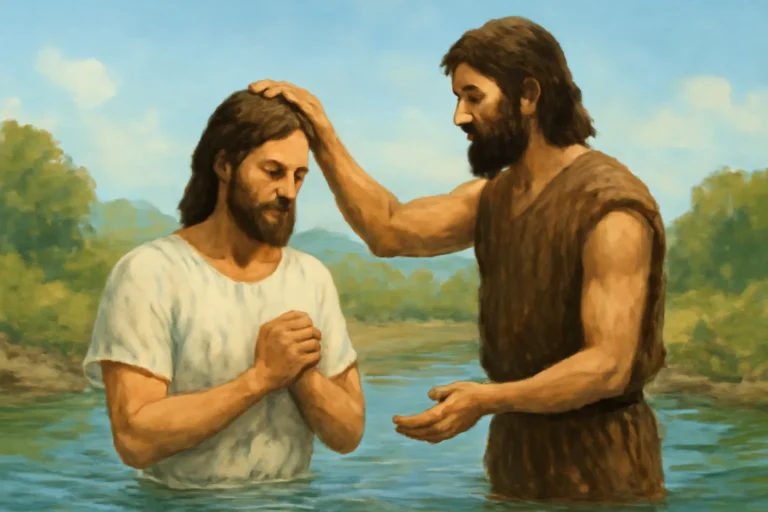
Baptist baptism stands as one of the most distinctive and defining
practices within the Baptist tradition. It is more than a ritual
moment; it is a deliberate expression of belief, a public witness of
faith, and a visible sign of a transformative relationship with Jesus
Christ. In Baptist life, baptism is treated primarily as an ordeal of
obedience and a symbol of spiritual union with the
crucified and risen Savior. This article surveys the meaning,
practices, and significance of baptism in the Baptist tradition. It will
explore the theological rationale behind believer’s baptism, the
practical steps of the rite, the way local churches care for and
include new members, and the historical currents that have shaped how Baptists
understand this sacred practice.
In the Baptist tradition, baptism is not a sacrament that confers grace
innately by itself; rather, it is a divinely ordained public declaration
of faith and a symbolic identification with Christ.
The practice rests on several core convictions:
Believer’s baptism instead of infant baptism: baptism follows a
conscious decision to place trust in Jesus Christ, rather than being
administered to infants who cannot yet confess faith.
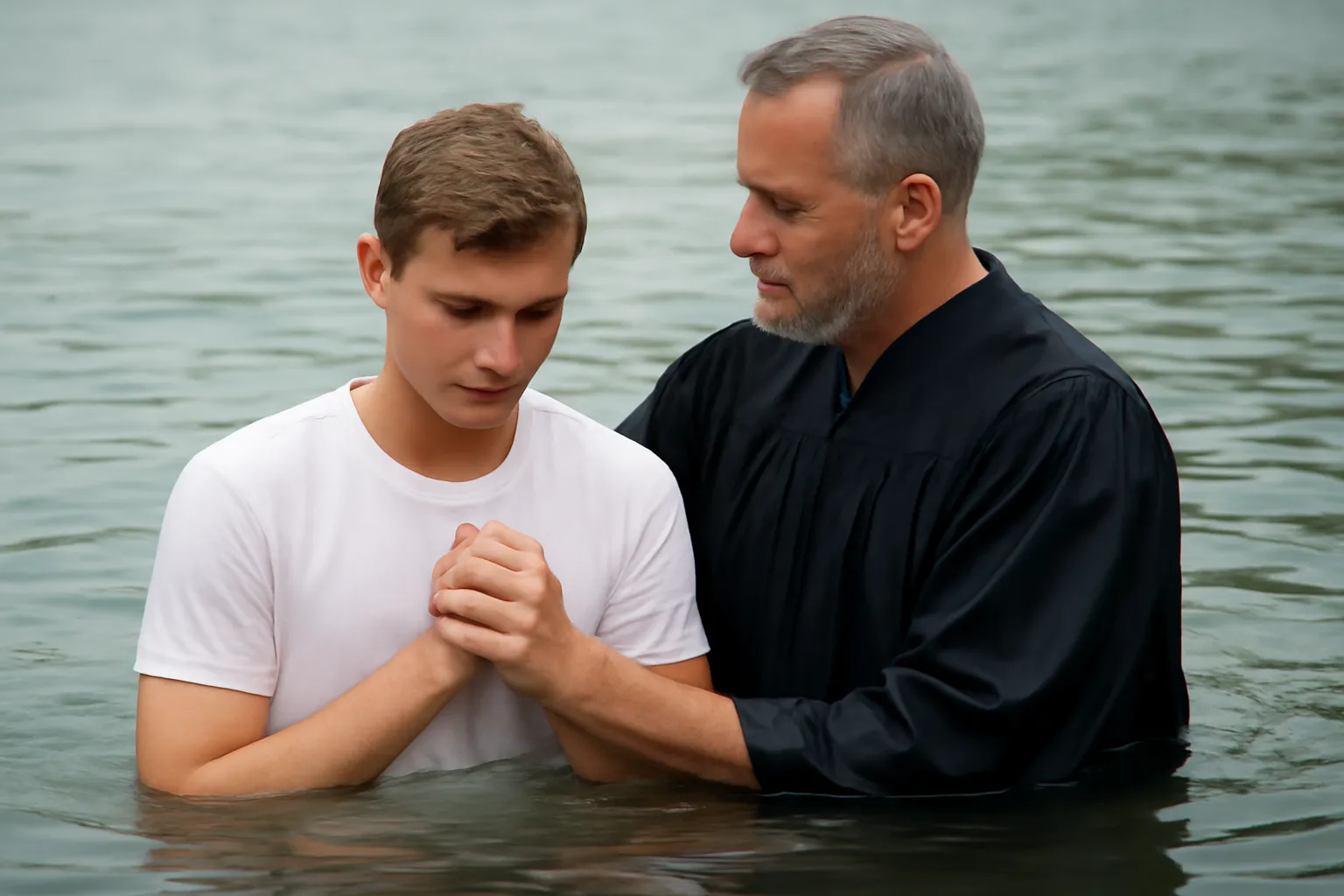
Immersion in water as the mode: baptism is performed by fully
immersing the candidate in water, symbolizing death to sin and
rising to new life in Christ.
Public testimony before the church and the world: baptism is
a visible confession that the believer has chosen to follow Jesus
and seeks to live in obedience to Him.
Symbolic identification with the gospel: the act embodies
the believer’s union with Christ’s death, burial, and resurrection, as
described in Scripture.
The phrase baptism by immersion is often paired with
the term believer’s baptism, underscoring that the person baptized has
exercised personal faith and repentance. Although different Christian
traditions may practice baptism in other modes or at different ages,
the Baptist understanding emphasizes conscious faith and a
deliberate act of obedience to the Lord Jesus Christ.
Historical Roots and Theological Rationale
The present form of Baptist baptism has rich historical roots that
trace back to movements that emphasized personal faith, the authority of Scripture,
and a voluntary church fellowship. While Baptists discern a lineage that
includes early Anabaptist circles of the 16th century, the modern
Baptist movement also grew out of English Puritan and Separatist streams
who criticized infant baptism and urged a church of professing believers.
The biblical rationale for believer’s baptism rests primarily on
New Testament accounts in which individuals profess faith in Christ and then
are baptized as a next step of obedience. Key texts frequently cited include
the baptism of the Ethiopian eunuch in Acts 8, the confession and baptism of
households in Acts 16, and Jesus’ own baptism by immersion in Matthew 3. In
Paul’s letters, baptism is described as a symbolic participation in Christ’s
death and resurrection (Romans 6:3-4; Colossians 2:12). For Baptists, these
passages are read as urging a response of personal faith and a public,
observable sign of that faith.
The practice of baptism in Baptist churches is carefully governed by
shared convictions about the meaning of baptism and the nature of the church.
While there can be minor regional or denominational differences, the typical
pattern remains constant: it is a baptism by immersion that follows a
profession of faith and leads into the church’s life of discipleship.
Mode and Method: Immersion as the Central Element
The immersion of the candidate beneath the water is the most
distinctive and widely observed mode in Baptist baptism. Proponents argue
that immersion most faithfully represents the symbolism of burial with Christ
in death and resurrection to new life (Romans 6:3-4). Because immersion
visually conveys a total immersion into Christ and a change of status before
God and the church, it is treated as the normative method.
Order of the Rite
While local practices may vary, the typical order of Baptist baptism follows a
predictable rhythm:
Preparation and testimony: a believer shares a personal testimony of
faith in Christ, often with brief explanation of how they came to trust Jesus.
Declaration of faith: the candidate publicly acknowledges
Jesus as Lord and Savior, often including mention of repentance and
desire to follow Him in baptism and obedience.
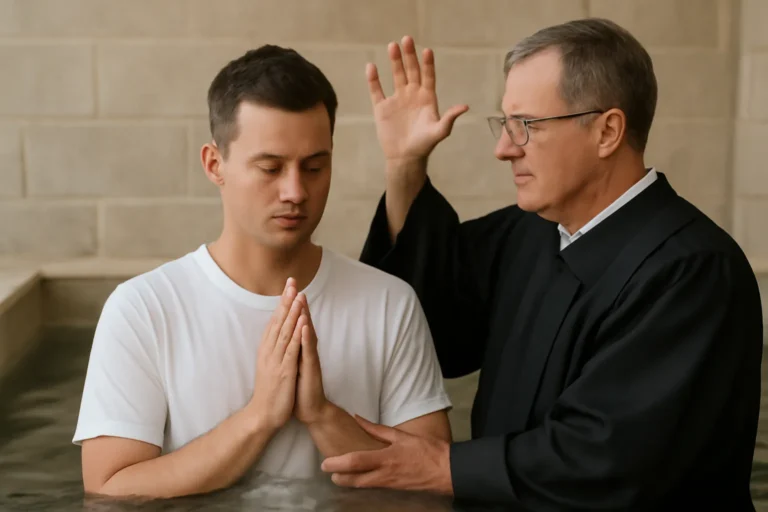
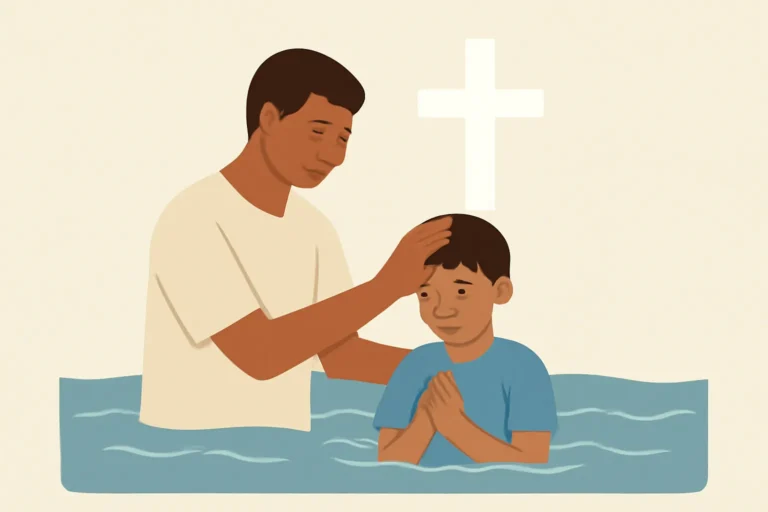
Baptism by immersion: the candidate is immersed in water by the
pastor or a designated person, symbolizing burial with Christ and rising
to new life.
Welcome and membership considerations: after baptism, the
individual is welcomed into the local church as a member or as a candidate
for membership, depending on the church’s polity.
Where and When It Happens
Baptism is commonly conducted in a baptismal pool at the local church, in a
body of water suitable for immersion, or in a symbolic setting designed for
the rite. The timing of baptism typically follows a clear profession of faith
and may occur after a period of catechesis, discipleship training, or
personal preparation. Some churches schedule baptisms during special services—
such as a baptismal ceremony at the end of a worship gathering—while others
hold waterside baptisms at lakes, rivers, or outdoor locations when the
climate and logistics permit.
Membership Implications
For many Baptist communities, baptism marks the entrance into a local church
fellowship. It signals that the believer is committed to the church’s
mission, doctrine, and community life. In some contexts, baptism is closely
tied to the process of church membership, while in others it serves as a
public sign prior to formal membership verification. In all cases, the rite
foregrounds the idea that discipleship and church life are linked
and that baptism is a step in the ongoing journey of following Christ within a
local faith community.
Significance of Baptist Baptism in Personal Faith
The significance of baptism within Baptist practice extends beyond the ritual
act itself. It embodies theological convictions about the nature of faith, the
church, and the mission of Christians in the world.
Public Profession of Personal Faith
A central significance is that baptism is a public profession of faith
and a declaration that the believer has consciously embraced the gospel. In a
world where belief can be private or culturally ambiguous, the baptismal act
stands as a clear, public statement: “I have chosen Jesus Christ as my Lord and
Savior, and I intend to live as His disciple.”
Baptism symbolizes participation in the gospel story. The baptist
symbolism often highlights two aspects: (1) death and burial to the old
self, represented by the burial in water, and (2) resurrection and new life with
Christ, represented by rising from the water. This dramatic symbol communicates
a powerful spiritual truth: the believer’s life has been united with Christ’s
life through faith, and the believer is now walking in newness of life.
Identity Within the Community of Believers
The rite is also about identity—who a person is within the people of God. In
Baptist life, the local church is a visible assembly of saved people
who gather for worship, mutual edification, and the advancement of the gospel.
Baptism confirms a believer’s entry into that community and signals a shared
commitment to the church’s doctrine and practice.
Ecclesial and Discipleship Implications
The act of baptism has ongoing implications for discipleship. It opens the door
to continued teaching, enrollment in catechesis or discipleship programs, and
involvement in the church’s mission. In many churches, baptism is followed by
ongoing training in Scripture, prayer, and service opportunities. The
ritual thus serves as a gateway to a life of faithful obedience, service, and
spiritual growth—an ongoing journey rather than a one-time event.
Variations Within the Baptist Family: How Belief Is Expressed
The Baptist tradition is not monolithic. It comprises a broad family of
congregations and fellowships that share common principles yet differ on
certain practices, governance, and emphases. The following notes illustrate
some of the common variations you might encounter in the diverse Baptist world.
Believer’s Baptism Across Denominations
Across Southern Baptists, Independent Baptists, and
many other Baptist groups, the core conviction of belief in Jesus Christ as
personal Savior, along with baptism upon profession of faith by immersion, is
widely shared. However, the way churches implement membership processes,
leadership structures, and doctrinal statements can vary. Some churches
emphasize a more formal catechetical process prior to baptism, while others
emphasize immediate baptism following a clear confession of faith.
Infant Baptism and Pedobaptism in Perspective
In contrast to many other Christian traditions that practice infant baptism,
Baptists generally reject infant baptism as the basis for church membership or
the validity of baptism. The belief here is that baptism should follow a
conscious profession of faith, which presupposes an individual ability to
understand and respond to the gospel. Some Baptist groups may encounter
exceptions or debates on this topic, but the prevailing norm remains believer’s baptism by immersion for those who can affirm personal faith.
Ingredients of the Service: Music, Testimony, and Community
In the practice of baptism, many Baptist churches integrate other elements that
reinforce its meaning and communal significance. These can include songs or
hymns that celebrate grace, a short exhortation from the pastor, a time for
personal testimony, and prayers offered on behalf of the candidate. The goal
is not to turn baptism into mere performance but to weave it into a
worshipful moment that strengthens the church’s faith and mission.
While immersion is widely regarded as the normative mode, there are rare
circumstances in which a Baptist congregation may accept pouring or sprinkling as a pragmatic alternative when immersion is impractical
or dangerous for health reasons. This is not typical and may be subject to
local church policy or denominational guidelines; however, the practice is
much less common than in other traditions.
The historical development of Baptist baptism reveals how doctrine,
ecclesiology, and church life converge around the rite. The early modern
period saw a reaction against state-sponsored churches that practiced infant
baptism and that often withheld full church membership from those who had not
undergone the rite. In response, Baptists emphasized a voluntary church
membership founded on personal faith and baptism by immersion. This
combination—personal faith plus church discipline and membership—became a
hallmark of Baptist polity.
In contemporary times, Baptist baptism continues to be a defining symbol of
the faith community. Churches vary in how they teach about baptism, how they
prepare candidates, and how they integrate baptism into the broader
program of evangelism and discipleship. Yet the core conviction remains: baptism is a meaningful, public, scripturally grounded practice that
embodies the gospel and signals a believer’s entrance into a community that is
devoted to following Christ.
Common Questions About Baptist Baptism
Here are answers to some questions people often ask about the Baptist approach to baptism:
Is baptism necessary for salvation? The Baptist tradition
emphasizes that salvation comes by grace through faith in Jesus Christ. Baptism
is a commanded response and a subsequent public witness, but it is not in
itself a salvific act. It is an obedience-filled response to faith.
Who can be baptized? Typically, those who verbally confess
faith in Jesus Christ and demonstrate an understanding of what baptism means
are eligible. Some churches require evidence of genuine conversion or a period
of teaching before baptism.
Can infants be baptized in Baptist churches? The general
practice among Baptists is to withhold infant baptism in favor of
believer’s baptism when a person is capable of making a personal profession of
faith. Infant dedication or dedication ceremonies may occur in some Baptist
churches, but not baptism in the sense described here.
What is the relationship between baptism and church membership? In many Baptist churches,
baptism serves as a gateway to membership, symbolizing a person’s
commitment to live as part of the church family. In others, baptism is a
prerequisite to church membership; in all cases, baptism is integrated into
the life of the local church and its mission.
The Significance of Baptism for the Baptist Faith
In sum, Baptist baptism is more than a ceremonial rite; it is a theological act that embodies faith, identity, and discipleship.
It is rooted in a conviction that one’s public confession of Christ belongs in
the context of a local church where believers gather, worship, and commit
themselves to ongoing transformation through the gospel. The practice of believer’s baptism
by immersion is designed to declare not only an inner faith but also a
shared life in which the church supports the new believer in a lifelong
journey of following Jesus. For many Baptists, baptism is a powerful reminder
that the Christian life is lived in community, under Scripture’s guidance, and
for the sake of bearing witness to the hope of the gospel in the world.
Born Again Christian Baptism is a practice with deep spiritual meaning for many followers of Jesus. It is often described as a public response to the experience of being “born again” in Christ, a transformative moment of faith that leads to baptism as a visible sign of inward renewal. In this article, we explore the…
Meaning of the Christian Sacrament The word sacrament refers to a sacred sign or holy rite that conveys divine grace. In Christian usage, a sacrament is more than a ceremony or ritual; it is a tangible action that Jesus Christ instituted to communicate realities beyond the visible world. Across traditions, the expression the sacrament or…
Baptism has been a defining practice in Christian faith since the earliest followers of Jesus. Known by many names and expressed in a variety of forms, this rite—often called Christian water baptism, baptism in Christ, or simply baptism—serves as a public declaration of faith, a sign of spiritual cleansing, and a profound symbol of belonging…
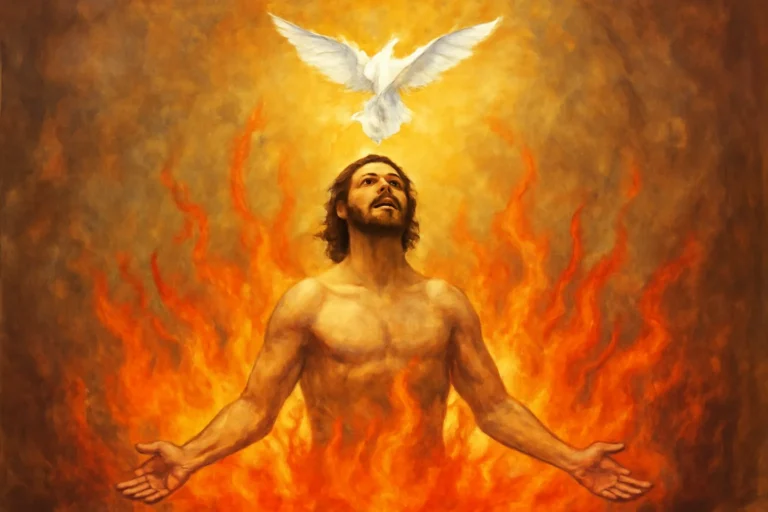
The phrase Baptized by the Holy Spirit and fire has captivated Christians for generations. It sits at the intersection of God’s empowering presence, personal renewal, and missionary zeal. This article seeks to explain what the expression means, how it is seen across Scripture, and what it might mean for a person’s faith today. Whether you…
Baptism Importance: Why This Sacrament Matters Baptism is one of the oldest and most widely observed practices in the Christian faith. Across traditions, it has been celebrated for centuries as a defining moment in a person’s journey of faith. This article explores baptism’s significance from multiple angles—from its scriptural roots and theological meanings to its…
What It Means to be Baptized Into Christ The phrase Baptism Into Christ captures a central idea in Christian faith: when a person submits to the rite of baptism, they are entering into a living, personal identification with the life, death, and resurrection of Jesus. This is not merely a ceremonial action; it is a…