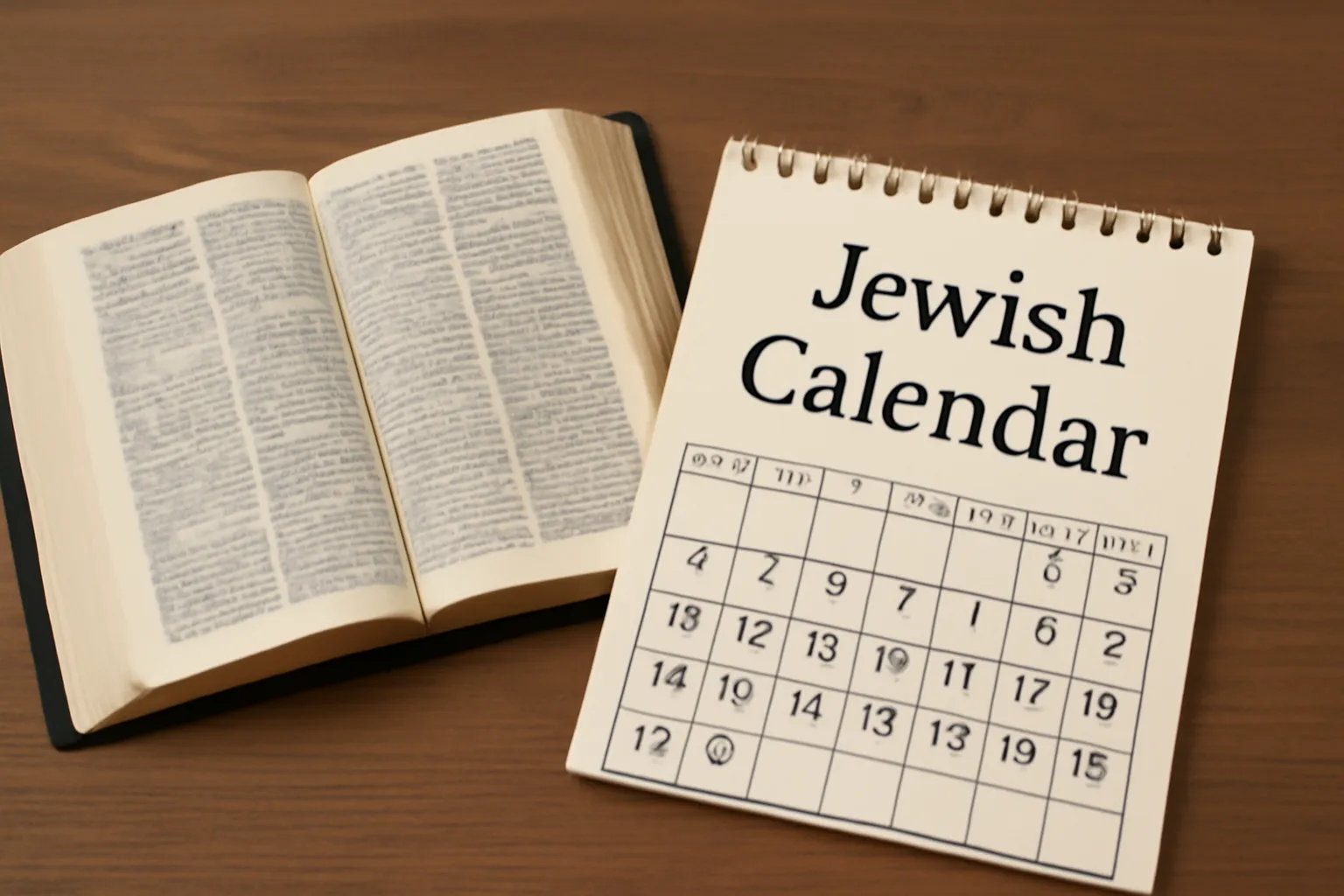
The bible-based calendar or biblical calendar refers to the way people in the ancient Israelite and Judahite communities tracked time for daily life, agricultural rhythms, and sacred observances. This bible calendar or Hebrew calendar has deep roots in lunar cycles, seasonal needs, and religious pilgrimage timeframes. In its earliest form it was primarily lunar and observational, but over time it evolved into a robust system that blends lunar months with solar-year adjustments—what scholars today often call a lunisolar calendar. The result is a dating system that guided when to sanctify months, celebrate feasts, and mark historical events found in biblical narratives.
In modern conversation, you will encounter several phrases describing the same family of timekeeping: bible calendar, biblical dates, calendar of biblical times, Hebrew calendar, and Jewish calendar. All of these terms point to the same central idea: a rhythm of months anchored to the lunar cycle, with occasional adjustments to keep the year in harmony with the agricultural and religious seasons described in biblical and postbiblical sources.
Historical foundations: how the biblical calendar began and evolved
In the bible calendar, months typically began with the new moon, or with the appearance of the crescent moon observed by witnesses. The biblical record presents a world in which the month is a living unit of time tied to natural phenomena—specifically, the cycle of the moon—and to ritual practice. The days of the week and the days of the month were counted with a horizon of religious festivals and agricultural seasons in view.
A central feature of the biblical approach to timekeeping was the role of authority in declaring a new month. In several periods, communities looked to a governing body—historically the Sanhedrin in Jerusalem—to validate the start of a new month, often after testimony about the witness of the new crescent. The new month was celebrated as Rosh Chodesh, the head of the new moon, and it carried a special religious significance in addition to marking the calendar for the coming weeks.
The biblical calendar also reflected the intimate connection between timekeeping and the agricultural year. The calendar helped to fix when to plant, harvest, and observe sacred feasts. The cycle of months and the times of great festivals—Passover, Weeks, and Tabernacles—are woven into the fabric of biblical history and prophetic expectation. The practical rhythm of time in the biblical world was as much about communal memory as it was about astronomical observation.
Names of months: ancient designs and modern equivalents
The Bible uses a mix of month names and numeric designations. In the early biblical period, months were named in the text with terms such as Aviv, Ziv, Ethanim, and Bul. In later biblical and postbiblical literature, as Aramaic and Babylonian influence grew, the months began to be known by names we still recognize today in the modern Hebrew calendar: Nisan, Iyar, Sivan, Tammuz, Av, Elul, Tishrei, Cheshvan, Kislev, Tevet, Shevat, and in leap years, Adar I and Adar II.
The following list provides a quick bridge between the biblical calendar vocabulary and the modern Hebrew calendar names. It helps readers recognize how biblical references map onto today’s dating practice:
Aviv corresponds roughly to the spring period in the agricultural cycle; in later usage it aligns with Nisan in the civil year.
Ziv is a later biblical month name that sits in the spring period, overlapping with the season of Nisan and Iyar.
Ethanim (and its parallel in the civil calendar) sits near the early autumn—the season of Tishrei in the modern system.
Bul appears among the ancient month names and has a rough association with times close to late winter and early spring in a broader calendar framework.
In the postexilic and rabbinic era, the regular sequence of months in the Hebrew calendar begins with Nisan and proceeds through Iyar, Sivan, Tammuz, Av, Elul, Tishrei, Cheshvan, Kislev, Tevet, Shevat, and, in leap years, Adar I and Adar II.
Intercalation, leap years, and the structure of the biblical year
A crucial aspect of the bible calendar is its lunisolar character. Months are lunations, but to keep the year aligned with the solar cycle and with the agricultural seasons, occasional adjustments were necessary. In the biblical and rabbinic tradition, this adjustment is known as intercalation—the insertion of an extra month when necessary to prevent the months from drifting too far out of season.
In the most ancient and general sense, the biblical year could be 12 or 13 months long depending on whether the agricultural year required a leap month. The precise rules for intercalation are not laid out in the Pentateuch with fixed dates; rather, they emerge from later rabbinic and calendrical traditions and ultimately from a fixed, governed system developed in postbiblical Judaism. The modern Hebrew calendar codifies this structure through the Metonic cycle, a 19-year cycle in which seven of the years contain an extra month (Adar II in leap years) to maintain alignment with the solar year.
The resulting system is a careful blend of lunar and solar computations. The lunar component ensures that months begin with the new moon, while the solar component uses a leap-month adjustment to keep major agricultural festivals like Passover in their proper season. In this way, the bible calendar evolved into a precise lunisolar calendar that could serve both liturgical needs and civil life.
Major biblical dates and the sacred calendar
The calendar described in biblical sources centers on a cycle of sacred seasons and pilgrimage festivals. While the text sometimes names months and sometimes refers to them by number or by ancient names, the practical rhythm remains recognizable: a year punctuated by Passover, Weeks (Shavuot), and Tabernacles (Sukkot), with other fasts and observances marking pivotal moments in the redemptive narrative.
Core biblical feasts and their dates in the biblical calendar
Passover and the Feast of Unleavened Bread: begins on 15 Nisan and continues for seven days (in many biblical translations, the first day is a holy convocation).
Festival of Weeks (Shavuot): celebrated 50 days after the Omer offerings, traditionally counted from 16 Nisan; in the biblical record it is connected to the spring harvest and the giving of the Law at Sinai (Shavuot is tied to counting the Omer, which begins after Passover).
Festival of Booths (Sukkot): begins on 15 Tishrei and lasts for seven days (with an additional day for the first day in certain traditions).
Rosh Chodesh (the new month): observed as a minor festival and a marker for the new lunar month.
Rosh Hashanah (in later rabbinic usage; in the biblical period the autumn new year is reflected in the month’s designation and in agricultural cycles rather than in a fixed civil new year).
In addition to these principal feasts, the biblical calendar includes prophetic and ritual markers tied to particular days, such as fasts or assemblies called in the prophetic books. Understanding these dates in their original context often means recognizing that the months themselves were named or numbered, and the festivals were anchored to those months rather than to unchanging numeric days in a fixed solar year.
How the biblical calendar was observed in practice
Observing the calendar in biblical times required communal coordination and a shared sense of time. The allocation of a new month depended on authoritative confirmation, especially for months that began with a new crescent moon. The process typically involved:
Witnesses who observed the new moon and testified before a council or leadership.
Official declaration: the community accepted the testimony, and the new month was proclaimed.
Rosh Chodesh: the monthly reminder and celebration of the new month, which could carry additional ritual or ceremonial elements depending on local practice.
Preparation for major feasts: once a month was declared, the upcoming festival schedule could be calculated and prepared for by the people.
This practical system required careful timing, communal trust, and a shared calendar memory. It also meant that days were counted using a specific convention: a day begins in the evening and ends at the next evening, a standard that continues to influence the way biblical dating and liturgical timing are interpreted by scholars today.
From biblical and rabbinic practice to the modern Hebrew calendar
The evolution from the bible calendar to the rabbinic calendar and then to the modern Hebrew calendar reflects a shift from a locally authoritative, observational system to a codified, systematic calculation. Key transitions include:
From observation to calculation: The biblical reliance on witnesses and local declarations gave way to rabbinic rules that establish procedures for determining the new month even when witnesses are not available.
From twelve months to a fixed lunisolar model: The leap-month system (Adar II in leap years) keeps the agricultural festivals in their proper seasons.
From local to universal application: The modern calendar is used by Jewish communities around the world and provides a shared framework for liturgy, holidays, and life-cycle events.
The modern Hebrew calendar, with its Metonic cycle and precise rules for when to insert an extra month, ensures that Passover remains in the spring and that the festival days align with agricultural and historical memory across generations. While believers and scholars study the bible calendar for its ancient insights, the contemporary calendar is a practical tool for everyday life, education, and worship in many Jewish communities today.
A practical guide to dating biblical events and biblical dates
For readers who want to engage with bible dates and biblical dates in a practical way, here is a structured approach to interpret the text and, where possible, align it with the modern calendar. This guide treats the calendar as a tool for understanding biblical chronology, not as a precise scientific instrument, since biblical chronology often rests on narrative cues, regnal years, and textual cross-referencing.
Step-by-step approach
Identify the month name in the biblical text. Look for names such as Nisan, Tishrei, or the ancient names (Abib, Ziv, Ethanim, Bul) used in earlier Hebrew Bible passages. If the text uses a numeric designation (the “first month,” “seventh month”), note that as well.
Determine the day within the month as indicated. The biblical day counts (1st day, 2nd day, etc.) are often paired with festival notes (e.g., 15th day for Passover) or ritual convocations.
Correlate with regnal years if the text references a king’s reign (e.g., “in the tenth year of King X”). Use a chronology of the monarchs to approximate a relative date within a historical timeline.
Account for the lunar nature of the month and the possibility of intercalation. Ancient sources do not always supply a fixed rule for pushing months forward; the text often reflects a historical or literary cue rather than a mathematical table.
Cross-check with related biblical events to triangulate a timeframe. Parallel narratives (Kings, Chronicles, Ezra–Nehemiah, and the prophetic writings) can illuminate the likely season or festival corresponding to a date.
Translate into a modern date range with appropriate caveats. Because the biblical calendar was not a fixed civil calendar like today’s, any conversion to a specific Gregorian date is approximate and depends on scholarly interpretation.
Examples to illustrate the method
Passover in the biblical timeline is anchored to 15 Nisan, which is a spring festival. If a passage mentions the day of Passover, you can infer a spring timing in the assumed year, cross-checking with the reign of a king to narrow possibilities.
The wilderness generation’s journey often notes dates tied to months and feasts; when combined with the listing of the journey’s milestones, readers can infer a sequence of months and seasons without needing a precise day-for-day Gregorian conversion.
Prophetic utterances that discuss the “seventh month” or the “tenth day” can be matched with the major fixed observances such as Yom Kippur (the Day of Atonement) on 10 Tishrei, and Sukkot beginning on 15 Tishrei.
Common myths and clarifications about the Bible calendar
Readers often encounter questions about how precisely dates in the Bible map onto modern calendars. A few clarifications help avoid common pitfalls:
The biblical calendar is not a simple 365-day solar year. It is primarily lunar, with months of ~29 or ~30 days. Intercalation ensures festivals stay in their seasons.
Month beginnings are tied to lunar observation in many biblical periods, but rabbinic and later tradition provides systematic means to determine months even without witnesses.
Gregorian dates in biblical events are approximations. Without fixed astronomical data, assigning a precise Gregorian date to a biblical event involves interpretation and scholarly consensus.
The order of months and festival dates is stable enough to identify patterns. Even when a date cannot be pinpointed precisely, the association with Passover, Shavuot, Sukkot, and other feasts remains a reliable anchor for understanding biblical chronology.
Practical resources for studying the Bible calendar
Whether you are a student of biblical studies, a teacher preparing lessons, or a reader exploring the religious calendar described in scriptures, several trusted resources can deepen your understanding of the Bible calendar. Consider both primary and reference works that explore ancient Near Eastern timekeeping, rabbinic calendrics, and the modern Hebrew calendar.
Textual sources: Biblical books that mention months, feasts, and new moon observations (Exodus, Leviticus, Numbers, Deuteronomy; Kings and Chronicles; Esther; Ezra-Nehemiah).
Rabbinic literature: Talmudic discussions on Rosh Chodesh, the calendar rules, and the lunar-solar intercalation logic that led to the fixed calendar.
Chronological studies: Works that reconstruct ancient Israelite and Judahite regnal years to anchor biblical dates within historical timelines.
Calendrical references: Modern scholarly introductions to the Hebrew calendar, including the Metonic cycle and leap-year rules that shape the contemporary system.
Educational aids: Online calculators, interactive charts, and timelines that illustrate the months, feasts, and cycles described in biblical narratives.
embracing the Bible calendar as a living tradition
The topic of the bible calendar connects scripture, history, faith, and daily life. From the lunar beginnings of months to the long arc of feast days that knit a community together, the biblical approach to time offers a window into how ancient people understood their world, ordered their days, and oriented their worship toward God. The evolution to a lunisolar calendar—with its precise rules for leap months and seasonal alignment—demonstrates how a tradition can honor both continuity with the past and the practical needs of a changing community.
Whether you speak in terms of the bible calendar, the biblical calendar, the Hebrew calendar, or the Jewish calendar, the essential point remains: time in biblical and postbiblical Jewish life is a sacred, communal resource. It tells a story of seasons, pilgrimage, and memory that continues to shape how communities observe holidays, study sacred texts, and pass down centuries of tradition.
Rosh Hashanah, the Jewish New Year, invites believers to pause, listen, and turn toward God with reverent longing. Scripture provides a wellspring of reminders about repentance, remembrance, renewal, and hope as the year begins. This article gathers bible scriptures for Rosh Hashanah from across the biblical spectrum, offering top verses for reflection and practical ideas…
Bible Festivals: A Comprehensive Introduction to Biblical Celebrations The Bible speaks of a rhythm of time marked by sacred gatherings, feasts, and commemorations— a calendar that mirrors history, faith, and the ongoing relationship between God and His people. These occasions are often referred to as biblical festivals, divine feasts, or the feasts of Israel. Across…
The study of biblical festivals—often called the feasts of the Lord—offers a window into how ancient Israel understood time, memory, worship, and hope. These sacred occasions were not merely annual calendar events; they gathered communities, oriented daily life around God’s salvation narrative, and created a rhythm of faith that bridged past deliverances with future promises….
Christian Thanksgiving: Meaning, History, and Celebration Across centuries and cultures, Christian thanksgiving has been a shaping force in how communities respond to the gifts of life, faith, and salvation. While the phrase may evoke images of autumn feasts in North America, the broader idea runs far deeper: gratitude to God for creation, redemption, and daily…