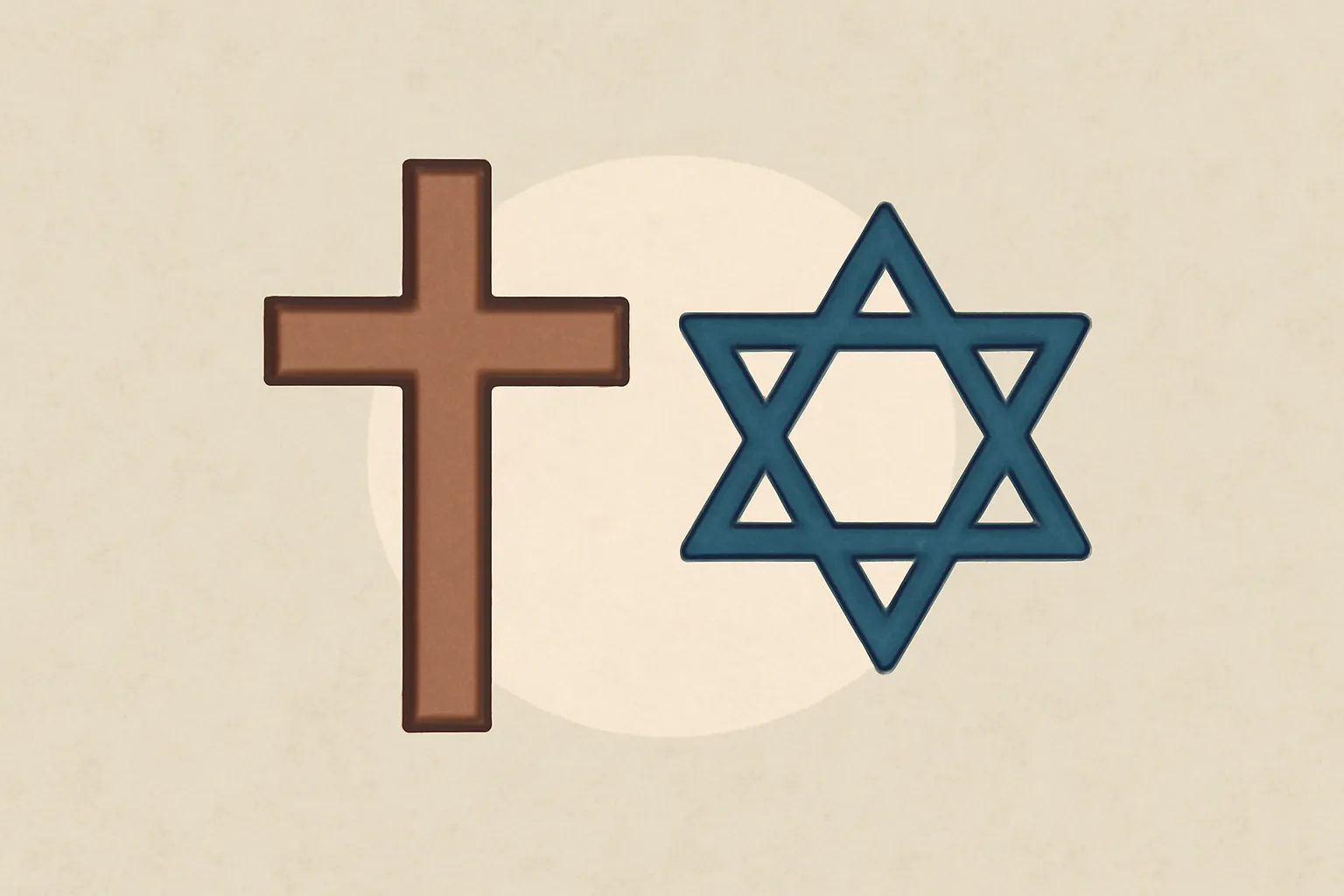
Christianity and Judaism share a long and intricate history, rooted in the same ancient soil and shaped by similar religious intuitions and ethical imperatives. This article explores the shared roots and common ground that bind these two faith traditions, while also acknowledging their distinctive beliefs and trajectories. By examining scripture, law, liturgy, ethics, and historical interaction, we can gain a clearer sense of the theological kinship and the cultural dialogue that have informed both communities across centuries.
One of the most obvious touchpoints between Christianity and Judaism is their engagement with a common scriptural lineage. The texts that Jewish communities hold sacred and Christians regard as foundational overlap in meaningful ways, even as each tradition reads and interprets these texts through different theological lenses.
The Hebrew Bible and the Christian Old Testament
In broad terms, the Hebrew Bible—also known as the Tanakh in Judaism—forms the core of what Christians call the Old Testament. Both traditions affirm the books of the Torah (the Pentateuch), the historical books, the writings (the Writings), and the prophetic books, though the order and emphasis may vary. The Tanakh is organized differently than the Christian canon, yet the content shares many of the same narratives, laws, and wisdom literature.
Genesis, Exodus, Leviticus, Numbers, Deuteronomy (the Torah) lay out creation, patriarchs, liberation from Egypt, and the giving of the Law.
Historical books recount Israel’s monarchy, exile, and return, providing crucial historical context for both traditions.
Prophetic writings offer ethical critique, calls to repentance, and visions of hope, which Christians later see as foreshadowing the life and mission of Jesus.
Wisdom literature (such as Proverbs, Psalms, Job, and Ecclesiastes) contributes to a shared moral and spiritual vocabulary, including themes of justice, faith, and devotion.
Textual echo and interpretive conversation
Beyond textual overlap, there is a deep interpretive conversation between Christian and Jewish readers. Christians often read the Prophets and the Psalms in light of the life and teachings of Jesus, while Jewish interpreters read these same texts within a framework that foregrounds covenant, law, liturgy, and community life. This divergent hermeneutics produces distinctive theological conclusions, yet it also reveals a shared reverence for the same stories and laws that have shaped ethical and religious life for millennia.
Key shared themes in scripture
Creation and covenant as foundational relationships between God and humanity.
Prophetic critique of social injustice, idolatry, and hollow ritual.
Messianic expectation in various forms—some believers emphasize a future messiah, others focus on a messianic figure within the biblical corpus—reflecting a spectrum of eschatological hope.
Ethical monotheism that centers on fidelity to God and love for neighbor.
Theological Convergences: Core Beliefs in Common
Across different eras and communities, Christianity and Judaism converge on several foundational theological intuitions. While the two faiths diverge on key points—most notably around the revelation believed to be realized in Jesus and the interpretation of the Law—there remains a durable bedrock of shared convictions.
Monotheism and divine sovereignty
Both traditions insist on monotheism, the belief in a single, sovereign God who created the world and sustains it. The first of the Ten Commandments, in Judaism, commands the worship of only one God, a principle that Christians affirm in varied formulations but with the same basic claim to singular divine sovereignty.
Covenant as a framework for relationship with God
The notion of a covenant—a sacred agreement between God and humanity that shapes identity and obligation—is central to both faiths. The Abrahamic covenant, repeated throughout Jewish and Christian scriptures, anchors the idea that a people is set apart for God’s purposes. In Christianity, the concept of the new covenant through Christ is interpreted as a fulfillment or extension of these ancient agreements, while Judaism emphasizes the enduring relevance of the Mosaic covenant and the obligation to maintain the covenantal lifestyle in daily life.
Ethical life and the moral law
Both traditions hold that fidelity to God must be reflected in ethical conduct. The Ten Commandments and the broader moral teachings found in the Torah provide a framework for justice, mercy, humility, and righteousness. Christian ethics often highlight the Sermon on the Mount and the ethical teachings of Jesus as a deepening or expansion of these shared principles, whereas Jewish ethics are grounded in the Torah, halakha (Jewish law), and the prophetic call to justice.
Prophetic imagination and hope
The prophetic voice appears in both scriptural worlds as a moral conscience of the community. Prophets in the Hebrew Bible challenge exploitation and idolatry and call people back to justice and covenant loyalty. Christians see the prophetic tradition as pointing toward the coming of Jesus and the inauguration of the kingdom of God, while Judaism interprets prophecy as a continuing call to repentance, ethical living, and fidelity to the covenant.
Covenant, Law, and Practice
The relationship between covenant and law is central to both Christianity and Judaism, though understood and applied differently. This section explores how these two elements have been envisioned in each tradition and how they intersect in daily practice and worship.
Abrahamic covenant and the people of God
In both faiths, the Abrahamic covenant is a foundational narrative: a divine promise to bless Abraham, his descendants, and through them all nations. In Judaism, this covenant is realized through descent, land, and circumcision, and it grounds the communal and ritual life of the people. In Christianity, the same covenant is often read as a precursor to the universal invitation to salvation through faith in Christ, with the Church understood as a new or spiritual Israel in some theological streams.
The Mosaic covenant and the Law
The Mosaic Law—often summarized by the commandments and the legal material in Exodus, Leviticus, Numbers, and Deuteronomy—plays a central role in Jewish life. Christian readers traditionally differentiate between moral, ceremonial, and civil law, and many theologians argue that Christians are not bound to the ceremonial aspects of the Torah as part of salvation, but they often uphold the moral principles embodied in the law, notably the commandments that govern moral behavior.
Ritual continuity and divergence
Both traditions preserve a rhythm of life that includes ritual discipline, prayer, and communal worship. However, Christians largely shifted some ritual emphases away from the old sacrificial system toward the belief that Jesus’ sacrifice fulfilled or replaced certain types of offerings. Judaism maintains the central role of temple service (historically and in some movements practically through the synagogal life) and the ongoing observance of ritual purity and kosher laws, where applicable. This divergence reflects distinct theological horizons while preserving a continuous sense of sacred time and space.
Worship Practices, Prayer, and Liturgy
Worship emerges as a practical expression of the shared faith in God. While the liturgical shapes differ—structured prayers and readings in Judaism, sacraments and creeds in many Christian communities—there are parallel aspirations: to commune with God, to learn, and to live out faith in community.
Prayer and liturgical rhythms
Prayer disciplines in Judaism include set times of daily prayer (like the morning, afternoon, and evening prayers) and communal prayers in synagogues, organized around the liturgical year and the Sabbath.
In Christian churches, prayer life is diverse—liturgy, sacraments, personal devotion, and communal worship. The Lords Supper or Eucharist for many denominations stands as a central act of worship that embodies remembrance, thanksgiving, and union with Christ.
Sabbath and Sunday observance
The Sabbath (Friday evening to Saturday evening) is a cornerstone of Jewish worship—an exclusive day of rest, family, study, and prayer. Christianity, especially in many traditions, emphasizes the first day of the week, Sunday, as a day of worship commemorating the resurrection of Jesus. While the days differ, both practices express a sanctified time set apart for worship, reflection, and community life.
Festivals as interpretive lenses
Festivals offer a portal into shared memory and the shaping of ethical visions. In Judaism, Passover (Pesach), Shavuot, and Sukkot celebrate deliverance, revelation, and gratitude, while in Christian circles, Passover is often linked to Holy Week and the events of Easter. Some Christian theologians and historians describe these overlaps as festal continuity, highlighting how the Easter narrative gains depth against the backdrop of Passover imagery and liberation motifs found in the Hebrew Bible.
Ethics, Social Justice, and the Moral Imagination
Ethical concerns form a crucial intersection between Christianity and Judaism. Both traditions articulate a robust moral vision that speaks into issues of justice, mercy, care for the vulnerable, and communal responsibility.
Love of neighbor and justice
Central to both faiths is a conviction that loving one’s neighbor is inseparable from loving God. The Jewish tradition emphasizes justice as a central command, with prophetic voices calling for equity, protection for the poor, and fair treatment of strangers. Christian ethics often foreground the call to love, forgive, and serve others as visible signs of faith in action, drawing on Jesus’ instructions about compassion and righteousness.
Care for the vulnerable
Both traditions place a premium on defending the marginalized. The Hebrew Bible speaks repeatedly about the vulnerable—the widow, the orphan, the immigrant—and calls the community to advocate for the weak and to pursue justice. Christian ethics has a long history of charity, humanitarian impulse, and social reform, including efforts to address poverty, education, healthcare, and human dignity, all rooted in a shared concern for human flourishing.
Ethical monotheism in daily life
In daily practice, both faiths instruct adherents to align their personal choices with a transcendent standard. This alignment is seen in ethical dietary choices, respect for human life, honest work, and community norms that shape civil conduct. The shared emphasis on living a life shaped by God’s law and wisdom invites thoughtful dialogue about modern ethics, social policy, and interfaith cooperation.
Shared Figures, Prophets, and Legendary Echoes
Some biblical figures occupy important places in both traditions, serving as anchors for memory, faith formation, and moral reflection. While the roles and significance given to these figures may differ, their presence underscores the shared religious imagination that has shaped Judaism and Christianity.
Patriarchs and matriarchs
Names such as Abraham, Sarah, Isaac, and Jacob feature prominently in both scriptures and theological conversations. They are remembered as exemplars of faith, tested by God, and celebrated for their fidelity. In Judaism, these figures are central to identity and covenantal narrative; in Christian thought, they are sometimes read as foreshadowing or prefiguring aspects of Christ’s work and the universal scope of God’s plan.
Moses and the prophetic tradition
Moses stands as a pivotal figure in both streams of faith. In Judaism, Moses is the greatest prophet and the mediator of the Law, whose sinless leadership and reception of the commandments anchor Israel’s religious life. In Christian tradition, Moses is revered as a type of Christ in some writings, illustrating how the Law and the Prophets point toward the fulfillment found in Jesus. The prophetic tradition, from Isaiah to Jeremiah to the later prophets, resonates across both communities as a call to righteousness and fidelity to God’s will.
kings and messianic expectation
David, Solomon, and other monarchs are discussed in both canons, often as symbols of leadership and divine backing. The messianic expectation—though interpreted differently—appears in both traditions. Judaism tends to emphasize a future anointed leader who will restore Israel and establish justice, whereas Christianity interprets Jesus as the fulfillment and culmination of the messianic promises, inaugurating a new era of salvation.
Festivals, Holidays, and Historical Interaction
The shared calendar of memory and festival reflects a deep historical and spiritual dialogue. While the ceremonies and theological meanings diverge in some respects, the two faiths share a sense of time as shaped by revelation, exodus, and renewal.
Passover and Easter: memory and meaning
Passover commemorates the Exodus from Egypt, liberation, and the preserving power of God in Jewish memory. Christians often interpret this event through the lens of Jesus’ passion, death, and resurrection, viewing his last supper as a memorial that connects to the Passover table. This overlap offers a rich field for mutual understanding, where the symbolism of liberation can be read in a way that honors both traditions’ commitments to freedom, justice, and divine mercy.
Other shared or adjacent festivals
Judaism observes festivals like Shavuot (the giving of the Law at Sinai) and Sukkot (the Feast of Booths), each rich with historical memory and agricultural symbolism. Christians celebrate seasons tied to the life of Jesus, such as Advent and Christmas, Holy Week, and Pentecost. Although the theologies differ—messianic expectations, the role of the temple, and the place of ritual sacrifice—these festival practices reveal a shared passion for remembering God’s acts in history and for shaping communal identity through ritual time.
Historical Intersections: Early Encounters and Dialogues
The history of Christianity’s emergence within a Jewish milieu is essential for understanding shared roots and later divergences. Early Christians were Jewish adherents who shared the same sacred texts, religious calendar, and moral framework. As the movement grew and defined distinctive beliefs, interaction with Judaism remained complex—from respectful dialogue to moment of tension and disagreement.
Early church and Jewish context
In the first centuries, the followers of Jesus were largely within the Jewish world. They used the same scriptures, worshiped in synagogues, and observed many Jewish practices. Over time, Christian self-understanding as a distinct faith led to theological differences, such as views about the Messiah, the nature of the divine, and the inclusion of Gentiles. Despite separation, the early Christian movement preserved deep roots in the Jewish Torah, prophets, and wisdom literature.
Paul and the interpretive bridge
Paul the Apostle, himself a Jew, played a decisive role in articulating how Gentile readers could participate in the Christian movement without adopting all Jewish ceremonial laws. His letters, while addressing particular communities, also reflect a Jewish hermeneutic and the broader conversation about how God’s promises extend beyond a single people. This period illustrates how mutual revelation and interpretation can be reframed to address new horizons of faith, while still acknowledging shared origins.
Common Challenges and Misunderstandings
Understanding the shared roots of Christianity and Judaism invites constructive dialogue but also requires careful attention to potential misunderstandings. Misconceptions can center on terminology, beliefs about Scripture, or the nature of salvation and covenant. A careful, historically informed approach helps keep conversations respectful and informative.
Terminology and identity
Terms like Old Testament versus Tanakh, New Covenant versus Shalom with God, or the label Christian versus Jew can cause confusion if not clarified. Readers benefit from recognizing that language evolves across communities and time, and that each tradition uses terms in ways that reflect its own theological commitments and liturgical life.
Understanding Jesus in Jewish and Christian thought
For many Jews, Jesus is not considered the Messiah within the framework of accepted Jewish expectation, while Christians view Jesus as the fulfillment of prophecies and the central figure of salvation. Acknowledging this divergence without denying shared reverence for the Hebrew Bible helps create respectful dialogue. When both sides focus on the historical context, ethical teachings, and the love of God that pervades the texts, meaningful conversation becomes possible.
The risk of reductionism
One risk in discussing christianity judaism similarities is reducing the two faiths to a single monolithic block. In reality, there is a plurality of Christian denominations (Catholic, Orthodox, Protestant, and others) and a spectrum of Jewish denominations (Orthodox, Conservative, Reform, Reconstructionist, and more). Each tradition has its own distinct practices, beliefs, and interpretive methods. Recognizing diversity within each tradition is essential for accurate representation and thoughtful comparison.
The exploration of the shared roots of Christianity and Judaism reveals a historical and theological tapestry rich with common language, shared texts, and parallel ethical commitments. From the Hebrew Bible to the prophetic imagination, from covenantal language to the moral responsibilities toward the vulnerable, these traditions illuminate each other in both memory and practice. They speak to a broader human longing for justice, mercy, and truth—an aspiration that transcends particular boundaries and invites interfaith conversation grounded in respect and curiosity.
In reflecting on the similarities and differences, we can appreciate how both faiths have contributed to the shaping of ethical monotheism, liturgical beauty, and a witness to the divine in the face of human frailty. The goal of this article is not to erase differences but to illuminate the durable connections that remind communities of their shared heritage and their ongoing invitation to learn from each other. By acknowledging the living history of Christianity and Judaism as intertwined yet unique, readers can cultivate a more informed, compassionate, and constructive engagement with both traditions.
For readers seeking deeper engagement, here are a few practical avenues:
Explore scriptural study that compares the Hebrew Bible and the Christian Old Testament side by side, noting where the texts parallel and where they diverge in interpretation.
interfaith dialogues that emphasize listening, shared values, and common ethical commitments.
Read commentaries from Jewish and Christian scholars that address the same passages from different vantage points to appreciate the breadth of interpretation.
Engage in community service projects that embody the shared ethical concerns of both traditions, focusing on justice for the vulnerable and care for the neighbor.
In the end, the journey through the similarities between Christianity and Judaism is a journey into the ways in which people have sought to honor God, organize community, and live out a moral vision in the face of historical change. By approaching these topics with humility, curiosity, and respect, readers can gain a more nuanced understanding of how faith communities understand their past, interpret their present, and imagine their future together.