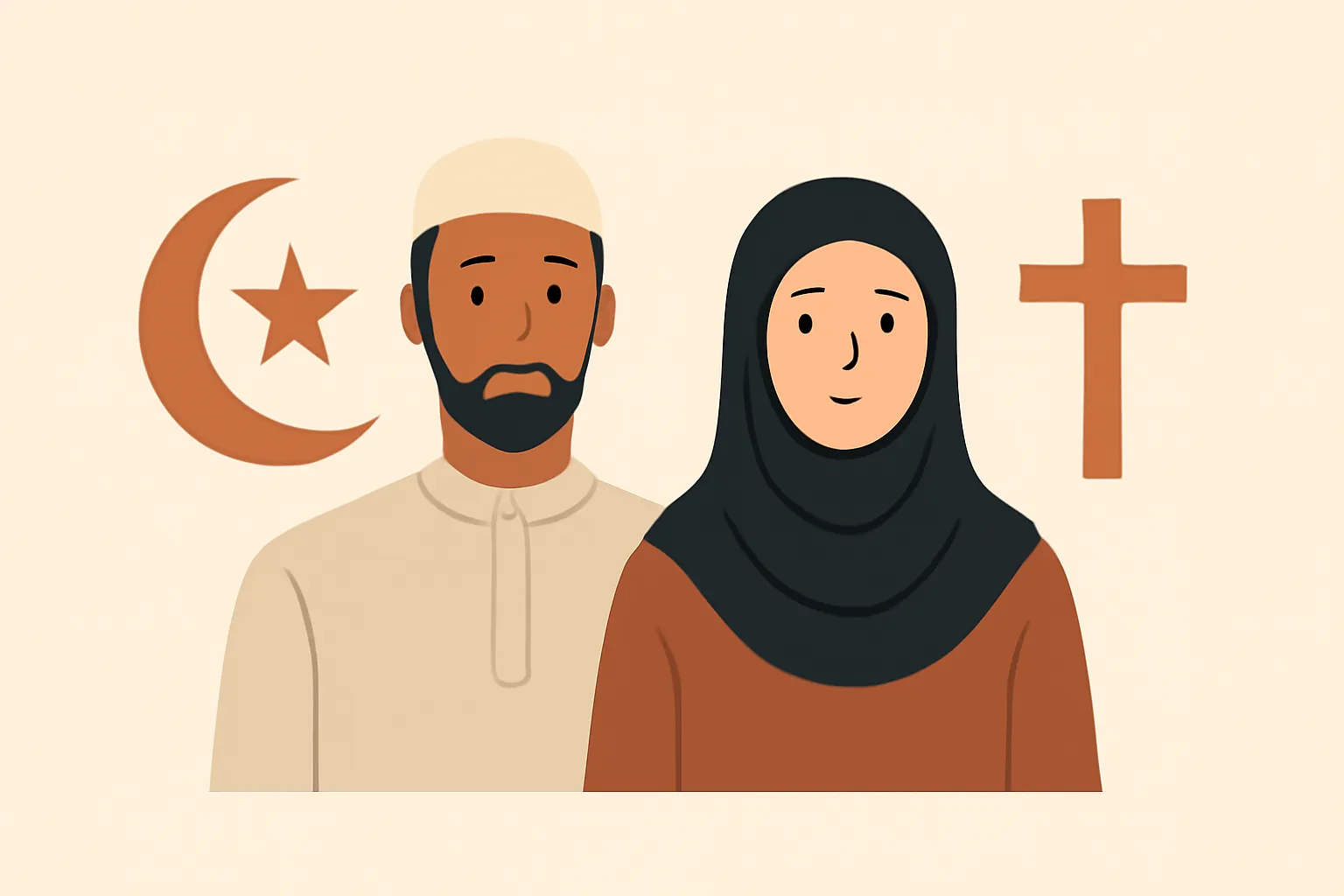
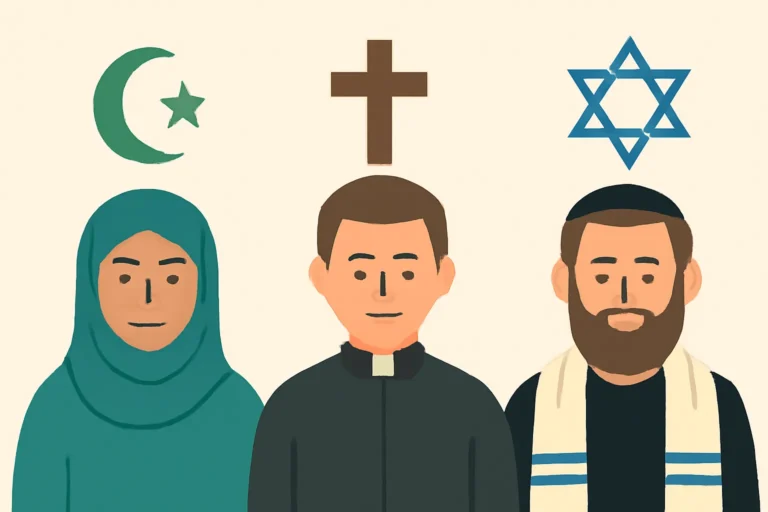
Across continents and centuries, the relationship between Islam and Christianity has shaped civilizations, inspired scholars, and challenged communities to think anew about faith, justice, and shared humanity. This article explores the topic often described as the Muslim–Christian religious landscape, examining core beliefs, historical interactions, and ongoing efforts at interfaith dialogue. By treating this subject as a living conversation rather than a fixed comparison, we can better understand how the two faiths relate within the broader family of Abrahamic religions.
Overview: Muslim–Christian Relations in History and Today
The phrase Muslim–Christian religion can refer to the mutual influences between Islam and Christianity, as well as to contemporary efforts to live together peacefully in diverse societies. In this narrative, the emphasis is not merely on doctrinal debates but on shared commitments to ethical living, charitable work, and the search for truth across traditions. Variations of the term—such as Islamic–Christian dialogue, Muslim-Christian relations, or the Muslim and Christian traditions—highlight different angles: theological discourse, social interaction, and historical analysis. Throughout this article, you will see multiple expressions used to convey the same broad topic, each adding semantic nuance while respecting the core idea of mutual engagement.
Foundations: Core Beliefs in the Muslim–Christian World
While Islam and Christianity are distinct faith traditions with their own theologies, there are important areas of overlap as well as clear differences. Understanding these foundations helps illuminate both moments of tension and occasions for common ground.
Theological Common Ground
Monotheism as a central creed: both faiths affirm that there is one God who is creator, sustainer, and judge. In Islam, this is expressed in the declaration of the oneness of God, or tawhid. In Christianity, while the doctrine of the Trinity distinguishes itself, the belief in one God remains foundational for most denominations and traditions.
Belief in Prophets and revelation: both traditions recognize a line of guiding figures through whom God communicates with humanity. Muslims honor prophets such as Adam, Nuh (Noah), Ibrahim (Abraham), Musa (Moses), and Isa (Jesus) among others, and Christians emphasize the prophetic and apostolic witness of figures like Jesus (whom they regard as the incarnate Word of God) and the apostolic witnesses who recorded the Gospel message.
The status of scripture and revelation: both traditions preserve sacred writings that guide belief and practice. Islam regards the Qur’an as the final revelation, purified from error, while Christianity centers on the Bible, comprising the Old and New Testaments, interpreted through communities and traditions.
Ethical imperatives and social ethics: both faiths call adherents to acts of worship, charity, justice, mercy, and care for the weak. Discipline, fasting, almsgiving, and charitable service are expressed in different liturgical and communal forms but share a common concern for human dignity and social harmony.
Theological Differences That Shape Identity
The Trinity versus Tawhid: Christians often understand God as Father, Son, and Holy Spirit in a unity of three persons; Muslims affirm the oneness of God in absolute terms and reject any division of God’s essence. This difference has deep implications for Christology, the nature of Jesus, and how salvation is understood in each faith.
The Person of Jesus: In Christianity, Jesus is typically seen as the incarnate Son of God whose life, death, and resurrection redeem humanity. In Islam, Jesus (Isa) is revered as a mighty prophet, born of the Virgin Mary, who preached God’s message but is not divine. The concept of incarnation is thus treated very differently, shaping worship, prayer, and piety.
soteriology and salvation: Christians emphasize faith in Christ’s atoning work as the path to reconciliation with God, whereas Muslims emphasize submission to God’s will, righteous deeds, repentance, and divine mercy. These distinct soteriologies influence how adherents understand grace, judgment, and the afterlife.
• and practice: Islam includes detailed practices in daily life (the Five Pillars, ritual purity, Friday prayer) guided by Sharia. Christianity encompasses a wide spectrum of traditions—from liturgical churches to evangelical communities—where moral law, grace, and freedom in Christ shape behavior in varied ways.
Despite these differences, the two faiths share a rich store of common language and imagery—such as reverence for monotheism, prophecy, and a commitment to ethical living—that can serve as a foundation for respectful discussion and collaboration.
Historical Interactions: From Early Encounters to Contemporary Encounters
The history of Muslim–Christian relations spans deserts, empires, ports, and cities. It includes moments of tension as well as periods of intense cultural exchange and mutual learning. A full historical account would fill many volumes, but several turning points illustrate how the two faiths have influenced each other and the cultures in which they have coexisted.
Early Encounters and Theological Exchanges
In the medieval era, Muslims and Christians often interacted through scholars, philosophers, traders, and diplomats who mediated learning across the Mediterranean and beyond. Translations of Greek philosophical works into Arabic and subsequently into Latin helped transmit ideas about logic, science, and ethics that both communities later integrated.
Cities such as Cordoba, Baghdad, Damascus, and Jerusalem became centers where scholars from different faith backgrounds met, debated, and contributed to a shared intellectual culture. While theological disagreements persisted, these exchanges produced translations, commentaries, and new ways of asking questions about God, revelation, and human destiny.
The figure of Jesus (Isa) is treated with respect in both traditions, though understood differently. Muslim scholars often discuss his miracles, his role as a prophet, and his birth to the Virgin Mary as a sign of God’s power, while Christian theologians engage with Christ’s identity and salvific work as central to faith. These conversations show the potential for dialogue even when doctrinal conclusions diverge.
Colonial and Modern Eras
With the spread of European empires, contact between Christian and Muslim communities intensified in new geopolitical contexts. This period saw both conflict and colonial-era exchange, but also the seeds of modern interfaith dialogue as leaders recognized the need to address cohabitation, education, and governance that included diverse religious communities.
In the 20th and 21st centuries, global migrations and urbanization brought Christians and Muslims into closer contact within plural societies. The emergence of interfaith movements and formal dialogues began to address questions of religious freedom, minority rights, and shared responsibility for the common good.
Landmark initiatives, such as the Common Word proposal in 2007—an open invitation from Muslim scholars to Christian leaders to focus on shared values of love of God and love of neighbor—illustrate a turning point toward cooperative engagement and public articulation of mutual respect.
Key Doctrinal Points: Overlaps, Tensions, and Shared Ethical Visions
In studying the Muslim–Christian religious relationship, it is helpful to map out areas of overlap and divergence so that discussions can be productive, charitable, and intellectually honest. The following points offer a structured lens for understanding both the convergence and the divergence between Islam and Christianity.
Scripture and revelation: Both traditions hold sacred texts that shape belief and practice. The Muslims’ regard for the Qur’an as the final and complete revelation is complemented by Christian reverence for the Bible as the inspired word of God. In practice, believers read these texts within communities, liturgies, and interpretive traditions that give voice to their convictions.
Prophethood and messengers: The reverence for prophets is a shared feature, though Muslims place particular emphasis on Muhammad as the seal of prophets who brings the final revelation, while Christians highlight the unique salvific role of Jesus as the incarnate Word and Savior, understood in the light of faith communities’ doctrines.
Jesus and Mary: Muslims honor Jesus (Isa) as a significant prophetic figure and Mary as a model of virtue. Christians honor Jesus as the Son of God and Savior, with Mary as his mother in a central devotional posture. The respectful engagement with these figures can serve as a shared point of reverence even amid doctrinal differences.
Ethics and social justice: Across traditions, there is a strong emphasis on compassion, care for the poor, hospitality to strangers, protection of life, and pursuit of justice. These shared ethical commitments often become practical grounds for collaboration in charitable work, education, and community service.
Salvation and divine mercy: The pathways to salvation are articulated differently, yet both faiths emphasize the mercy of God, the need for repentance, and the pursuit of a righteous life. Dialogues frequently focus on how to express mercy in action and how communities can support vulnerable people in society.
These doctrinal points do not erase differences, but they can illuminate how Muslims and Christians can engage in constructive conversations that honor both conviction and conscience. The aim is not to homogenize faiths but to build trust, mutual respect, and shared service to humanity.
Interfaith Dialogue: Models, Milestones, and Practical Pathways
Interfaith dialogue between Muslims and Christians has taken many forms—from academic dialogues and theological seminars to grassroots community projects and public diplomacy. Several models have proven fruitful in various contexts, highlighting how Muslim–Christian collaboration can address contemporary issues such as peacebuilding, education, and religious freedom.
Dialogue Models
Theological dialogues: These sessions bring scholars, clergy, and theologians together to examine doctrinal points, historical interactions, and hermeneutic methods for interpreting sacred texts. The goal is mutual understanding, not doctrinal concession, and the conversations often yield new insights into both traditions.
Pastoral and community dialogues: Local clergy, imams, and lay leaders meet to discuss everyday life—marriage, education, family, and social welfare—seeking common solutions that honor each tradition’s values while serving the broader community.
Public and civic dialogue: In plural societies, Christian and Muslim communities collaborate on public policy issues, humanitarian relief, and social cohesion initiatives. These efforts frequently involve interfaith councils, civil society organizations, and governmental partners.
Educational exchanges: Students, teachers, and researchers participate in programs that promote mutual literacy about each tradition, often including joint lectures, study tours, and collaborative research projects that address history, theology, and ethics.
Notable Initiatives and Milestones
Common Word (2007): Initiated by Muslim scholars and leaders to articulate two central commandments—“Love of God” and “Love of Neighbor”—as common ground with Christians and to promote peace, coexistence, and mutual respect.
Interfaith coalitions: Numerous interfaith coalitions, including those formed around refugee protections, education access, and anti-discrimination, demonstrate how Muslim and Christian communities can work together on shared values without compromising core beliefs.
Religious freedom advocacy: Both communities have engaged in advocacy for religious freedom, minority protections, and the right to worship in safety and dignity, recognizing that the ability to practice faith openly is essential for healthy plural societies.
These initiatives show that interfaith dialogue can be practical, hopeful, and action-oriented, capable of addressing real-world concerns while deepening theological understanding.
Contemporary Realities: Muslims and Christians in Society
In today’s world, the interplay between the Muslim and Christian communities occurs in a variety of social environments, from majority-Christian contexts to majority-Muslim settings, and in secular societies where faith communities negotiate space and voice. Several themes recur across different geographies and cultures:
Pluralism and civil society: In diverse societies, the presence of both communities prompts policy discussions about religious liberty, education, and public life. This requires clear norms that protect freedom of conscience while fostering respectful coexistence.
Migration and diaspora: Diaspora communities bring new dimensions to Muslim–Christian relations, creating opportunities for cross-cultural dialogue, shared charitable work, and the creation of interfaith networks that cross national boundaries.
Education and youth: Schools, universities, and youth programs can serve as bridges for cross-faith understanding, offering curricula and activities that emphasize critical thinking, empathy, and civic responsibility.
Media and cultural exchange: Media, literature, and the arts provide platforms for mutual storytelling and the construction of shared narratives that counter stereotypes and promote recognition of common humanity.
Conflict and reconciliation: In places where religious identity intersects with political conflict, dialogue becomes a tool of peacebuilding, offering spaces to address grievances, prevent escalation, and rebuild trust among communities.
Across these contexts, the phrase Muslim–Christian relations captures a broad spectrum of dynamics—from cooperation to disagreement—while consistently underscoring the value of treating one’s neighbor with dignity and seeking the common good.
Practical Guide: How to Engage in Meaningful Interfaith Dialogue
For individuals, communities, or institutions seeking to foster interfaith dialogue between Muslims and Christians, here are practical steps that have proven effective in various settings. These guidelines emphasize respect, honesty, and shared service to others.
Listen first: Begin by listening to one another’s stories, questions, and concerns. Listening builds trust, reduces misperceptions, and reveals the values that both faiths hold in common.
Be accurate and fair: Strive to understand the beliefs and practices of the other tradition accurately, avoiding caricatures. When unsure, ask respectful questions and consult credible sources.
Find shared values: Identify ethical commitments that both communities affirm—such as justice, mercy, care for the vulnerable, and the dignity of every person—and build programs around these shared commitments.
Focus on lived faith: Dialogue should consider how beliefs shape daily life—in worship, family life, work, and civic engagement—so that conversations remain grounded in reality rather than abstractions.
Encourage humility and honesty: Acknowledge areas of genuine disagreement while remaining open to learning. Dialogue is not about “winning” debates but about growing together in understanding and compassion.
Engage in collaborative action: Move from conversations to concrete projects—food drives, refugee support, scholarships, or community service—that demonstrate the faiths’ commitment to justice and service.
Respect freedoms and boundaries: Recognize different congregational practices, prayer styles, and theological emphases. Respect for diversity within each tradition is essential for healthy dialogue.
Provide education for younger generations: Create programs that teach history, theology, and ethics in an age-appropriate manner, helping youths form informed, compassionate perspectives.
In addition to personal engagement, institutions can foster environments that support dialogue by offering training in intercultural communication, hosting public seminars, and funding joint peace-building initiatives. The broader aim is to cultivate a culture of trust, coexistence, and mutual enrichment—reflecting the best aspirations of both Islamic and Christian communities.
Toward a Shared Future in the Muslim–Christian Religious Landscape
The relationship between Islam and Christianity is neither monolithic nor static. It is a dynamic field marked by moments of tension, enduring friendship, scholarly insight, and practical cooperation. The terminology used to describe this field—whether Muslim–Christian relations, Islam–Christian dialogue, or the Christian–Muslim encounter—signals a shared interest in understanding one another more deeply and acting together for the common good. By embracing a multifaceted view that honors differences while celebrating common ground, communities can build a future in which the Muslim–Christian religious conversation remains a force for peace, learning, and justice.
In this broader arc, the interfaith landscape between Islam and Christianity continues to evolve. As scholars, clergy, laypeople, and policymakers engage with one another—through study, worship, service, and public discourse—they participate in a shared project: to embody the best of their traditions while demonstrating compassion for others. The journey is ongoing, the path is challenging, and the rewards—mutual understanding, societal harmony, and renewed faith—remain deeply meaningful for people of faith around the world.
Muslim Christian Jew is a phrase that signals more than a simple listing of faith communities. It points to a shared human project: to understand one another, to seek truth with integrity, and to work toward a just and peaceful coexistence. In this article, we embark on a journey through the worlds of Islam, Christianity,…