The study of biblical festivals—often called the feasts of the Lord—offers a window into how ancient Israel understood time, memory, worship, and hope. These sacred occasions were not merely annual calendar events; they gathered communities, oriented daily life around God’s salvation narrative, and created a rhythm of faith that bridged past deliverances with future promises. In this article, we explore the origins of these divine feasts, walk through the canonical list that makes up the biblical calendar, and examine their significance for both ancient worship and contemporary interpretation. We will use several terms to describe these celebrations, including biblical feasts, bible feast, festivals, and festival days, to reflect the linguistic variety in the tradition while highlighting their shared purpose: to worship God, to remember, and to anticipate what God has done and will do.
The origin story of the divine feasts is rooted in the Mosaic covenant and the wilderness experience of the Israelites. In the books of Exodus, Leviticus, and Deuteronomy, God commands a calendar of sacred times that frame the agricultural year, the pilgrimage identity of the people, and the central worship life centered in the tabernacle (and later the temple). The feasts are not simply cultural festivities; they are ordinances given by God to shape memory, obedience, and communal identity. The phrase “Leviticus 23” often functions as a shorthand for the authoritative list of holy convocations and feast days that structure the year for Israel.
The agricultural and historical context. These festival days arise from agrarian rhythms—planting, harvest, and the cycles that made divine provision tangible in daily life. The signs of harvest, seasons, and sacrificial offerings were integrated with worship so that the land itself becomes a teacher of faith. The biblical authors consistently present the feasts as opportunities to recall God’s past acts of salvation while recognizing God’s present provision and future hope.
The pedagogy of memory. The feasts function as teachers of memory. They instruct generations to retell the central acts of redemption: liberation from slavery, the giving of the law, the gifting of the Spirit, and the promise of a future dwelling with God. Each festival becomes a narrative signpost pointing to a larger story in which God acts decisively for his people.
The symbolism of worship. Beyond the historical events they commemorate, the festivals carry symbolic meanings—blood and lamb, bread without leaven, water drawn from the rock, booths made of branches, and the presence of God among the people. These symbols connect ritual practice with ethical formation, reminding the worshiper that faith is lived in community, not in isolation.
As the biblical text unfolds, the feasts take on a theological shape that traces a movement from deliverance and covenant to expectation and fulfillment. In the Hebrew Bible, the festivals are presented as concrete, concrete acts of devotion that God expects his people to observe. In Christian interpretation, many of these same feasts are seen as types or foreshadowings—points of contact where New Testament revelation casts light on Old Testament practices. This dynamic—origins meeting fulfillment—is central to understanding the biblical feast days in both their ancient setting and their enduring significance.
The seven biblical feasts: a calendar of sacred time
The corpus of biblical feasts in Leviticus 23 and related passages presents a structured sequence that falls into two broad seasons: the spring or early calendar feasts and the fall or late calendar feasts. In many traditions, these are grouped as the spring (or early) feasts and the fall (or late) feasts. The following sections describe each feast, its biblical basis, typical observances, and its significance within the larger narrative of salvation history.
Passover (Pesach)
Passover is the foundational festival that inaugurates the biblical festival calendar. In the Exodus narrative, God commands the slaying of a lamb and the marking of doorposts with blood so that the destroyer will “pass over” the homes of the Israelites (Exodus 12). This dramatic act of salvation—deliverance from slavery in Egypt—begins the annual cycle of remembrance. In biblical terms, Passover is both a historical commemoration and a present act of worship, inviting each generation to testify to God’s saving power.
Ritual focus. The central rite is the Seder meal in later Jewish practice, but the original act centers on the household remembrance of the Passover sacrifice and the meal that marks deliverance.
Theological significance. Passover highlights the theme of redemption, the fragile humanity of Israel, and God’s faithfulness to his promises. It also serves as a pattern for future redemptive hopes, including Christian readings that see the Passover lamb as a foreshadowing of Jesus as the Lamb of God.
Months and timing. Passover falls on the 14th day of the first month (Nisan or Aviv) in the Jewish calendar, followed by the festival of Unleavened Bread. The timing ties worship to the agricultural and ceremonial year.
Unleavened Bread is closely linked to Passover and immediately follows it for seven days. The biblical text emphasizes removing leaven from the homes as a sign of cleanliness, obedience, and spiritual purification. The phrase “unleavened bread” signals both a dietary practice and a deeper moral exhortation to purity and readiness for God’s presence.
Ritual emphasis. The seven-day period includes holy convocations on the first and last days, during which no ordinary work is performed. Leavened products are set aside as a symbolic reminder of haste in leaving Egypt and of purity before God.
Symbolic meanings. Unleavened bread symbolizes purity, haste in obedience, and the people’s reliance on God rather than on fermented or preserved sustenance. In Christian interpretation, it is often connected to Jesus’ sinlessness and the early church’s emphasis on purity in the era of the new covenant.
Firstfruits (Yom HaBikkurim)
Firstfruits marks the initial harvest and acts as a pledge of the full harvest to come. Originally tied to the barley harvest in the spring, this festival is a declaration that God has provided a bountiful crop and a call to acknowledge him as the Giver of life.
Ritual sign. A sheaf from the first ripe barley is waved before the Lord, signaling gratitude and dependence on God’s ongoing provision.
Theological resonance. In biblical theology, firstfruits anticipates the fullness of God’s harvest and foreshadows the idea that all blessings belong to God. In Christian readings, Firstfruits is often connected to Christ’s resurrection as the firstfruits of those who sleep (1 Corinthians 15:20).
Weeks (Shavuot, Pentecost)
Weeks—also known as Pentecost in later tradition—occurs 50 days after Firstfruits and celebrates the end of the grain harvest. It is a festival of completion, covenant revelation, and gratitude for the abundance God provides.
Rituals. The festival includes offerings of the first fruits of the wheat harvest and, in many traditions, special readings and prayers recognizing God’s giving of the Torah at Sinai.
Symbolic significance. Shavuot emphasizes God’s law, revelation, and communal identity as a people bound to him by a covenant. In Christian interpretation, Pentecost is often linked to the outpouring of the Holy Spirit (Acts 2), a significant bridge between the old covenant and the new.
Trumpets (Yom Teruah)
Trumpets announces the beginning of the seventh month and carries themes of awakening, judgment, and divine sovereignty. The sound of the shofar becomes a sonic marker that calls the community to prepare for a season of reflection, repentance, and renewal.
Ritual and practice. It is observed with special assemblies and the blowing of trumpets or shofars, serving as a wake-up call to righteousness and worship.
Spiritual import. The festival invites believers to reflect on their relationship with God, their moral commitments, and the upcoming Day of Atonement. In Christian settings, the imagery of trumpets often echoes the anticipation of Christ’s return and the final judgment in the eschatological narrative.
Day of Atonement (Yom Kippur)
Day of Atonement is the most solemn day of the Jewish year. It centers on confession, fasting, repentance, and reconciliation with God and with one’s neighbor. It is the culmination of the season of repentance that begins with the month of Elul in other traditions.
Ritual focus. The day features fasting, abstention from work, and special liturgical prayers seeking forgiveness for sins (Leviticus 16; 23:26-32).
Significance. Atonement emphasizes forgiveness, purification, and the restoration of right relationship with God. In Christian theology, the Day of Atonement is often discussed in light of Jesus’ atoning work, interpreted as fulfillment of the sacrificial system.
Tabernacles (Sukkot)
Tabernacles, also called Booths or Tents, commemorates God’s provision during the wilderness generations and symbolizes God’s presence with the people as they dwell in temporary shelters in gratitude and trust.
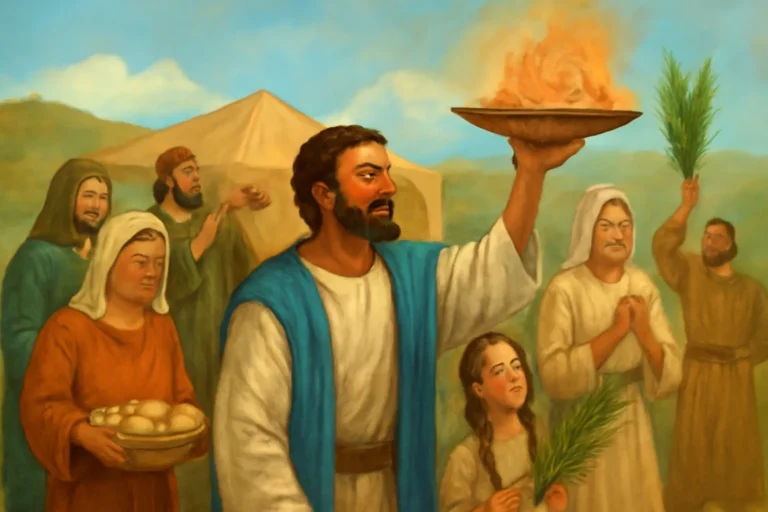
Rituals and symbols. The festival involves dwelling in booths made of branches, waving of palm, willow, and myrtle, and ceremonies of thanksgiving for the agricultural harvest and God’s faithfulness.
Theological themes. Sukkot emphasizes God’s dwelling with humanity and his continued care during life’s journey. In Christian thought, the festival can be read as a prefiguration of the Incarnation and God’s ultimate presence with humanity in Jesus and, in eschatological outlooks, in the new creation.
In later tradition, an additional day, Shemini Atzeret, follows Tabernacles, sometimes considered the «eighth day» festival. While not always counted among the core seven, this day functions as a distinct observance: a time to pray for rain in agrarian communities and to reflect on God’s ongoing relationship with his people. In various communities, it is paired with Simchat Torah, celebrating the completion and restart of the annual Torah reading cycle.
Ritual focus. Special prayers, blessings, and Torah readings mark the day; in some streams, it serves as a bridge between Tabernacles and the regular cycle of worship.
Connection to the broader calendar. Shemini Atzeret reinforces the sense that God sustains the covenant people in every season and that time itself is sacred when properly oriented toward God.
Significance and themes across the biblical feast cycle
The seven (or eight, in some traditions) sacred times form a coherent whole. Taken together, these offerings emphasize several enduring themes that recur throughout biblical theology:
Redemption and deliverance. Passover begins the annual calendar by recalling liberation from oppression and the power of God to rescue his people.
Holiness and purity. The Unleavened Bread and Firstfruits seasons call for personal and communal purity, ready obedience, and gratitude for life as a gift from God.
Revelation and covenant. The Weeks festival highlights the moment of divine revelation at Sinai, where God’s law is given and the covenant established.
Wakefulness and repentance. Trumpets and the Day of Atonement invite the people to examine their lives, seek forgiveness, and prepare for divine judgment and mercy.
Provision and presence. Tabernacles culminates in the memory of God’s presence among the people while they live in tents, acknowledging his faithful provision in the wilderness and beyond.
Hope and fulfillment. The festival calendar as a whole points forward to a future fullness—the ultimate redemption, the transformation of creation, and the dwelling of God with his people in a renewed order of things.
Rituals, symbolism, and the agricultural backdrop
Every biblical feast is saturated with rituals that encode theological truth. Some of these practices are explicitly linked to the land and its cycles, while others express the covenantal relationship between God and the community. Some salient aspects include:
Sacrificial offerings. The feasts often include parts of animal sacrifices, grain offerings, and libations, as acts of worship that acknowledge God’s sovereignty over life and land.
Sacred seasons and convocations. The first and last days of certain festivals are declared holy convocations—times set apart for communal assembly and worship.
Dietary and purity practices. Leaven is purged, bread is prepared under specific rules, and certain foods are abstained from at particular times to symbolize moral and spiritual purification.
Symbols of trust. The tents of Sukkot, for example, symbolize dependence on God’s protection and provision during a nomadic stage of the people’s history, inviting believers to trust in divine care rather than human security.
The agricultural setting is inseparable from the religious meaning of these feasts. They teach gratitude for crops, rain, and seasonal fertility, while also reinforcing the idea that all sustenance comes from God. When the festivals are observed, the whole community participates in a visible, shared confession: God provides, and humans respond with worship, obedience, and generosity toward neighbors. This combination of memory, ritual, and social living is a hallmark of the biblical feast tradition.
From the Old Covenant to the New Covenant: Jesus and the festivals
In Christian interpretation, the biblical feasts acquire a new dimension as they are read through the life and works of Jesus and the testimony of the apostles. Several interpretive lines emerge:
Fulfillment motifs. Many Christian readers view the feasts as types or shadows of the greater revelation fulfilled in Christ. For example, the Passover lamb is read as a prefiguration of Jesus’ sacrificial death, the Lamb of God who takes away the sin of the world (John 1:29; 1 Corinthians 5:7).
Resurrection and the firstfruits. Jesus’ resurrection is often connected to the Firstfruits festival, understood as the first-fruit of those who will be resurrected (1 Corinthians 15:20).
Birth of the Spirit and Pentecost. The outpouring of the Holy Spirit on the followers of Jesus at Pentecost (Acts 2) is closely associated with the Weeks festival, seen as the harvest of God’s redemptive plan in the church era.
Continued anticipation. Scriptural witnesses also point toward a future fulfillment in which Christ’s return, judgment, and the establishment of God’s fully renewed creation are consummated in ways that echo the eschatological hopes embedded in the feasts.
Different Christian traditions emphasize various connections between the biblical feast calendar and the life of Jesus and the church. Some see the entire calendar as a cohesive map of salvation history, while others highlight specific feasts that resonated most with the gospel narrative. Regardless of the interpretive emphasis, the linkage between ancient festival practice and New Testament revelation remains a fruitful field for study, reflection, and dialogue about how sacred time shapes faith, worship, and mission.
Modern observance and relevance of biblical feasts
Today, communities around the world observe these festivals in diverse ways. Some Jewish communities maintain a calendar-based practice rooted in continuity with ancient worship. Others—both Jewish and Christian—engage in study, prayer, and family-centered ceremonies that adapt the old patterns to contemporary life. A few themes shape modern observance:
Identity and memory. The biblical feasts provide a shared story that binds families and communities to their history and to each other, reinforcing a sense of belonging to a larger faith tradition.
Education and catechesis. The feasts serve as teaching moments about God’s actions in history, his laws, his covenants, and his promises for the future. They are often used to train younger generations in faith and practice.
Hospitality and social ethics. Pilgrimage, shared meals, and hospitality during festival times emphasize justice, generosity, and care for the vulnerable, consistent with the biblical call to love neighbor as oneself.
Ecumenical and interfaith dialogue. Because the feasts are rooted in biblical history, they can become occasions for collaboration, learning, and mutual respect among Jewish and Christian communities and among people from other faith traditions who value scriptural heritage and moral reflection.
In contemporary Christian practice, the feasts are often explored as biblical typology and as a lens for spiritual formation. Some congregations celebrate these seasons with liturgical readings tied to Leviticus 23, songs that express gratitude for God’s provision, and sermons that connect ancient patterns to Christ-centered faith and everyday life. Others approach the feasts as a historical-theological study, tracing how God’s people have understood time itself as a form of worship and a teacher of virtue.
For readers who want to study, teach, or reflect on the biblical feast days in greater depth, here are some practical avenues:
Study Bibles and commentaries. Look for resources that discuss Leviticus 23 and the related festival passages, with attention to historical context, ritual practices, and theological themes.
Historical and cultural background. Scholarly works on ancient Near Eastern festivals, temple worship, and agrarian life can illuminate why these feasts mattered so deeply in their original setting.
Liturgical resources. For communities that celebrate the feasts, calendars, prayers, and readings can help structure a season of worship that respects tradition while encouraging contemporary meaning.
Ecumenical dialogue. Participating in interfaith or inter-denominational discussions about the feasts can broaden understanding and reveal shared ethical commitments, such as justice, mercy, and generosity.
Whether you encounter the term bible feast in scholarly literature, sermons, or community gatherings, it signals a collection of sacred moments designed to train the heart and mind toward God. Across the centuries, these festival days have served as a pedagogy of faith, teaching not only what happened in ancient times but what God desires for his people in every age: to worship him, to live in community, to pursue justice, and to hope for the fullness of his kingdom.
The biblical feasts present a remarkable synthesis of history, worship, symbol, and future hope. They invite readers to enter into a rhythm where memory anchors identity, ritual shapes virtue, and anticipation motivates faithfulness. The story of the feasts is not merely a chronicle of ancient ceremonies; it is a living invitation to see how time, nature, and God’s saving work intersect in every season of life. From Passover’s redemptive drama to Tabernacles’ dwelling with God, these sacred days reveal a God who acts in history, invites his people into intimate worship, and looks forward to a day when his presence fills all creation. In this sense, the biblical feast calendar remains a profound resource for those who seek to understand how sacred time can cultivate gratitude, obedience, and expectant hope in the present age.
Rosh Hashanah, the Jewish New Year, invites believers to pause, listen, and turn toward God with reverent longing. Scripture provides a wellspring of reminders about repentance, remembrance, renewal, and hope as the year begins. This article gathers bible scriptures for Rosh Hashanah from across the biblical spectrum, offering top verses for reflection and practical ideas…
Christian Thanksgiving: Meaning, History, and Celebration Across centuries and cultures, Christian thanksgiving has been a shaping force in how communities respond to the gifts of life, faith, and salvation. While the phrase may evoke images of autumn feasts in North America, the broader idea runs far deeper: gratitude to God for creation, redemption, and daily…
Overview: What is the Bible Jewish Calendar? The bible-based calendar or biblical calendar refers to the way people in the ancient Israelite and Judahite communities tracked time for daily life, agricultural rhythms, and sacred observances. This bible calendar or Hebrew calendar has deep roots in lunar cycles, seasonal needs, and religious pilgrimage timeframes. In its…
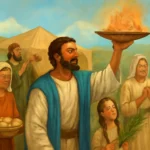
Bible Festivals: A Comprehensive Introduction to Biblical Celebrations The Bible speaks of a rhythm of time marked by sacred gatherings, feasts, and commemorations— a calendar that mirrors history, faith, and the ongoing relationship between God and His people. These occasions are often referred to as biblical festivals, divine feasts, or the feasts of Israel. Across…