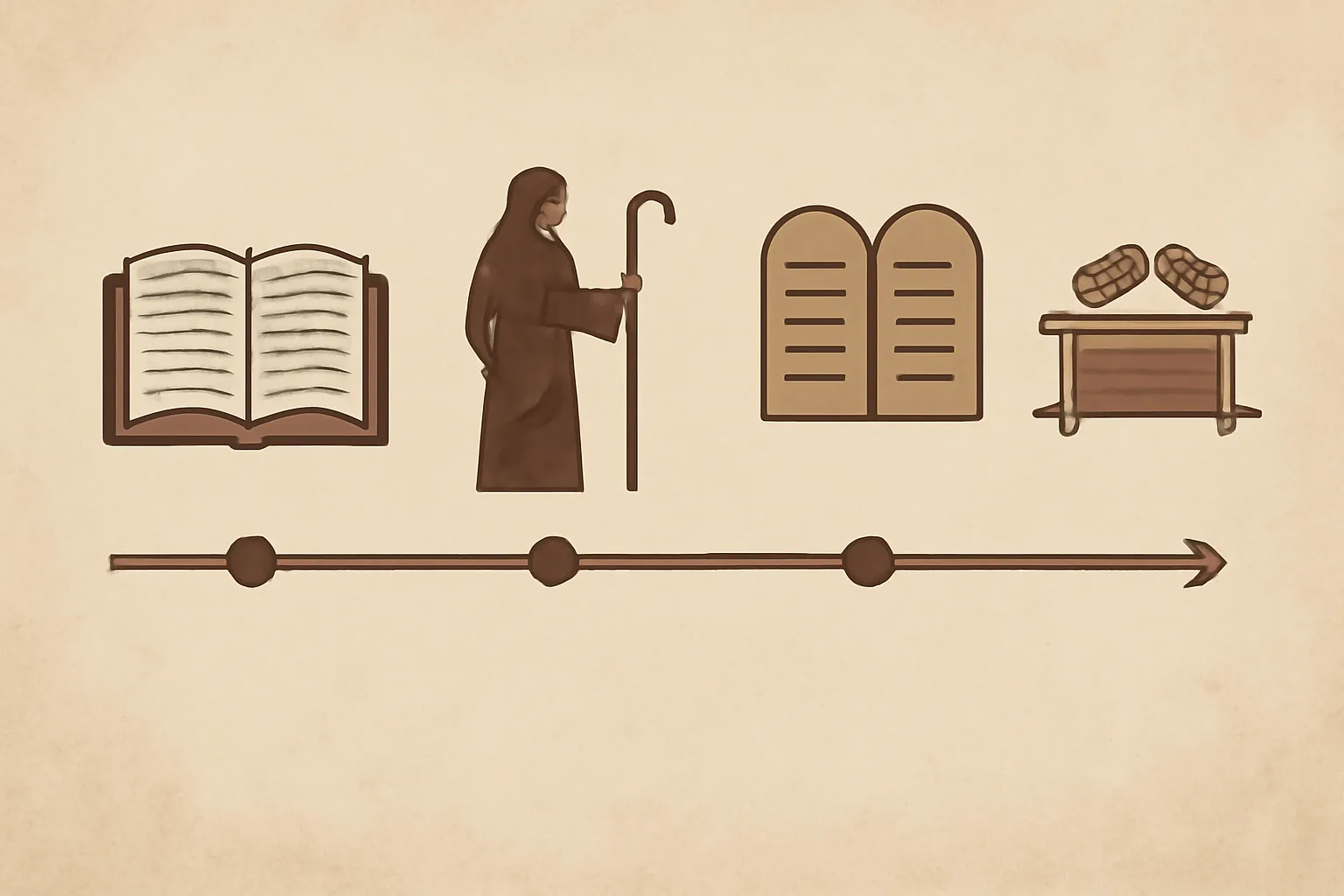
Bible Old Testament Timeline: A Chronology of Key Events
The bible old testament timeline weaves together sacred narrative, historical memory, and theological purpose. This article provides a structured chronology that highlights major turning points, pivotal figures, and the sequence of events that shape the Old Testament. Because ancient dating varies by tradition and scholarly method, the dates offered here are approximate ranges meant to orient readers rather than exact headlines. Throughout, you will encounter variations in how different traditions place events, from creation-era estimates to the post-exilic era. The goal is to present a coherent, reader-friendly timeline that captures the arc of the biblical story.
Timeline at a Glance: A Quick Overview
Creation and Early Humanity — Traditional timelines often look back to the beginning of the world, with rough estimates ranging from about 4,000–2,000 BCE depending on الرواية or interpretation. The narrative sets up humanity’s relationship with God, including the Fall and the early generations.
Patriarchal Era — c. 2,000–1,600 BCE. The stories of Abram/Abraham, Isaac, Jacob, and Joseph establish a growing family that becomes the ancestral line of the Israelite people.
Egypt, Bondage, and the Exodus — c. 1,600–1,250 BCE (dates vary by tradition). The Israelites are enslaved in Egypt, rescued by leadership under Moses, and begin a journey toward nationhood.
Wilderness Trek and Covenant at Sinai — c. 1,250–1,200 BCE (traditional dating). The giving of the Law and the establishment of the covenant mark a foundational moment for Israel’s identity as a people under God.
Conquest and Settlement in Canaan — late 13th–11th centuries BCE. Under leaders like Joshua, the Israelites enter and begin to establish their communities in the land promised to the fathers.
Period of the Judges — c. 1,400–1,050 BCE. A cycle of oppression, repentance, deliverance, and recurring leadership characterizes this era, before the monarchy is established.
United Monarchy — c. 1,050–930 BCE. The people are united under three central kings: Saul, David, and Solomon, culminating in the flourishing of centralized worship in Jerusalem and the construction of the first temple building at the end of Solomon’s reign.
Divided Kingdoms: Israel and Judah — c. 930–586 BCE. After Solomon’s reign, the kingdom splits into the northern Israel and the southern Judah. The era features prophetic voices, foreign pressures, and eventual falls: Israel to Assyria in the 720s BCE and Judah to Babylon in 586 BCE.
Babylonian Exile and Return — 586–516 BCE with continued influence afterward. The exile reshapes Israelite identity; leaders and prophets work to preserve faith and law, and a return begins under Persian sponsorship, eventually rebuilding the temple area.
Second Temple Period and Post-Exilic Prophets — 516 BCE onward into the early centuries BCE. The Second Temple is completed, and prophets such as Haggai, Zechariah, and Malachi help guide religious renewal as the canon gradually takes shape and the Jewish community adapts to life under foreign rule.
From Creation to the Patriarchs
This early stretch is foundational in the biblical narrative, describing humanity’s first relationship with God, the fall into sin, the spread of humanity, and the choices that lead to a particular family line chosen for blessing. While many readers encounter these chapters as sacred history, scholars often treat them as theological literature that explains origins and sets themes for later redemption.
Adam and Eve— The first humans, whose choices shape the human condition and introduce consequences that echo through generations.
Cain and Abel— Sibling antagonism, divine judgment, and the spread of humanity after the Fall.
Noah— The righteous figure who survives the flood and restarts human civilization, establishing a covenant with God after the waters recede.
Abram/Abraham, Isaac, Jacob, and Joseph— The patriarchs whose families become the seedbed of the nation of Israel; the narrative emphasizes faith, covenant, and the testing of trust in God.
Milestones
Tower of Babel and spread of nations, illustrating human diversity and the need for divine guidance.
Abram’s call and the promise of blessing to all nations through his offspring.
Migration to Canaan and the formation of a family lineage that will become a people with a distinct identity.
Egypt, Bondage, and the Exodus
The narrative moves from blessing and promise to bondage and deliverance. The Israelites endure centuries of living in Egypt before a dramatic rescue leads to a new sense of national purpose and covenantal obligation.
Key Figures
Joseph— His rise to power in Egypt explains how the family survives and prospers in a foreign land.
Moses— The central liberator and lawgiver who leads the people out of slavery and toward a covenantal relationship with God.
Aaron— Moses’ brother and a key priestly figure who assists in the formation of the religious system.
Milestones
Bondage in Egypt— The Israelites endure oppression that sets the stage for divine deliverance.
Exodus— The dramatic escape from slavery, often dated to a period roughly in the second millennium BCE; the exact year is debated but the event remains a defining moment in Israelite identity.
Giving of the Law at Sinai— The covenantal framework, including the Ten Commandments and the broader covenant code, becomes the rule of life for the people.
Wilderness Trek and Covenant at Sinai
The Israelites wander in the desert while God shapes them into a people capable of living in a relationship with their Creator. The law, worship practices, and social structure emerge during this period.
Milestones
TABernacle/Tabernacle as the portable sanctuary, where God’s presence dwells among the people.
Giving of the Law on Sinai and the codification of moral, civil, and ceremonial laws that guide communal life.
Periodic rebellions and renewal— The arc of obedience and disobedience shapes the trust relationship between the people and God.
Conquest and Settlement in Canaan
The narrative shifts to the challenge of inhabiting the land promised to the patriarchs. The conquest and subsequent settlement establish the basis for a distinct, land-centered identity as a nation under God.
Key Figures
Joshua— Moses’ successor who leads the conquest campaigns and allocates territory among the tribes.
Caleb— A faithful scout who embodies steadfast trust in the land and its promises.
Milestones
Conquest campaigns across portions of Canaan, establishing footholds for future settlement.
Division of land among the tribes of Israel, setting up the territorial map that shapes political and religious life for generations.
Victory and resistance against some local powers, intertwined with instances of compromise and disobedience to God’s commands.
Period of the Judges
The era of the judges is marked by cycles of sin, oppression, supplication, and deliverance. Local leaders rise and fall as the nation grapples with governance, faithfulness, and ongoing threats from neighboring peoples.
Gideon— A reluctant warrior who, with divine guidance, delivers Israel from oppression.
Deborah— A prophetess and judge who helps lead Israel to victory.
Samson— A warrior whose strength and flaws illustrate the tensions of leadership and fidelity.
Milestones
Federated leadership without a centralized monarchy leads to localized governance under regional judges.
Recurring cycles of apostasy followed by deliverance through divinely chosen leaders.
Transition toward monarchy— The demand for a king rises as tribal system faces external pressures and internal instability.
United Monarchy: Saul, David, and Solomon
The establishment of a centralized monarchy marks a major shift in Israel’s social and religious landscape. This period culminates in a temple-centered form of worship and a strong, centralized political authority.
Key Figures
Saul— The first king who unites the tribes for a time but struggles with obedience and personal challenges.
David— The iconic king who consolidates power, expands territory, and establishes Jerusalem as the political and religious heart of the nation.
Solomon— David’s son whose reign is renowned for wealth, wisdom, and the building of the first temple in Jerusalem.
Milestones
Consolidation of the monarchy and the emergence of a centralized temple cult.
Golden age of culture and worship centered in Jerusalem, with a thriving court and prophetic activity.
Division after Solomon— The united kingdom becomes two: the northern kingdom of Israel and the southern kingdom of Judah.
Divided Kingdoms: Israel and Judah
The split kingdom era is characterized by competing centers of worship, differing political fortunes, and the steady rise of prophetic voices urging fidelity to the covenant. This period ends with dramatic changes in sovereignty and the loss of the northern and southern kingdoms to imperial powers.
Key Events
Israel’s capital shift to Samaria and ongoing conflict with Judah.
Prophetic activity— The messages of Elijah, Elisha, and others call Israel and Judah to repentance and faithfulness.
Assyrian conquest of Israel (c. 722 BCE) and the dispersion of the ten northern tribes.
Babylonian threat to Judah— Jerusalem faces siege, destruction, and exile in 586 BCE.
Milestones
Destruction of the First Temple during the fall of Jerusalem, a watershed event in Jewish history.
Exile to Babylon— A pivotal moment shaping religious practice, community identity, and memory.
Babylonian Exile and Return
The exile forces a redefinition of faith and practice as the people live far from the land. In this period, the writing and collection of sacred texts begin to assume their canonical shape, and the faith community holds onto covenantal promises while living under foreign rule.
Milestones
Destruction and deportation— The temple and Jerusalem are destroyed; lives and leadership are displaced.
Decree of Cyrus (rebuilding policy) and the beginning of return to the land around 539–538 BCE.
Return under leaders like Zerubbabel, Ezra, and Nehemiah— Rebuilding of the altar and the walls, and the restoration of religious order.
Rebuilding of the Second Temple— Completed around 516 BCE, marking a new center for worship and community life.
Second Temple Period and Post-Exilic Prophets
The post-exilic era sees renewed religious focus, the reorganization of worship, and the development of prophetic voices that guide the community through challenges under Persian rule and beyond. This period also hints at the eventual formation of a cohesive Jewish canon as the stories and laws are collected and interpreted for a post-exilic context.
Key Figures
Haggai and Zechariah— Prophets who encourage temple rebuilding and spiritual renewal.
Malachi— A later prophetic voice that addresses covenant fidelity and imminent judgment.
Temple renewal and liturgical reform— The community re-establishes worship, priestly roles, and ritual life around the Second Temple.
Scriptural shaping— The formation and preservation of writings that will become part of the authoritative canon.
Religious life under foreign rule— A sustained encounter with Persian, Hellenistic, and later imperial dynamics that influence Jewish thought and practice.
Notes on Dating and Variation
The dates in this timeline are broad ranges drawn from biblical texts, early historical records, and modern scholarly work. Some traditions place events earlier; others align events with archaeological data that can shift by decades or even centuries as new discoveries emerge. This page aims to reflect a balanced overview that respects the diversity of perspectives while highlighting the core sequence of the biblical story.
How to Use this Timeline
Readers can use this chronology to map passages in the Old Testament to historical periods, thematic arcs, and literary genres. For students and curious readers, consider these practical approaches:
Genre awareness— Recognize the differences between narrative history, poetry, prophecy, law, and wisdom literature, and see how each contributes to the timeline.
Canonical development— Observe how the order of books and the emphasis on certain figures reflect evolving religious priorities.
Prophetic voices— Track how prophets respond to political events, social concerns, and spiritual calls to fidelity.
Temple and covenant— See how the center of worship shapes national identity, ethical conduct, and interfaith relations.
Expanded Reading Path: Suggested Next Steps
For readers who want to dive deeper, here is a structured reading path that follows the timeline while highlighting key themes:
Genesis 1–11 and Genesis 12–50 — Explore creation, the Fall, the Flood, and the patriarchal narratives leading to retying the thread of blessing to Abraham.
Exodus 1–40 and Leviticus–Numbers–Deuteronomy — Examine liberation, covenant, law, tabernacle worship, and wanderings in the wilderness.
Joshua and Judges — See the transition from wilderness to land and the cycles of obedience and disobedience among the tribes.
1 Samuel, 2 Samuel, 1 Kings 1–11 — Follow the rise of the monarchy, the reigns of Saul, David, and Solomon, and the early temple era.
1 Kings 12–22, 2 Kings 17–25 — Understand the division of the kingdom, prophetic admonitions, and the fall of Israel and Judah.
Ezra, Nehemiah, Esther — Engage with the post-exilic return, temple life, and the challenges of rebuilding a community.
Prophetic Books: Isaiah, Jeremiah, Ezekiel, and the Twelve Minor Prophets — Read the messages that shape theological reflections on judgment, hope, and restoration during and after exile.
The bible old testament timeline presented here is designed to be a navigational tool. It encourages you to see both the continuity and the development across centuries—from the earliest stories of creation to the reformation and renewal that followed the exile. By approaching the Old Testament as a living narrative with a clear arc, readers can better grasp how faith, history, and literature interact in this foundational corpus.
Whether you study by era, by major figures, or by the development of the temple and the priesthood, the timeline helps reveal how the biblical authors understood time, destiny, and covenant. It invites readers to reflect on the ways in which ancient communities organized memory, taught theology, and instructed future generations to live in fidelity to God’s purposes. In this sense, a solid bible old testament timeline is not simply a list of dates—it is a map of faith, a guide to understanding how a people learned to live under divine instruction, and how their story continues to inform religious imagination today.
The Bible contains a rich tapestry of narratives that span vast stretches of time. When we study biblical chronology, we aim to place these stories into a coherent timeline of biblical events that mirrors the flow of history as it unfolds across Scripture. This article presents bible stories in chronological order, arranging major episodes from…