What is a word-for-word translation? How it is defined in Bible study
A word-for-word translation refers to a method of rendering biblical texts by prioritizing a close correspondence to the original wording, grammar, and syntax of the source languages (primarily Hebrew, Aramaic, and Greek) into the target language. In practice, this means that translators aim to preserve the order of words, the core semantic units, and the most immediate sense of the original text. However, no translation can be perfectly literal in every case, because languages differ in structure, idiom, and cultural context. The result is a translation that is often labeled as formal equivalence or literal translation, with a goal of transparency about the original text’s wording while still producing fluent reading in the target language.
In the world of biblical studies, a word-for-word rendering is contrasted with a more idiomatic or dynamic equivalence approach, which prioritizes natural readability over strict word-level fidelity. The distinction matters for readers who want to trace how a passage was written, to conduct a word study, or to understand how specific terms function in the original context.
Key terms and concepts related to word-for-word Bible translation
Understanding the vocabulary helps you navigate what is meant when translators describe their approach. Here are several core terms and how they relate to the idea of word-for-word translation.
Formal equivalence — a translation philosophy that seeks to preserve the form and content of the original with minimal additions or reductions. This is often the heart of a word-for-word or literal translation when feasible.
Dynamic equivalence — also called functional equivalence, emphasizing readability and natural expression in the target language, even if it means departing more from the exact words.
Interlinear Bible — a scholarly resource that presents the original Hebrew/Aramaic and Greek text aligned with a direct, often word-by-word, translation beneath or beside it. This is a practical tool for lexical studies and close textual work.
Gloss translation — a rendering that explains or comments on words and phrases to clarify meaning, sometimes used in tandem with a word-for-word base.
Back-translation — translating a target-language rendering back into the source language to verify fidelity, often used in quality control for formal equivalence projects.
Lexicon — a dictionary of biblical terms that helps a translator decide how a word should be rendered when multiple meanings are possible.
Textual criticism — a scholarly discipline that examines manuscript evidence to determine the most likely original wording, a crucial step that informs any word-for-word translation project.
Verbum pro verbo (Latin for “word for word”) — a traditional phrase used to describe the ideal of literal rendering that many formal-equivalence translations strive to approximate.
Why the distinction between word-for-word and other approaches matters
The choice of translation method affects how readers encounter biblical texts. For students who want to understand language choices, rhetorical devices, and possible ambiguities in the original text, a word-for-word translation can be especially valuable. It can reveal nuances such as a verb’s tense, aspect, or force of a preposition that might be less obvious in a more idiomatic rendering.
However, the word-for-word approach can also introduce challenges. Because the source languages have different syntax and idioms, a strictly literal rendering can feel wooden or hard to grasp in fluent English (or another target language). This is why many readers use multiple translations side by side to capture both the precise wording and the natural sense of the passage.
How bible translation word for word interacts with modern English and other languages
The Hebrew Bible and the New Testament were written in languages with grammar and word order that often do not align neatly with English. For example, Hebrew frequently uses a verb-subject-object order that can be quite flexible, while Greek uses cases and participles in ways that can carry nuanced syntax. A word-for-word translation attempts to keep the original order where possible, but it must resolve problems such as:
Pronoun reference and subject continuity in a way that remains clear to contemporary readers
Idiomatic expressions that do not translate literally (for instance, idioms about cultural practices, weather, or daily life)
Cultural concepts that have no exact one-to-one counterpart in the target language
Verbal aspect and nuance that might alter the sense if not carefully rendered
These challenges are faced not only in English translations but in any bible translation when rendered into languages with different grammatical structures. A word-for-word Bible translation in Spanish, Korean, Chinese, or Arabic will confront similar questions of how to convey meaning while preserving form. Translators often balance fidelity to the original text with the reader’s ability to understand and apply the message.
Common approaches and samples of word-for-word translation in practice
Several well-known English Bible versions are recognized for leaning toward formal equivalence, offering readers a sense of the original wording while still aiming for readability. Here are a few notable examples, described as models of word-for-word translation tendencies:
New American Standard Bible (NASB) — widely cited as a leader in formal equivalence among modern English translations. It frequently preserves warrantable sense segments from the original languages, even when that results in more literal phrasing.
English Standard Version (ESV) — another major voice in the word-for-word tradition, balancing precision with readability and offering extensive study notes aligned with the formal approach.
King James Version (KJV) — historically recognized for its literary fidelity to early English renderings; its base is not purely literal by modern standards, yet it reflects a strong tradition of formal equivalence in many passages.
New King James Version (NKJV) — preserves much of the formal equivalence character of the KJV while updating archaic vocabulary and grammar.
In addition to these, there are interlinear Bibles and scholarly editions that present the original text in parallel with a line-by-line English rendering. These resources illustrate the word-for-word aim by letting readers see how each Hebrew or Greek word corresponds to English counterparts, often supporting a deeper lexical study and a more precise exegesis.
Strengths and limitations of word-for-word translations
Like any translation method, word-for-word translation has a set of strengths that make it valuable, along with limitations readers should acknowledge. Here are some of the most important:
Strengths
Fidelity to original wording — helps scholars and careful readers track how a passage was initially expressed, which is crucial for textual criticism and term studies.
Lexical transparency — enables a closer examination of key terms and how they function in context, aiding word studies and semantical analysis.
Textual traceability — the structure of sentences and the roles of words are often more explicit, making it easier to follow translators’ decisions in notes and apparatus.
Consistency for study — in academic contexts, formal-equivalence translations support consistent cross-referencing across passages and related terms.
Readability challenges — literal renderings can feel stilted or archaic, especially for modern readers who expect natural English phrasing.
Idioms and cultural distance — idiomatic phrases embedded in the original culture may lose their impact or require glosses that interrupt flow.
Ambiguity and multiple meanings — a word in Hebrew or Greek often has a range of possible meanings; a literal approach may still leave interpretive decisions to the translator or to footnotes.
Potential for misleading nuance — without careful study, a word-for-word rendering might unintentionally suggest a nuance that the broader text does not support.
How translators pursue word-for-word translation in practice
The practical labor behind a word-for-word Bible translation involves several steps designed to maximize fidelity while keeping the text readable. Key processes include:
Source text analysis — detailed examination of the Hebrew/Aramaic and Greek manuscripts, including syntax, morphology, and lexical choices.
Lexical alignment — identifying the most accurate English equivalents for original words, often consulting lexicons and semantic ranges.
Sentence structure mapping — attempting to reproduce the order of clauses and phrases where possible, while preventing confusion for modern readers.
Textual criticism — evaluating variants across manuscripts to determine the most probable original wording and how that affects translation choices.
Notes and apparatus — providing supplementary information, such as why a certain word was chosen over another, to maintain transparency about word-level decisions.
For readers who want to see how word-for-word translation works in real time, an interlinear Bible is an excellent resource. It lays out the original words with direct, usually line-by-line English equivalents, and it often includes grammatical tags and brief glosses to illuminate structure and meaning.
Choosing the right translation approach for study vs. devotion
Readers often use a combination of translations to suit different needs. The choice between a word-for-word translation and a more dynamic equivalent rendering depends on purpose, audience, and context. Here are some guiding considerations:
Academic study — for careful exegesis, it helps to compare several formal-equivalence versions with major dynamic equivalents to balance precision and readability.
Word studies — when you want to trace the range of meanings of a term across contexts, a interlinear or word-for-word rendering can be especially valuable.
Devotional reading — for accessible meditation and reflection, readers may prefer translations that flow naturally, such as dynamic-equivalence editions.
Teaching and preaching — a blend of precise wording with clear phrasing is often ideal; a study Bible that includes notes and references can help bridge the gap.
Historical and theological considerations in word-for-word translations
Over centuries, translators have faced debates about how literal a translation should be. Theologically, the decision to render a particular term word-for-word can have implications for doctrine, ethics, and interpretation. For example, rendering a key Greek term with a particular English noun or verb can influence how a reader understands a verse’s action, agency, or intention. Therefore, transparency in translation notes and a clear statement of translation philosophy are essential components of responsible Bible translation work.
Practical tips for readers who want to use word-for-word translations effectively
If you are curious about how to maximize the benefits of word-for-word translation in your study routine, consider the following actionable steps:
Compare multiple versions — place a word-for-word translation alongside a more readable version to observe how words map to meaning.
Consult an interlinear — use interlinear Bibles to see the direct alignment of original terms with English equivalents.
Use lexicons and grammars — deepen your understanding of root meanings, cognates, and word usage in different contexts.
Pay attention to textual variants — note where manuscripts diverge and how translators decide which reading to render.
Read notes and apparatus — study notes often explain why certain words were chosen and what alternatives were considered.
Common pitfalls to avoid when relying on word-for-word translations
As helpful as a word-for-word approach can be, readers should avoid overreliance on any single translation. Some common pitfalls include:
Assuming precision without context — a literal word mapping without historical-cultural context can mislead.
Overlooking translator bias — every version reflects interpretive choices; recognizing this helps in critical reading.
Ignoring literary genre — poetry, prophecy, and narrative have distinct rhetorical forms that affect translation choices.
Neglecting linguistic diversity — what is plausible in one language pair may be awkward in another; cross-language comparison is essential.
A concise glossary of terms related to word-for-word translation
To keep handy, here is a short glossary of terms frequently encountered in discussions of translation approach:
Formal equivalence — translation approach focused on literal rendering and structural fidelity.
Dynamic equivalence — translation approach focused on conveying meaning and natural readability.
Literal translation — another term for attempting to render word-for-word, often used interchangeably with formal equivalence.
Interlinear Bible — resource showing original text with a direct line-by-line translation.
Textual criticism — scholarly discipline analyzing manuscript evidence to determine original wording.
Lexicon — dictionary of biblical terms and their semantic ranges in the source languages.
Gloss — brief explanation or paraphrase added to clarify meaning in a translation.
Case studies: how word-for-word translations handle tricky passages
To illustrate how a word-for-word approach operates, consider two archetypal challenges: a Hebrew idiom and a Greek particle. While the exact words differ, the method is similar: preserve the source’s lexical unit when possible, then rely on notes to explain any interpretive leaps.
Idioms — Hebrew idioms like “a heart of wisdom” or “the land of milk and honey” frequently require glosses or marginal notes to communicate the intended sense beyond literal word order.
Particle usage — Greek particles (such as ἄν, μή, γε, τε) convey emphasis, possibility, or contrast. A word-for-word translation will often keep the particle visible and rely on notes to explain its force in context.
In both cases, a formal-equivalence translation may present the reader with a close textual echo while the accompanying study notes illuminate how those words function in the original language and how the sense is best understood in the current language.
Is word-for-word translation the best option for every reader?
The answer depends on goals. For scholarly inquiry, a formal equivalence translation paired with critical apparatus can be the most productive foundation for precise analysis. For devotional reading, a dynamic equivalence translation can provide a more emotionally accessible and rhetorically satisfying reading experience. The best practice is often to use both, along with cross-checking against an interlinear and consulting a lexicon or commentary when a verse seems especially nuanced or contentious.
How readers can engage with a word-for-word Bible translation in a community setting
In classrooms, church libraries, or study groups, a word-for-word translation can serve as a springboard for discussion. Practical approaches include:
Conducting a parallel Bible study session where participants compare a formal-equivalence edition with a dynamic-equivalence edition.
Using an interlinear during a workshop to demonstrate how the English rendering maps to the original words.
Encouraging learners to consult a lexicon to explore polysemy and semantic fields of key terms.
Annotating passages with notes about textual variants and the rationale behind translation choices.
the value of understanding word-for-word translation in Bible reading
Understanding what a word-for-word translation entails—its strengths, limitations, and practical applications—equips readers to engage more deeply with Scripture. It clarifies why some translations read with precision and others with fluidity, and it highlights the ongoing work of translators who strive to honor the original texts while making them accessible to people across languages and cultures. Whether you approach the Bible as a field for linguistic study, theological reflection, or personal devotion, recognizing the role of formal equivalence and its alternatives will enhance your ability to interpret, compare, and apply biblical passages with care.
Quick recap: the core ideas of this article
The word-for-word translation goal emphasizes fidelity to original wording and grammatical structure.
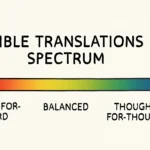
Formal equivalence vs dynamic equivalence represent two ends of a spectrum in Bible translation strategy.
Tools like interlinear Bibles, lexicons, and critical apparatus support the practice of word-for-word rendering.
Readers benefit from using multiple translations to balance precision with readability.
Care One King James: An Overview Care One King James, also referred to as CareOne King James, Care One: King James, or simply the King James care solution, represents a holistic approach to care management designed for modern health and elder-care environments. This guide aims to be a complete guide to the platform or program…
Genesis Translator refers to any approach, tool, or method used to render the opening book of the Bible from its original languages into another language with precision. This article explores how a Genesis translator can achieve accuracy, how the task differs from translating other biblical books, and what readers and scholars should expect from modern…