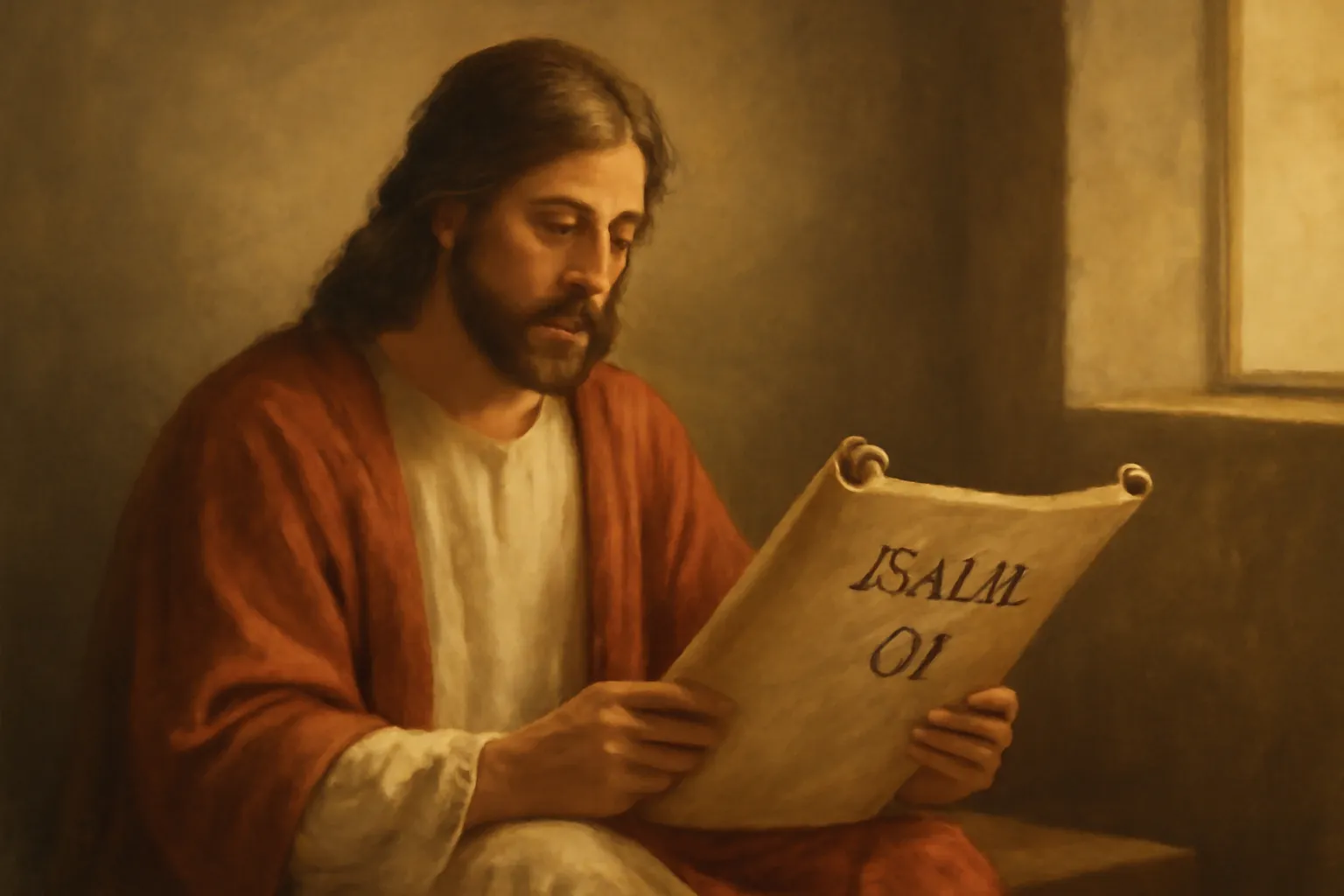
The scene in which Jesus reads Isaiah 61 in a Nazareth synagogue is one of the most studied moments in the Gospel tradition. It sits at the crossroads of prophecy, messianic expectation, and the bold claim of Jesus’ own mission. In the telling by Luke, this act is not merely a literary episode; it is a theological claim that links ancient prophecy to a concrete, living ministry. When Jesus quotes or paraphrases Isaiah 61, he is declaring a purpose, announcing a fulfillment, and inviting listeners to interpret what it means for their time and for all time.
This article surveys Jesus reading Isaiah 61 from multiple angles: the meaning of the passage itself, the historical and religious context in which it was heard, how the Gospel writer frames the moment, and what this event has meant for generations of readers and believers. We will use variations of the phrase—such as Jesus reads Isaiah 61, Jesus reading from Isaiah 61, or the Nazareth synagogue reading of Isaiah 61—to show how scholars and readers talk about the same event in diverse ways. The goal is clarity about what the text said, what it signified in its first-century setting, and how that interpretation has shaped Christian theology and ethical reflection ever since.
The Scene: Where and How the Reading Takes Place
The account centers on Luke 4, where Jesus, a member of the Galilean ministry, goes to the synagogue in Nazareth—his hometown—and stands up to read. The custom in Luke’s Gospel is for a guest preacher to be handed a scroll and to read from a designated prophetic text. In this instance, the scroll is opened to a passage from the book of Isaiah, specifically the portion often identified as Isaiah 61:1–2 (with Luke rendering it in a way that aligns with the Hebrew Bible’s phrasing and the Septuagint’s circle of language).
After reading, Jesus sits down with all eyes on him and pronounces a claim that triggers mixed reactions: a proclamation that the scripture has reached its intended moment in him, followed by the provocative assertion that “Today this scripture is fulfilled in your hearing” (Luke 4:21). In the storytelling, this moment serves as a fulcrum: a public revelation of identity and mission that will be met with both awe and controversy in the townspeople’s response.
Key setting details
Synagogue worship as the public square of Jewish religious life
Reading from a familiar prophetic text to anchor Jesus’ message in scriptural expectation
The contrast between oppressed expectations and the new claim being made in Nazareth
What Isaiah 61 Really Says: The Core Elements
The portion traditionally read as the source for Jesus’ reading is a poetic-prophetic text. In its core, it speaks of a messenger who is anointed by the Spirit of the Lord to bring good news to the marginalized and to carry out a comprehensive program of liberation and restoration. A compact rendering, often cited in Christian teaching, includes these lines:
The Spirit of the Lord is upon me, because he has anointed me to proclaim good news to the poor. He has sent me to proclaim freedom for the prisoners and recovery of sight for the blind, to set the oppressed free, to proclaim the year of the Lord’s favor.
While Luke’s version of the moment is brief, the themes are rich:
The primary audience being the poor and the marginalized
Liberation and restoration as central acts of salvation
The year of the Lord’s favor as a Jubilee-like blessing and restoration
Understanding Isaiah 61 in its original Hebrew context and in its later interpretation helps readers see how Jesus signals that his work is a continuation and culmination of God’s purposes for Israel and, in Luke, a broader invitation to all people.
Meaning and Theological Significance: Who Is the Messiah in This Reading?
The central question sparked by Jesus reading Isaiah 61 concerns the identity of the Messiah and the nature of his mission. In Judaism of the Second Temple period, the Messiah was often conceived as a future king and liberator who would restore Israel’s political sovereignty and reestablish justice. Luke’s Gospel, however, frames the Messiah in a more expansive divine program, one that binds political, social, spiritual, and cosmic dimensions. When Jesus proclaims the Spirit’s anointing and the mission to preach good news to the poor, he is presenting a holistic vision of salvation—one that includes healing, justice, and release from oppression.
The phrase “the year of the Lord’s favor” evokes the ancient practice of the Jubilee year (every 50 years) described in Leviticus, when debts were forgiven, land returned to families, and social renewal occurred. Jesus’ linkage of this language to his own ministry invites readers to interpret his work as a present, not merely future, fulfillment of a divine timetable. In this sense, the Messiah’s mission is already underway in him, but its full consummation remains future for the world to anticipate.
To speak of the Messiah’s mission through Isaiah 61 in Luke’s account is to emphasize a particular blend of themes:
Spiritual liberation that opens sight, hearing, and understanding
Material and social justice reflected in care for the poor and the oppressed
Healing and restoration as signs of divine intervention
Inclusive salvific scope—not limited to one people group but offered to all
Theologically, this helps explain why early Christian readers repeatedly connect Jesus’ ministry with Isaiah’s prophetic horizon. The Messiah, then, is not only a political liberator but a divine agent who embodies God’s compassionate plan to bring good news and liberty to those who live under many kinds of bondage.
Contextual Background: What Lies Behind Isaiah 61?
The book of Isaiah is a composite collection spanning several centuries, with a strong prophetic voice that speaks into crises, exile, return, and restoration. The portion that includes Isaiah 61 is often associated with themes of comfort, justice, and restoration. The prophet’s language about the Spirit’s anointing, the sending of a messenger, and the declaration of a favorable year would have resonated deeply with readers who understood the Jubilee as a symbol of cosmic justice and societal renewal.
In the broader Jewish context of Jesus’ day, many expected the Messiah to bring national deliverance in a political sense. Luke’s gospel, however, is more nuanced: it presents a Messiah who acts with divine authority in ways that simultaneously heal individuals and critique systems of oppression. The act of reading Isaiah 61 in the Nazareth synagogue is not merely an interpretive gesture; it is a decisive claim about the nature of Jesus’ mission and the kind of Messiah he proposes to be.
First-century expectations about the Messiah varied widely; Luke highlights a spirit-empowered and merciful messianic profile.
The concept of anointing (messiah) accompanies leadership and prophetic commissioning across the Hebrew Bible and early Jewish interpretation.
The language of freedom for the prisoners and healing for the blind connects literal healing with spiritual liberation.
Literary and Theological Significance in Luke
Luke’s account of Jesus reading Isaiah 61 is not isolated from the rest of his narrative. It sits just before the crowd’s mixed reaction and the subsequent episode in which Jesus’ home community attempts to push him away. This placement serves a narrative purpose: it foregrounds a pattern that recurs in Luke-Acts—recognition of divine specialness, followed by opposition, and eventually a broader mission that extends beyond Israel to the nations.
Some salient themes in Luke’s portrayal include:
Universal scope: the mission is for the poor, the oppressed, and the marginalized, not just for a single religious group.
Joy and reversal: the passage resonates with Luke’s larger theme of the reversal of social expectations and fortunes.
Fulfillment in the present: the reading’s claim that the scripture is fulfilled is intentionally pointed toward the audience’s ears and hearts.
In later Christian tradition, the quotation from Isaiah 61 became a lens through which to view Jesus’ work—healing, preaching, forgiveness, and social compassion as parts of the same divine mission. The idea of anointing and the Spirit’s empowerment remains central to Christian understandings of vocation, calling, and mission for all believers who follow the Messiah.
Implications for Belief and Practice: What Does this Reading Encourage?
The act of reading Isaiah 61 in Luke invites readers to consider how prophecy meets person and how God’s promises take on flesh in the life of a teacher and healer. The message bears several practical implications for readers today:
Compassion in action: a call to care for the poor, the prisoner, the blind, and the oppressed
Spiritual empowerment: a model of being filled with the Spirit to serve others
Social justice oriented faith: faith that engages with justice and restoration in concrete ways
Hope rooted in proclamation: good news proclaimed as a present and future reality
The phrase “the year of the Lord’s favor” often prompts reflection on how communities today can practice mercy, forgiveness, and opportunity in ways that mirror the Jubilee’s spirit of restoration. Christians, Jews, and scholars alike may read this as a reminder that divine mercy has both a spiritual dimension (inner transformation) and a social dimension (relationships and structures healed).
Some readers also reflect on the tension between expectation and interpretation: if the Messiah is defined by this passage as one who proclaims release and sight, what does that imply for how communities measure success or evaluate leadership? This tension invites ongoing discernment about how to live out the ethic of Isaiah 61 in everyday life.
Common Questions and Discussion Points
Here are some typical questions that students and readers bring to the study of Jesus reading Isaiah 61 and how many scholars approach them:
What exactly did Jesus read? He read a passage from Isaiah 61, typically understood as a declaration of divine commissioning and mission for the Messiah.
Did Jesus’ audience understand this as a political claim? Some did in part, but Luke emphasizes a broader, gospel-centered message of liberation, healing, and universal mercy that transcends political expectations.
Why did Jesus say, “Today this scripture is fulfilled in your hearing”? This bold declaration marks the moment when readers are invited to see Jesus as the living embodiment of Isaiah’s prophecy, inaugurating the inbreaking of God’s reign in his person and ministry.
How does this relate to Jubilee? The reference to the year of the Lord’s favor evokes Jubilee as a symbol of restoration and liberation—an idea Jesus signals as being realized in his work.
What happened after this moment? The crowd’s response moves from interest to anger as Jesus challenges them with the scope of his mission and their own expectations, illustrating how prophetic revelation can provoke mixed reception.
Compare Isaiah 61 in the Hebrew Bible with Luke 4’s grasp of the text
Explore how Isaiah 61 is echoed in other New Testament passages about healing and freedom
Study how early Christian interpreters read Isaiah 61 as a sign of Jesus’ ongoing mission in the Church
Writers and teachers often refer to “Jesus reading Isaiah 61” in different ways to capture the breadth of its impact. Some useful variants include:
Jesus reads from Isaiah 61 as a moment of prophetic commissioning
Reading Isaiah 61 aloud in Nazareth as a scene of revelation
Jesus’ sermon that quotes Isaiah 61 and announces a fulfilled prophecy
Messianic reading of Isaiah 61 in Luke’s Gospel
Prophetic anointing described in Luke 4 with implications for mission
Each phrasing emphasizes a particular strand: the textual basis (Isaiah 61), the act of reading (in the Nazareth synagogue), the identifications with the Messiah (anointed one), and the practical outworking of the mission (good news, release, sight, and freedom). Readers who survey these variations gain a broader understanding of how a single scriptural moment can be interpreted in multiple, complementary ways.
The Enduring Significance of Jesus Reading Isaiah 61
The event of Jesus reading Isaiah 61 in the Nazareth synagogue is more than a historical snippet. It is a window into the way early Christianity read Scripture, a declaration about the Messiah’s mission, and a call for readers to participate in the divine project of restoration. The passage situates the Spirit-empowered ministry of Jesus at the center of God’s saving work, tying together themes of liberation, healing, and jubilee-like mercy. By attributing to Jesus the fulfillment of Isaiah’s prophecy in the present moment, Luke invites readers to understand salvation as a present engagement with a promise that began long ago and will culminate in God’s gracious renewal of all things.
Today, the question remains: how will you respond to the reading of Isaiah 61 as it finds its living center in Jesus? Will you align with the ongoing work of the Spirit, sharing good news with the poor, offering freedom to the oppressed, and pursuing healing and justice in your own communities? The text continues to invite sincere reflection and concrete action—an invitation that is as relevant now as it was when Jesus read Isaiah 61 for the first time in Nazareth.
New Covenant Bible Verse: Key Passages and Meaning The phrase “New Covenant” appears in multiple Bible passages, and it anchors a sweeping shift in how God relates to humanity. This article explores the most important new covenant verses, what they mean, and how they shape Christian faith and practice. We will look at foundational promises,…
The Bible contains passages that feel surprising, unconventional, or even crazy when read in a modern light. That sense of astonishment often comes from material that is highly dramatic, vividly symbolic, or morally provocative. In this article, we explore a broad range of verses and episodes that readers sometimes find hard to believe at first…
Why Bible Verses on Christian Mission Matter The Christian life is often described as a journey with a purpose beyond personal comfort—a calling to bring the light of Christ into every corner of the world. Christian mission is not merely a historical event confined to the pages of the Bible; it is a living invitation…
Across the pages of Scripture, the theme of second chances appears repeatedly as a core throughline—not as a one-time moment, but as a rhythm of mercy, repentance, and restoration. The Bible speaks to human failure without abandoning us to it. It offers redemption, hope, and renewal as real possibilities for people and communities who turn…
Bible Verses About Looking Up: Hope and Guidance in Scripture Across the pages of Scripture, the image of lifting the eyes, turning the gaze upward, and directing attention heavenward recurs as a powerful metaphor for hope, trust, and guidance. When people face trials, confusion, or darkness, looking up to God is presented not as a…
Across ages and continents, people turn to biblical promises of provision and direction when life feels heavy. The idea that God will make a way through even the most daunting circumstances has comforted pilgrims, encouraged communities, and inspired leaders. This article explores the phrase in its biblical roots, explains how it functions in Scripture, and…