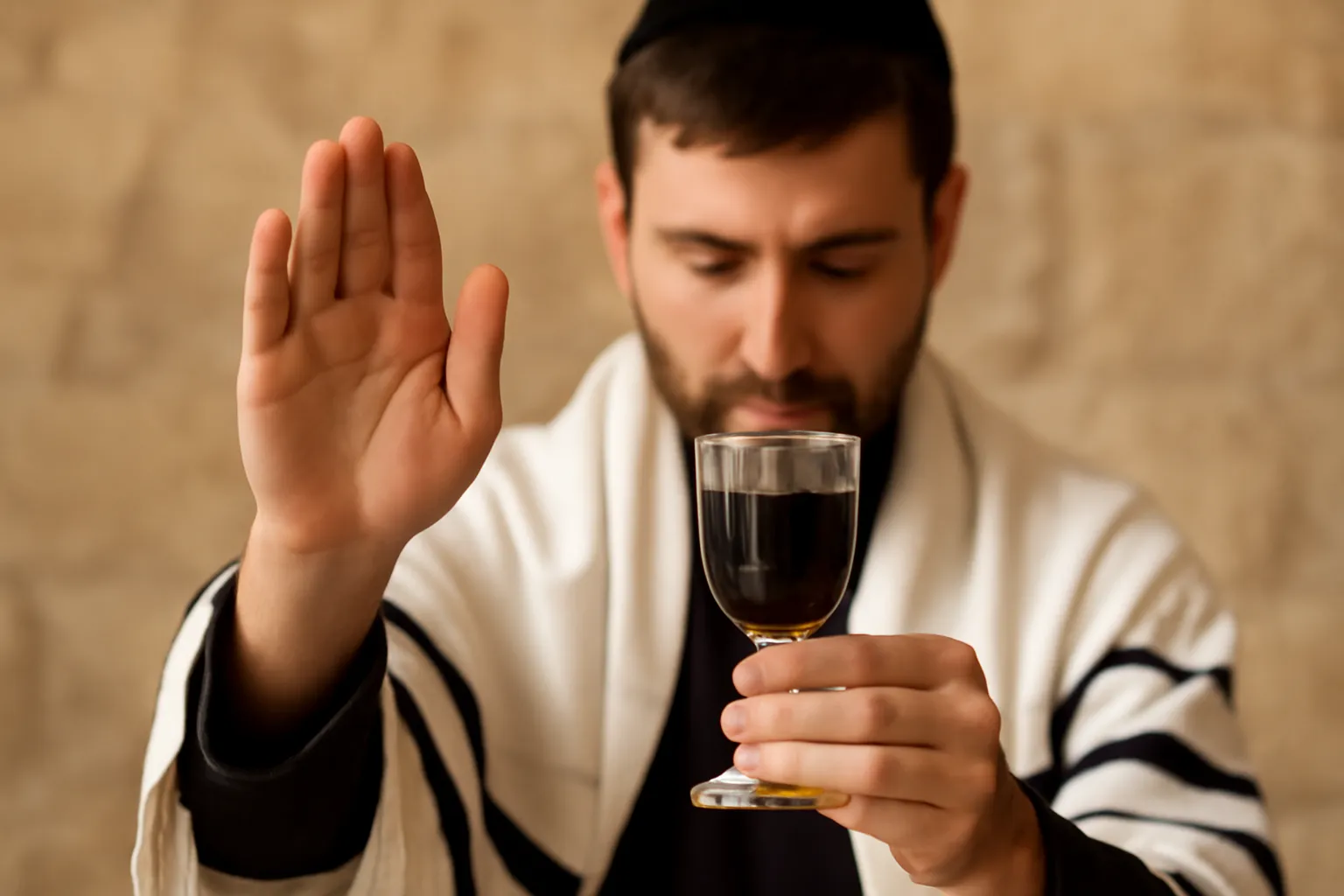
Introduction to the Jewish wine blessing: meaning, practice, and purpose
Across Jewish life cycles and weekly rhythms, the wine blessing stands as one of the most visible and meaningful rituals. When communities gather for Kiddush on Friday night or for holiday meals, the act of reciting a blessing over wine or grape juice signals the sanctification of time, gratitude for the gifts of creation, and a sense of communal belonging. In Jewish practice, the blessing over the fruit of the vine—also called the Blessing on wine, the Birkat HaGafen—is more than a formula; it is a doorway into memory, covenant, and spiritual intention.
In this article we explore the meaning of the wine blessing, its origins in scriptural and Rabbinic sources, and practical guidance on how to recite it properly in various contexts. We’ll use a range of terms to describe the same practice—blessing over wine, borei pri hagafen, Birkat HaGafen, and Kiddush—to show how the language evolves across communities while the core idea remains the same.
What does the wine blessing mean? The core ideas behind the blessing
The wine blessing can be thought of as a compact statement of gratitude and sanctification. It is a public acknowledgment that the fruit of the vine is a divine gift, set apart for holy occasions and for celebrating human partnership with God. The essential idea can be summarized in a few core themes:
Sanctification of time (Kiddush) — wine is used to mark Shabbat and sacred days, transforming ordinary hours into a remembered presence of the divine within the fabric of daily life.
Gratitude for creation — recognizing the grape as a created fruit and thanking God for its life-giving vine.
Communal memory — sharing a cup of wine with family, friends, and guests creates a moment of shared identity and continuity with generations past.
Mindful intention — the blessing invites contemplation: what does it mean to sanctify time, to celebrate, and to offer praise in community?
The wording of the blessing itself embodies these ideas. The formula is short, precise, and repeatable, yet its placement in ritual life gives it a larger life—the moment becomes a hinge between the everyday and the sacred.
Origins and scriptural roots: where the wine blessing comes from
The practice of blessing the fruit of the vine has deep roots in Jewish law and liturgy, with a Rabbinic evolution that spans the biblical period into the medieval era. While wine appears throughout the Hebrew Bible as a symbol of joy, covenant, and ritual, the formal blessing over wine—“borei pri hagafen” (who creates the fruit of the vine)—emerges in Rabbinic texts as a separate agricultural and religious blessing.
Key strands of the origin story include:
Biblical associations with wine — wine is repeatedly linked to sanctification, offerings, and festival joy in the Hebrew Bible, laying the groundwork for later blessings that acknowledge divine creation of grape life.
Rabbinic codification — the blessing over fruit of the vine becomes formalized in Rabbinic literature, with the precise phrase baroi pri hagafen (in Hebrew) used whenever wine or grape juice is enjoyed for sanctified or celebratory purposes.
Kiddush as a ritual frame — the use of wine to sanctify Shabbat and holidays grows into a structured liturgy, where the blessing over wine precedes the recital of Kiddush and the sanctification of the day.
Differences among communities — across Jewish denominations, the same core blessing is preserved, but the surrounding liturgical text (and the way wine is used) can vary, reflecting different minhagim (customs) and halachic approaches.
Scholarly and liturgical scholarship notes that the wine blessing is among the most longstanding and widely observed blessings in Jewish life. Its endurance through centuries reveals a shared value: gratitude expressed through a tangible, sensory act that connects people to their ancestors and to the rhythms of the week and the year.
The central formula recited over wine is known in Hebrew as Baruch Atah Adonai Eloheinu Melech ha-olam borei pri hagafen. A direct transliteration and translation follow:
transliteration: Blessed are You, Adonai our God, King of the universe, who creates the fruit of the vine.
Translation: Blessed are You, Lord our God, King of the universe, who creates the fruit of the vine.
This blessing is designed to be recited when wine or grape juice is used to sanctify a moment of Jewish life, whether at home, in synagogue, or at a special event. The phrase is compact, but it holds the weight of tradition and reverence for the grape as a creation that participates in the sanctifying work of God.
How this blessing is used in practice: when and where to recite it
The wine blessing appears in several important contexts. Understanding these contexts helps ensure the blessing is recited with proper intention and accordance with custom.
Kiddush on Friday night and on Jewish holidays — the most common setting for reciting the wine blessing is Kiddush, which sanctifies the Shabbat or festival day and marks the transition from weekday time to holy time.
Havdalah at the end of Shabbat — a separate blessing over wine is recited as part of the Havdalah service, signaling the return to the ordinary weekday order. The same borei pri hagafen formula is used in this context.
Special ceremonies and life-cycle events — at weddings, Brit Milah, or other religious milestones, wine is often used with the blessing to set apart the moment and to participate in communal joy.
Non-Shabbat occasions — wine or grape juice is blessed to mark gratitude or thanksgiving in various settings, with the blessing adapting to the particular ritual aim.
A common practical note: whether you are reciting the blessing at home with family, in a synagogue, or at a ceremony, the goal is to align your speech with intention (kavanah) and to realize that the act of blessing is both personal and communal.
Practical guidance: how to recite the wine blessing and the related rituals
The practical steps around the wine blessing can be broken down into preparation, the act of recitation, and the post-blessing tradition (the toasts, the drinking, and the next steps of the ritual). While customs vary slightly between communities, the basic structure remains consistent.
Preparation: selecting the wine and setting the scene
Choose wine or grape juice that is kosher for the blessing, or at least made from fruit of the vine and suitable for the occasion. In many homes, a kosher wine is the standard, while some use grape juice for children or guests who abstain from alcohol.
Present the cup prominently on the table or a designated place in the room, clearly within reach of the person reciting the blessing.
Ensure cleanliness and respect in the space where the blessing will be recited. Some communities emphasize ritual cleanliness for the person leading the blessing; others focus on attention and reverence.
The moment of blessing: recitation and intention
Recite the blessing over the wine first: Baruch Atah Adonai Eloheinu Melech ha-olam borei pri hagafen.
Pause for purpose (kavanah) — take a moment to reflect on what you are sanctifying and why you have gathered together.
Kiddush text (if applicable) — after the blessing over the wine, the appropriate Kiddush text is recited for the day (Shabbat or festival). This may be followed by additional prayers or verses depending on the tradition.
Toast and sip — often, participants say “L’chaim” (to life) and take a small sip together, thereby completing the sanctification in a physical act of drinking the wine.
Orthodox practice generally emphasizes strict adherence to the timing and sequence of Birkat HaGafen and Kiddush, as well as the use of kosher wine with reliable supervision.
Conservative and Reform approaches may adapt the language, emphasize inclusivity (e.g., using grape juice when necessary), and highlight the symbolic aspects of the blessing in addition to the liturgical framework.
Children and education — grape juice is frequently used in family settings where children participate, while adults maintain the practice with wine.
Variations and related terms: semantic breadth around the wine blessing
While the core act remains the same, people refer to the blessing and its associated rituals with a variety of terms. These variations help capture different nuances of the practice and show how the same act appears in diverse communities.
Birkat HaGafen — the blessing over the wine, literally the blessing on the “fruit of the grape.”
Borei Pri Hagafen — the exact blessing formula in Hebrew for wine or grape juice.
Kiddush on wine — the ritual of sanctifying the Shabbat or holiday using wine, typically accompanied by the Birkat HaGafen.
Sanctification of time with wine — a descriptive phrase that emphasizes the temporal dimension of the ritual.
Wine blessing in Havdalah — the same core blessing recited at the close of Shabbat, signaling the end of the holy day and the return to ordinary time.
Blessing over the fruit of the vine — a broader, more literal translation that captures the agricultural and ecological aspects of the blessing.
The wine blessing in life-cycle events and communal practice
The practice of blessing wine is woven into many Jewish life-cycle events, reflecting how the rite binds personal milestones to communal tradition. A few notable contexts include:
Weddings — wine is often part of the ceremony and reception, with a blessing and a toast that link the couple’s joy to a long-standing ritual of gratitude.
Seder nights — while Passover uses a different set of blessings (including the four cups of wine), the reverence for the fruit of the vine remains central to the ritual meal.
Shabbat and holidays — Kiddush is the primary framework in which the wine blessing appears, marking the transition into sacred time.
Ritual meals in communities — in many communities, the wine blessing is a regular feature in communal meals that follow prayer services, study sessions, or celebrations.
To help readers navigate common concerns, here are some frequently asked questions and concise answers.
Can grape juice be used for the wine blessing?
Yes. Grape juice is acceptable for the borei pri hagafen blessing, and it is commonly used in family settings, for children, or when alcohol content is a concern. The blessing remains the same; the material substance (grape juice vs wine) is the variable in practice. Some communities reserve wine for the solemn Kiddush, but grape juice is an accepted alternative in many homes.
What if the wine is not kosher or has no hechsher?
In traditional practice, kosher wine with reliable supervision is preferred for formal Kiddush, but in urgent or informal situations, the blessing over wine can still be recited with grape juice or non-kosher wine if necessary to fulfill the religious obligation. However, for synagogue services and formal ceremonies, kosher wine is typically required to maintain ritual integrity.
How important is intention (kavanah) when reciting the blessing?
Intention matters. While the wording is fixed, the spiritual impact of the blessing is enhanced by kavanah—the purposeful focus on sanctification, gratitude, and community. Even a brief moment of contemplation before the blessing can deepen the experience and help connect participants to the larger tradition.
Is there a specific sequence after the blessing over wine?
Yes. In the standard Kiddush practice, after borei pri hagafen is recited, the appropriate Kiddush text is spoken to sanctify the day, followed by any customary verses, spiritual readings, or songs. Finally, the participants toast L’chaim and drink a portion of the wine together. Some communities also recite a short blessing thanking God for rest or peace as part of the ritual.
Beyond the mechanics of the blessing, the practice carries a range of spiritual meanings and cultural values that inform Jewish thought and daily life.
Memory and time — the wine blessing is a reminder that Jewish life is deeply rooted in time-bound moments that are sanctified and remembered.
Gratitude and praise — saying a blessing over wine is a structured way to offer gratitude for creative gifts, such as the vine itself and the abundance it represents.
Hospitality and inclusion — wine is a shared symbol; offering a cup invites guests and family to participate in a common ritual, fostering hospitality and community.
Transition and renewal — the act of sanctifying time reflects a broader Jewish ethic of ongoing renewal, marking the shift from one meaningful period to another.
Across communities, the language used for the blessing can vary. Some prefer to keep the traditional Hebrew form with a straightforward translation; others offer slightly different translations or explanations to help lay readers and new learners grasp the meaning.
Hebrew phrasing— the core is Baruch Atah Adonai Eloheinu Melech ha-olam borei pri hagafen, which remains constant in the vast majority of communities.
English translations — common translations emphasize the idea of blessing and gratitude for the fruit of the vine, sometimes elaborating on the idea of sanctification and the role of God as the Creator.
Transliteration — to support pronunciation, many families and organizations provide transliteration for the blessing, which helps those not fluent in Hebrew to participate meaningfully.
For educators, families, and communities seeking to teach the wine blessing to children or newcomers, the following tips can help make the experience accessible and meaningful.
Start with the core phrase— practice the essential blessing Baruch Atah Adonai Eloheinu Melech ha-olam borei pri hagafen until it feels natural, then layer in the translation or transliteration as needed.
Use a visual aid— display the Hebrew text, transliteration, and translation side by side, so learners can connect language with meaning.
Pair with a simple ritual— after the blessing, offer a short moment of silence, a toast, and a shared sip of wine or grape juice to create a tangible connection to the ritual.
Explain the purpose— emphasize the idea of sanctifying time and giving thanks, so learners understand why this blessing matters beyond the words themselves.
Adapt for accessibility— for participants with sensory or language differences, provide alternatives that preserve intention and community participation, such as a reading of the blessing or an audio recording.
The wine blessing is a small but powerful ritual that embodies a long arc of Jewish practice. It is a moment where the ordinary act of sharing a drink becomes a conduit for memory, gratitude, and communal identity. Its origins lie in ancient times, but its meaning remains fresh with every generation that recites it. Whether performed in a sunlit kitchen on a Friday evening, in a bustling synagogue, or around a family table at a festive meal, the blessing over the wine invites participants to pause, praise, and participate in something larger than themselves.
To recap, here are the essential points about the wine blessing in Jewish practice:
What it is — the birkat pri hagafen, a blessing over the fruit of the vine, recited to sanctify and elevate moments of Jewish life.
Why it matters — it links gratitude, sanctification of time, and communal life through a tangible ritual.
Where you find it — primarily in Kiddush for Shabbat and holidays, with additional use in Havdalah and life-cycle events.
How to recite — prepare wine or grape juice, recite the blessing, engage in the Kiddush or related liturgy, toast, and drink together.
Language and variation — though the core blessing remains constant, communities vary in surrounding liturgy and emphasis, reflecting diverse customs.
Introduction to the Blessing Over Wine The Blessing Over Wine is a central ritual phrase in Jewish liturgy and daily life. In Hebrew, the standard formulary for the wine blessing is Baruch Atah Adonai Eloheinu Melech ha-olam Borei Pri Hagafen. This sacred sentence is recited to acknowledge the divine gift of the fruit of the…