Origins of the Temple Concept: From Mishkan to Beit HaMikdash
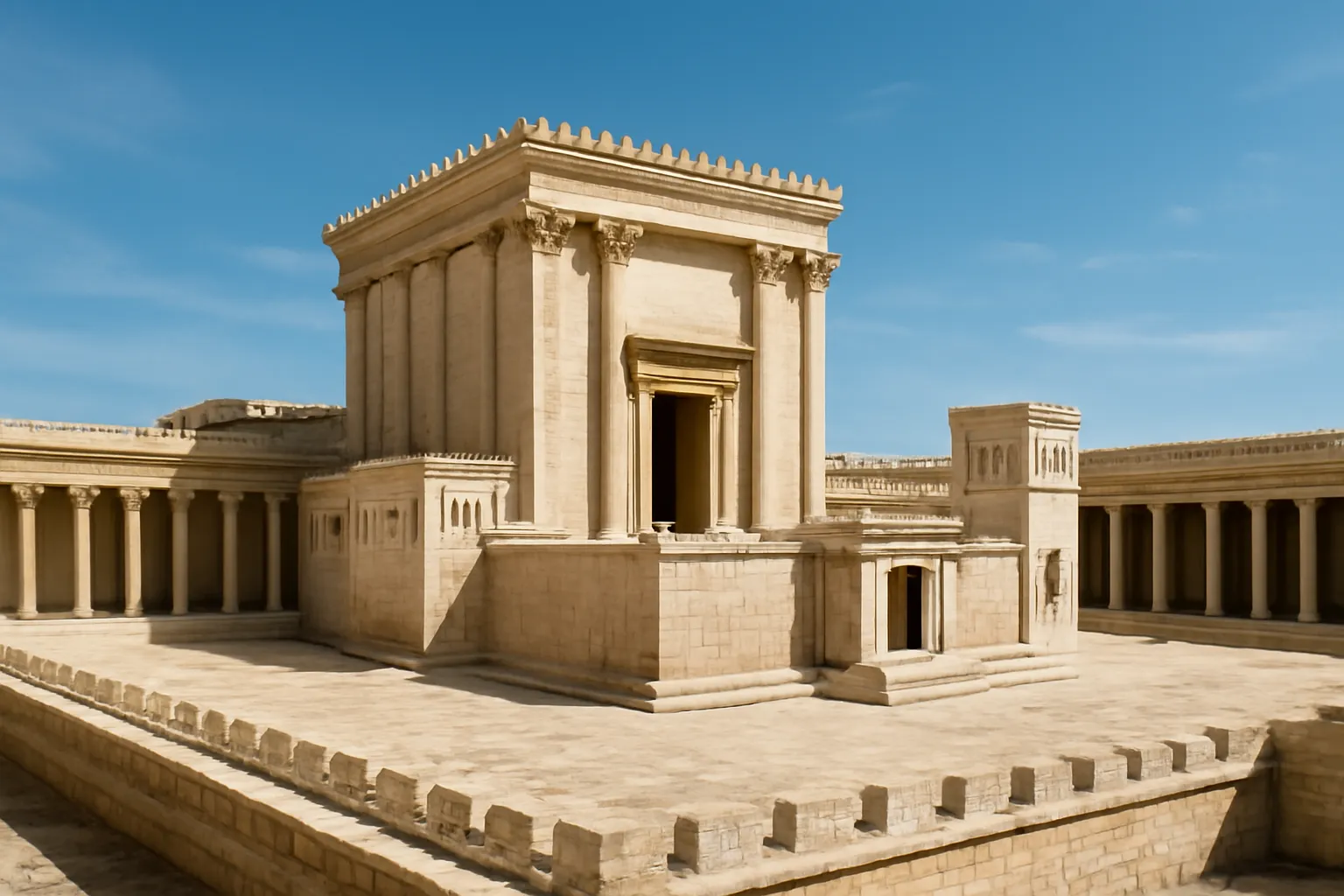
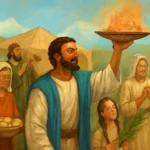
The idea of a central sanctuary for the Jewish people runs deeply through the biblical narrative and the later centuries of rabbinic thought. In the Hebrew Bible, the journey begins with the portable sanctuary, the Mishkan (the Tabernacle), crafted for the wilderness wanderings of the Israelites after the Exodus. This portable sanctuary was followed by a more settled structure in Jerusalem—the Beit HaMikdash, often translated as the Holy Temple. Over time, these terms have come to symbolize not only a physical building but a spiritual center—an axis around which Jewish life, ritual, and longing have revolved. The arc from Mishkan to Beit HaMikdash frames questions about what it would mean to see a Temple rebuilt in the future: how such a rebuilding would interact with history, theology, and modern life.
Historically, the two great sanctuaries are the First Temple, built by King Solomon in the 10th century BCE and destroyed by the Babylonians in 586 BCE, and the Second Temple, begun around 520 BCE under Zerubbabel and later expanded by Herod the Great in the first century BCE. The lay of the land, the liturgical rhythms, and the priestly service were transformed across these eras, even as the central aspiration—the dwelling place of the divine presence in the midst of the people—remained a constant thread. In Jewish thought, the Temple is not merely a structure but a focal point for worship, sacrifice, and the sense of collective national and spiritual identity.
As soon as the Second Temple stood, the longing for a future Temple rebuilt persisted in prayers, psalms, and blessing formulas. Yet the rabbinic tradition also wrestled with how to imagine such a rebuilding within the limits of history and human responsibility. The concept of a rebuilt Temple, whether interpreted as a future physical sanctuary or as a symbol of spiritual renewal and ethical reform, has given rise to a broad spectrum of ideas across Jewish communities and across generations.
Terminology and semantic breadth
To trace the language of this topic you will encounter several related terms and phrases that scholars and commentators use interchangeably or with nuance. These variations help express different dimensions of the same arc:
Beit HaMikdash (the Holy Temple) — often used in Hebrew sources to denote the sacred space in Jerusalem.
Temple rebuilt or reconstruction of the Holy Temple — phrases that foreground the physical and ritual dimensions of a future sanctuary.
Third Temple — a shorthand widely used in modern discourse for the anticipated new sanctuary that would stand in place of or after the previous structures.
Beit HaMikdash in Zion or Jerusalem’s Mikdash — expressions that emphasize the geographical and theological center of gravity.
Mishkan or Tabernacle — the earlier portable sanctuary that some readers invoke to compare ancient practice with later hopes for a rebuilt temple.
Each of these terms carries not only a descriptive sense but also a web of expectations about how Jews understand divine presence, ritual purity, and national destiny. In discussing the topic of the Temple in Jerusalem rebuilt, it is useful to distinguish between a literal, physical reconstruction and a broader, reformulated sense of sacred space that emphasizes ethical living, communal responsibility, and spiritual renewal.
Prophecy and Visions: The Temple in Jewish and Near-Eastern Readings
Prophecy has long shaped Jewish expectations about a future sanctuary. In the Hebrew Bible, several strands address the idea of a renewed sanctuary or a transformed religious landscape in the end times. The most famous prophetic passages connect the Temple with universal peace and universal worship, a vision that has animated both liturgical yearnings and scholarly debate across the centuries.
Ezekiel’s detailed temple blueprint: a cornerstone for future hope
Among the most discussed passages is the Book of Ezekiel, especially chapters 40–48, which present an elaborate account of a future temple and its governance. Ezekiel’s vision describes precise measurements, divisions of space, and ritual responsibilities. Because of its intricate architectural prescription, this text has been interpreted in diverse ways. Some readers treat it as a literal blueprint awaiting fulfillment, while others see it as symbolic, conveying a broader message about holiness, boundaries, and the restoration of divine presence among the people. Regardless of hermeneutical stance, Ezekiel’s temple vision remains a central reference point for discussions about a Temple rebuilt in the messianic era, a blueprint that invites vivid imagination about what a rebuilt sanctuary might entail.
Other prophetic strands and the moral horizon
Beyond Ezekiel, other prophetic voices in the Hebrew Bible point toward a future when nations stream to Jerusalem for instruction and peace. Passages such as Isaiah 2:2–4 and Micah 4:1–4 imagine a time when the mountain of the Lord’s house becomes a center of justice and wisdom for all peoples. In these traditions, the Temple rebuilt serves not merely as a site for burnt offerings and rituals but as a symbolic locus of moral recommitment and spiritual convergence for humanity. For many Jewish readers, the future temple is inseparable from a broader ethical renovation—an era in which the sanctuary’s purposes are fulfilled through justice, compassion, and peace among nations.
In rabbinic literature, the relationship between land, temple, and worship is often discussed with nuance. The rabbis emphasize that the elevated status of the sanctuary in biblical times carried responsibilities: ritual purity, sanctified behavior, and communal accountability. If a future Temple in Jerusalem rebuilt were to arise, rabbinic commentators would likely foreground questions of ritual accessibility, priestly duties, and the balance between sacrificial rites and the evolving nature of spiritual service in a changed world. These debates reflect a theology in which the temple’s physical form and its ethical meaning grow together rather than stand in opposition.
The Second Temple, Destruction, and the Longing That Endures
The Second Temple period represents a crucial hinge in Jewish history. Built after the return from exile, it was eventually expanded by Herod the Great and stood for several centuries as the center of Jewish life and worship. The destruction of the Second Temple in 70 CE by the Romans marked not an end to Jewish religious life but a dramatic transformation: the center shifted from a single sanctuary to a dispersed, diaspora-driven identity that retained the memory and longing for a future sanctuary.
The Western Wall, a remaining segment of the Temple precincts, provides a tangible link to this long arc. For many Jews, it is a place of prayer, lament, and hopeful expectation. The memory of the Second Temple remains a powerful motivator for those who imagine a Temple rebuilt, because it embodies both historical continuity and a renewed sense of possibility. Yet the destruction also reminds communities to approach questions of rebuilding with humility and responsibility, recognizing that sacred space is inseparable from ethical stewardship and communal harmony.
In modern discourse, the idea of reconstructing the Temple raises fundamental questions about space, access, and sovereignty. The Temple Mount is a site of immense religious significance to multiple faith communities, and any discussion of rebuilding must contend with religious sensitivities, political realities, and the possibility of conflict. Historical memory and sacred reverence coexist with the complexities of present-day governance, making the topic one of the most delicate intersections of faith and politics in the contemporary world.
Within Jewish communities, the lingering question is not simply whether a Temple rebuilt could physically rise from relics of the past, but how such a project would redefine what it means to worship, to sacrifice, and to pursue justice in a post-Temple era. The memory of the Second Temple thus informs both aspiration and caution: aspiration toward spiritual renewal, and caution about social stability and interfaith relations in a contested landscape.
Remembrance and ritual as living continuity
Even without a physical rebuild, the memory of the ancient sanctuaries continues to shape daily life and liturgy. The tefillot (prayers) for the restoration of Zion and for a future sanctuary are woven into the fabric of Jewish prayer and ritual. In some communities, the idea of a future reconstruction is treated as a theological horizon rather than an imminent historical plan. In others, it becomes a concrete focus of study and advocacy. Across this spectrum, the temple remembrance serves to remind Jewish people that their tradition is not only about a distant past but also about ethical endurance and spiritual vision that can animate the present and ordinary moments with a sense of purpose and hope.
Historical memory of the First Temple and Second Temple remains foundational to Jewish identity.
The Western Wall stands as a symbolic remnant where prayers are offered for national healing and spiritual renewal.
Longing for a Temple rebuilt is balanced by commitments to living a life of justice, mercy, and reverence in the diaspora as well as in Israel.
Modern Relevance: Debates, Movements, and the Ethics of Rebuilding
In the modern era, the question of whether and how a Temple in Jerusalem rebuilt might come about has prompted a spectrum of responses, ranging from devotional to political. The dialogue touches on theology, law, archaeology, architecture, and international relations. It also raises questions about the interpretation of sacred texts, the meaning of religious pluralism, and the practical implications for peace and security in a highly contested city.
Religious perspectives: Orthodox, Conservative, Reform, and beyond
Different Jewish denominations offer varied perspectives on a possible future rebuilding. Broadly speaking:
Orthodox Judaism often maintains a belief in a future messianic era during which the Temple could be rebuilt. At the same time, there is a strong emphasis on the sanctity of the present holy space and a caution against any action that could violate laws or provoke danger on the ground. For many Orthodox communities, the focus remains on spiritual readiness, Torah study, and ethical living in anticipation of what the Torah and prophets describe as the era of renewal.
Conservative Judaism tends to emphasize continuity with historical practice while encouraging thoughtful engagement with the evolving meaning of worship. The question of rebuilding might be framed as a theological contemplation rather than an immediate political project, with attention to historical legitimacy, ritual integrity, and communal responsibility.
Reform and Progressive movements often prioritize spiritual meaning over a literal reconstruction. For these communities, the concept of a rebuilt sanctuary is sometimes understood as a metaphor for renewed covenantal living—emphasizing justice, inclusion, and ethical conduct as the true «temple» of the contemporary era.
The Temple Institute and modern proposals: what to know
In the late 20th and early 21st centuries, groups such as the Temple Institute have drawn public attention by presenting ceremonial tools, garments, and plans associated with a hypothetical future sanctuary. Their work is often described as educational, ceremonial, and symbolic rather than a practical blueprint for immediate construction. Critics argue that such proposals could inflame tensions or challenge the delicate political status quo surrounding the Temple Mount. Proponents, however, view these efforts as a way to keep memory alive and to cultivate a thoughtful, reverent approach to the deeper questions of divine presence, ritual service, and national vocation. When discussing these efforts, it is essential to distinguish between scholarly or devotional interest and political mobilization that could affect real-world security and interfaith relations.
Legal, ethical, and security considerations in the modern state
Today, the Temple Mount is a highly sensitive site with layered religious significance for Judaism and Islam, as well as strategic implications for regional stability. Any discussion about rebuilding would intersect with international diplomacy, religious freedom, and the rights of worship for different communities. The ethical discourse includes questions such as:
How should sacred space be navigated when multiple faiths claim spiritual ownership?
What is the appropriate balance between spiritual longing and the practical needs of peace and coexistence?
Could a physical rebuilding be reconciled with nonviolent, multi-faith engagement, or would it risk escalation?
What role can education, interfaith dialogue, and cultural exchange play in shaping a shared future for the site?
These questions show that the idea of the Temple rebuilt is not merely a theological fantasy but a living debate about how a religious community imagines its responsibilities in a pluralistic world. The modern relevance of this topic lies in its capacity to provoke reflection on sacred space, ethical leadership, and the means by which a community can pursue spiritual renewal without compromising the safety and dignity of others.
Beholding the Temple not as a Monument but as a Horizon
For many Jews and for interested scholars, the notion of a Temple rebuilt is more than a blueprint for physical reconstruction. It is a way to articulate a vision in which sacred space becomes a catalyst for moral renewal, communal solidarity, and a shared commitment to peace. In this sense, the idea acts as a horizon toward which communities orient their prayers, study, and acts of service. The temple in Jewish imagination has always been polyvalent: it represents sacrifice and atonement, yes, but also education, ritual discipline, and the covenantal relationship between the people and God. The modern discussion continues to reformulate these meanings for a world that is technologically advanced, culturally diverse, and politically intricate.
Practical implications for education, archaeology, and culture
Even without immediate action toward rebuilding, the topic fosters productive avenues of inquiry and public dialogue. Educational curricula might explore:
The historical sequence from Mishkan to First Temple to Second Temple and beyond.
The prophetic traditions that frame expectations about a future sanctuary, including interpretive differences among scholars.
The ways in which liturgy and prayer reflect enduring longing for reconciliation, spiritual integrity, and ethical leadership.
Archaeological and architectural studies that illuminate how ancient sanctuaries were designed and how their memory informs contemporary architecture and ritual philosophy.
Artistic and literary works—from historical fiction to modern poetry—also engage with the theme, often using the holy temple dream as a symbol of universal longing for peace and renewal. In this wider cultural field, the idea of a rebuilt Temple becomes a vehicle for exploring questions of memory, justice, and hope, rather than a narrowly defined political program.
Origins, Prophecy, and Relevance—Three Threads Interwoven
The question of whether a Temple rebuilt could or should occur remains a matter of ongoing discourse. By examining the origins of the sanctuaries in Jerusalem, engaging with prophetic visions that have shaped Jewish expectation, and considering how modern communities interpret and respond to these ideas, we can appreciate why this topic has endured for millennia. It is not simply an antiquarian inquiry about a vanished building; it is a living conversation about sacred space, communal memory, ethical responsibility, and the pursuit of a society that aspires to be just, peaceful, and reverent.
In reflecting on the origins of the Temple idea, we see how sacred space emerges from the rhythm of worship, liturgy, and leadership in times of transit—from the wilderness to exile to the modern city. In considering prophecy, we encounter a tradition that imagines a future moment when divine presence inspires a universal sense of justice and harmony. In contemplating modern relevance, we recognize that the question of rebuilding—whether framed as literal restoration, spiritual revival, or ethical renewal—remains a lens through which we examine power, memory, and coexistence in a crowded and contested metropolis.
Ultimately, the concept of a Temple rebuilt invites us to ask: What is the sanctuary for our time? How do we honor the lessons of the past while shaping a future that centers human dignity and reverence for the divine? The conversations—across religious communities, scholars, and ordinary readers—continue to unfold, and in that ongoing dialogue lies a form of renewal that is as meaningful today as it has ever been.
For readers curious to explore further, consider these avenues:
Study primary scriptural sources about the Beit HaMikdash, Mishkan, and prophetic envisionings of a future sanctuary.
Examine how different Jewish movements interpret the idea of a Temple rebuilt within the context of modern ethics and international relations.
Engage with historical scholarship on the Second Temple period and its lasting impact on Jewish liturgy and identity.
Explore contemporary theological discussions around sacred space, ritual practice, and the ethics of memory.