10 Commandments in King James Version: Complete List, History, and Meanings
The Ten Commandments, known in Jewish tradition as the Decalogue,
occupy a central place in the moral imagination of civilizations shaped by the King James Version
of the Bible. In the King James Version (KJV), these sacred laws are rendered in the distinctive
Early Modern English idiom that has shaped religious discourse for centuries. The list is traditionally read as a compact
treaty between the LORD and the people of Israel, given at Sinai and renewed in later generations. In this article,
we will explore the complete KJV list, the historical setting of the commandments, and the meanings that scholars and faith communities
have drawn from them. We will also consider variations in wording across Genesis–Deuteronomy traditions and how those
variations affect interpretation within different Christian and Jewish streams.
Readers will encounter the commandments in the King James idiom, where words like Thou, thee, thy, and shalt give the text its characteristic cadence. The piece below uses bold emphasis to flag key ideas
and phrases that recur across translations and interpreters. While the textual form is set in the KJV,
the meaning remains a topic of living discussion among theologians, historians, and lay readers alike.
Complete List of the Commandments (KJV)
The commandments are traditionally divided into two parts or “tables” and are recorded in Exodus 20:1–17 and again in Deuteronomy 5:6–21 with slight wording differences. In the KJV, the list that follows presents the commandments in their
commonly cited form for Protestant readers, with the standard numbering. For clarity, each item below includes the King James phrasing in brief
and a compact gloss that helps explain the core demand.
First Commandment: Thou shalt have no other gods before me.
Second Commandment: Thou shalt not make unto thee any graven image, or any likeness of any thing that is in heaven above, or that is in the earth beneath, or that is in the water under the earth: Thou shalt not bow down thyself to them, nor serve them: for I the LORD thy God am a jealous God.
Third Commandment: Thou shalt not take the name of the LORD thy God in vain; for the LORD will not hold him guiltless that taketh his name in vain.
Fourth Commandment: Remember the sabbath day, to keep it holy. Six days shalt thou labor, and do all thy work: but the sabbath day is the rest of the LORD thy God.
Fifth Commandment: Honour thy father and thy mother: that thy days may be long upon the land which the LORD thy God giveth thee.
Sixth Commandment: Thou shalt not kill.
Seventh Commandment: Thou shalt not commit adultery.
Eighth Commandment: Thou shalt not steal.
Ninth Commandment: Thou shalt not bear false witness against thy neighbour.
Tenth Commandment: Thou shalt not covet thy neighbour’s house, thou shalt not covet thy neighbour’s wife, nor his manservant, nor his maidservant, nor his ox, nor his ass, nor any thing that is thy neighbour’s.
These ten statements crystallize a set of ethical imperatives that govern worshipful obedience to the One God and
the conduct expected within a community. While the exact wording above mirrors the King James Version, many modern readers may also
encounter the commandments in slightly different wording within other English translations and within the Jewish and Catholic traditions. The
core ideas—loyalty to God, reverence, rest, family honor, and respect for neighborly rights—remain constant across languages and centuries.
To understand how the King James Version presents the Ten Commandments, it helps to acknowledge two parallel textual streams:
the Exodus 20 version and the Deuteronomy 5 version. In the KJV and in most Protestant editions, the Exodus reading is treated as the
foundational form, while Deuteronomy recapitulates the same moral law with slight stylistic differences that reflect a later, covenant-renewing address.
Exodus versus Deuteronomy: Two Representations
Exodus wording frequently emphasizes the immediate deliverance from Egypt and the prohibition against idolatry that arises from the recent
memory of oppression: “Thou shalt have no other gods before me” is paired with warnings against “graven images” and the
blasphemous use of God’s name. In Deuteronomy, the same moral ground is re-anchored in the context of a subsequent generation about to enter the
promised land. The phrasing tends to be more expansive, sometimes explicitly clarifying social and ceremonial implications for a community that is now
grounded in its own civil order rather than an immediate escape from bondage.
In addition to Exodus and Deuteronomy, there are variations in how the two tables are numbered in different traditions: the Protestant/Anglican numbering typically counts ten distinct prohibitions and injunctions, while certain Catholic and Orthodox
traditions treat some items as grouped differently or emphasize the ceremonial-law pieces in a slightly different way. The King James text,
by virtue of its early modern translation, has a cadence that has shaped English-speaking religious culture for centuries.
Important Phrases That Appeared in Many Editions
“Remember the sabbath day, to keep it holy” is a phrase that resonates beyond the Sabbath commandment, often invoked in Christian debates about rest,
worship, and communal life.
“Thou shalt not bear false witness” expresses a universal principle of truth-telling that intersects with ethics, law, and personal integrity.
“Thou shalt have no other gods before me” is widely cited in discussions of monotheism, religious exclusivity, and worship practices.
History and Context
The Ten Commandments occupy a prime place in the larger story of the Sinai covenant, a foundational moment in the religious life
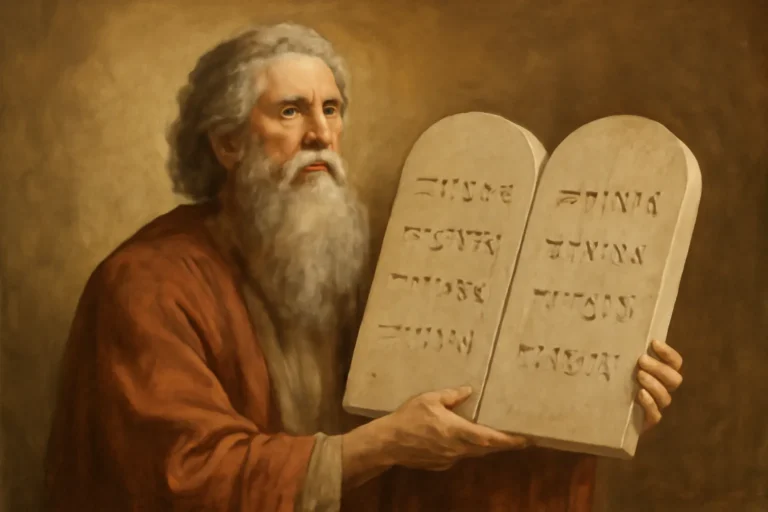
of the Hebrew people. The commandments are traditionally understood to have been given to Moses on Mount Sinai, embedded within a larger
revelation that includes moral, ceremonial, and civil laws. The term Decalogue—from the Greek deka logoi, meaning “ten words”—highlights that in some ancient
traditions the list is framed as ten compact proclamations rather than ten exhaustive prohibitions. Modern scholarship often emphasizes the
sophisticated structure of these laws: a first table focusing on the relationship with God, a second table addressing the duties to one’s neighbor.
The King James Version itself is a narrative achievement of early 17th-century English Christianity. Commissioned under King James I of England
and officially published in 1611, the KJV sought to produce a translation that was accessible to scholars, clergy, and lay readers alike. Its language
preserves a distinctive cadence—characterized by the use of “thou” and “thee” pronouns, the word “shalt”, and other archaisms—that has influenced literary, religious, and legal discourse in the English-speaking world.
The Mosaic Context and the “Two Tables” Concept
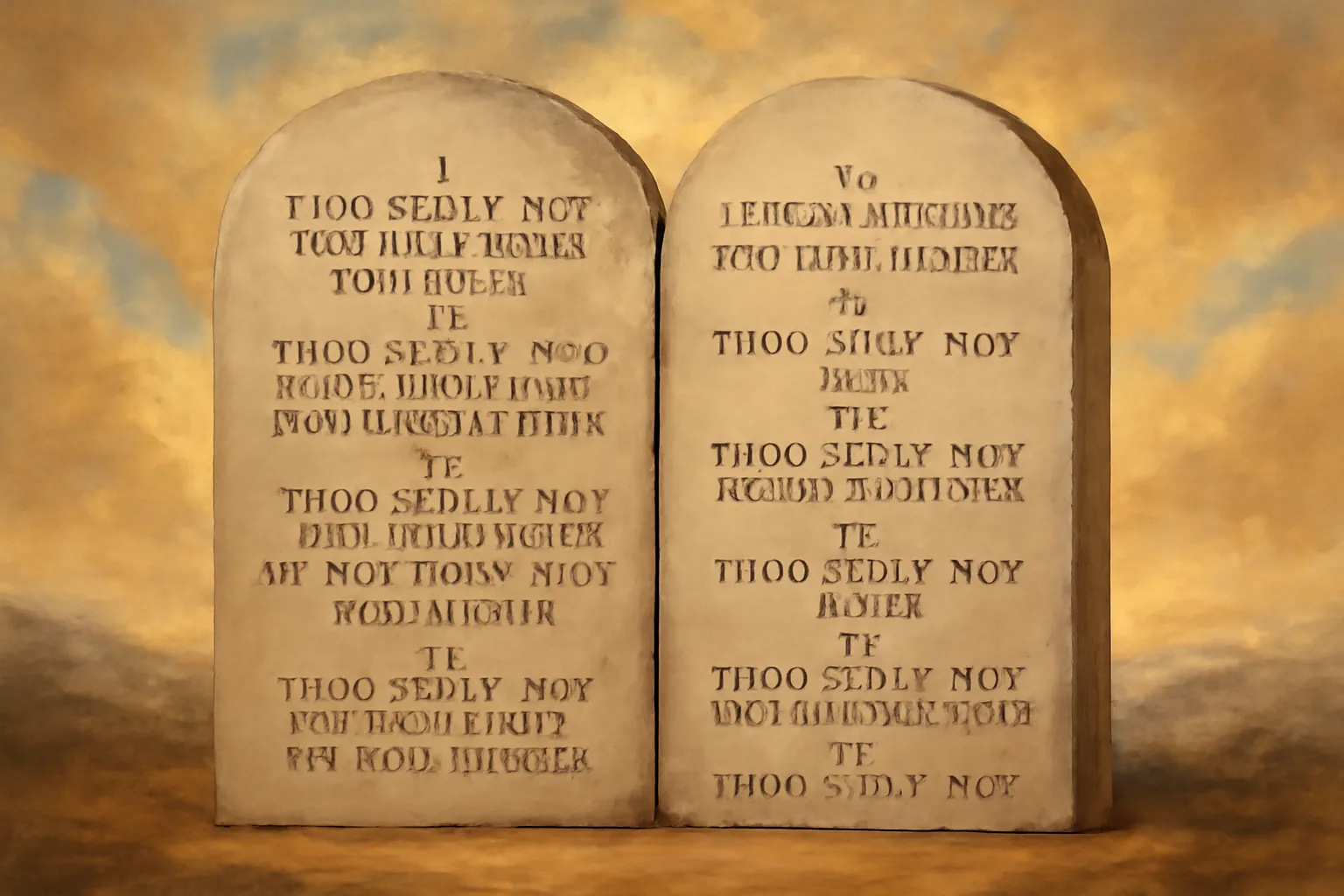
Tradition often presents the commandments as inscribed on two stone tablets, a visual metaphor for two equal and complementary responsibilities:
love and loyalty to God (the first table) and love of neighbor (the second table). This framing helped early readers grasp how worship and ethics
are interwoven in a single moral economy. The KJV’s wording supports this dual emphasis, shaping centuries of preaching, catechesis, and civic
life around the idea that worship and ethics belong to one coherent covenantal program.
Meanings and Interpretations
The meanings extracted from the Ten Commandments in the King James Version are not merely historical; they have served as a living source for
moral reasoning, spiritual formation, and social ethics. Across Christian denominations and Jewish communities, these commandments are read not only
as literal prohibitions but as enduring ideals that shape character, habit, and community life.
Monotheism and exclusive worship: The commandment to have no other gods emphasizes loyalty to the One God.
Rejection of idolatry: The prohibition against graven images guards against equating the divine with crafted objects.
Respect for God’s name: The commandment against taking the name of the LORD thy God in vain cultivates reverence in speech and practice.
Holiness of time: The sabbath commandment anchors rhythms of rest, worship, and family life in a sacred cadence.
Respect for family life: Honoring parents binds generations, contributing to social order and communal memory.
Sanctity of life: The prohibition on killing guards the moral value of human life and the dignity of the vulnerable.
Fidelity in marriage: The prohibition against adultery protects the integrity of intimate relationships and family structure.
Property and labor: Prohibitions against stealing defend individual rights and the social trust necessary for a common life.
Truthfulness: The prohibition against bearing false witness upholds justice and the reliability of communal judgments.
Contentment and justice: The prohibition against coveting protects both personal desire and social harmony by reducing envy and conflict over possessions.
Ethical and Theological Implications
The Ten Commandments offer a model of ethical universalism within a particular covenantal framework. They combine
the declaration of God’s sovereign authority with a pragmatic set of instructions for everyday life. For many readers,
these laws function as a moral grammar: they teach not only what to abstain from but also how to live in a community with
integrity, justice, and communal responsibility. The KJV’s language—with its emphasis on personal responsibility before God and neighbor—
has made these laws a staple for preaching, catechesis, and ethical reflection across ages.
Interfaith and Interdenominational Perspectives
While the specifics of practice vary among Jewish, Catholic, Orthodox, and Protestant communities, the core ethical themes
remain surprisingly consonant: fidelity to God, reverence in speech, a rhythm of rest, care for family, and just relations with others.
The King James rendering has contributed to the English-language imagination of these themes, often shaping moral rhetoric in debates on worship,
public life, social policy, and education.
The Ten Commandments, as presented in the King James Version, have left a durable imprint on literature, law, and culture.
In Christian preaching, catechesis, and personal devotion, these verses are frequently invoked as the bedrock of a life oriented toward
moral clarity and reverence for God. Beyond ecclesial settings, the commandments have shaped moral philosophy and even aspects of civil life
in societies influenced by biblical ethics.
In Literature and Art
The cadence and imagery of the KJV have inspired poets, playwrights, and artists to reflect on sacred duty, conscience, and the tension
between individual desire and communal responsibility. The formal, ritual cadence of phrases like Thou shalt and Remember the sabbath day
has become embedded in the cultural memory of English-speaking societies.
In Law and Public Life
The moral themes of the commandments—respect for life, property, truth, and family—have informed debates about civil law,
policy, and social norms in Western societies. While modern legal systems are shaped by many sources, the underlying ethical claims of
the Ten Commandments have often been cited as early articulations of universal principles—human dignity, truth-telling, and social order—that
underpin just governance.
Catholic and Orthodox Perspectives
In Catholic and Orthodox traditions, the Ten Commandments are frequently harmonized with the broader Law given in the Pentateuch,
including additional ceremonial and moral precepts. While the KJV is a Protestant-era translation, the moral core
of the commandments transcends denominational boundaries, even as interpretive frameworks differ with regard to natural law, grace, and ecclesial discipline.
Variations in Wording: A Close Look at Language in the King James Version
The King James Version of the Bible uses a distinctive lexicon that has shaped how readers perceive divine authority and moral obligation.
The repeated use of the second-person singular Thou and the contractions of shalt and wilt create a sense of intimacy
and immediacy in the moral injunctions. In examining the Ten Commandments, a few notable linguistic features emerge:
Thou shalt versus you shall: The imperative form intensifies personal responsibility and obedience.
Before me versus before thee: The placement of God in the person’s life as the ultimate reference point.
Sabbath language: The commandment to keep the sabbath day is framed in terms of rest and sanctification, linking worship to time management.
Narrative continuity: The prologue “I am the LORD thy God” foregrounds a personal relationship that grounds the subsequent prohibitions.
When scholars compare the King James Version with other English translations (such as the Douay-Rheims or modern English paraphrases),
differences in wording can highlight distinct theological emphases. The KJV’s cadence can emphasize ritual purity and God-centered ethics, while other
translations might foreground social justice or civil liberties in different ways. Regardless of the translation, the moral core of the
commandments often remains coherent: exclusive loyalty to God, a prohibition of idolatry, reverence in speech, sabbath-keeping as a sacred rhythm,
and respect for the life, family, property, truth, and contentment of others.
How to Read the Ten Commandments Today
Reading the Ten Commandments in the 21st century invites a careful balance between textual fidelity and contemporary relevance. Here are some approaches
that readers often find fruitful:
Historical reading: See the commandments as part of a covenantal framework that governed an ancient people within a particular legal and religious milieu.
Ethical reading: Focus on universal moral themes—truth-telling, fidelity, justice, and respect for life—that remain salient across cultures.
Theological reading: Consider the commandments as expressions of faith in the one God and as a guide to worship and ethical living.
Liturgical reading: In congregational settings, treat the commandments as a call to confession, covenant renewal, and ethical formation.
Whether encountered in a pew, a classroom, or a study, the King James Version’s presentation of the Decalogue offers a vivid and enduring
invitation: to acknowledge the God who delivers, to walk in integrity with one’s neighbors, and to structure life around a sacred
sense of rhythm, honesty, and responsibility.
The Ten Commandments in the King James Version present more than a list of prohibitions; they articulate a
covenantal vision of life in which monotheism, worship, and everyday ethics are interwoven. From the moment their words were
first rendered into English, they have functioned as a moral compass, a liturgical framework, and a source of cultural memory. The two tables of the law—one oriented toward God, the other toward neighbor—remain a powerful reminder that the path of worship
and the path of social harmony are inseparable. Whether you approach these commandments as a sacred text, a historical artifact, or a
living ethic, the King James renderings invite reflection on how language shapes faith, how tradition informs conduct, and how a people’s
moral imagination can endure across many generations.
For readers seeking a compact reference, the complete list above provides the commandments in their classic KJV form, while
the surrounding sections offer historical, linguistic, and interpretive context. As you study the King James Version of the Bible
and its enduring legacy, you may find it helpful to compare the Exodus and Deuteronomy presentations, to note how archaisms
and Legal language shape interpretation, and to consider how these ancient words still speak to questions of duty, justice, and devotion today.
Introduction to the 12 Tribes of Israel: Meaning, Verse, and Reference The phrase “twelve tribes of Israel” appears across the Hebrew Bible and the New Testament, signaling a foundational structure of the people of God. In Scripture, these tribes originate from the twelve sons of Jacob (also named Israel), and they together form a complex…
This article offers an accessible yet thorough exploration of 119 psalms commentary in the form of a verse-by-verse guide to Psalm 119. Widely regarded as the longest chapter in the Bible, Psalm 119 is not random poetry but a carefully crafted acrostic poem that unfolds the Bible’s imagery of the law, precepts, statutes, and word…
Psalm 121, often called the 121st Psalm or Psalm 121 in many Bible translations, is a compact yet powerful meditation on trust, protection, and divine companionship. As part of the Song of Ascents (Shir HaMa’alot), this eight-verse hymn is traditionally sung or recited by pilgrims as they traveled toward Jerusalem. Its enduring appeal rests in…
1 Corinthians Summary by Chapter: A Chapter-by-Chapter Guide This chapter-by-chapter guide offers an accessible overview of 1 Corinthians by walking through each letter segment, outlining the main issues, concerns, and pastoral guidance Paul offers to the church in Corinth. While the book addresses a specific historical context, its themes—unity, moral integrity, spiritual gifts, and the…
The Ten Commandments are often associated with the givenness of Israel’s covenant at Sinai, yet in the New Testament era they are not set aside. Instead, the New Covenant reframes the decalogue in light of the life, teaching, and redemptive work of Jesus. This article offers a detailed exploration of what many scholars and theologians…
Bible Chapter Summaries: Quick Overviews of Each Chapter is a practical guide to understanding and capturing the essence of biblical texts in brief, readable forms. This article explains what a chapter summary is, why it’s useful for study or teaching, and offers ready-to-use examples from several well-known books. Whether you are a student, a teacher,…