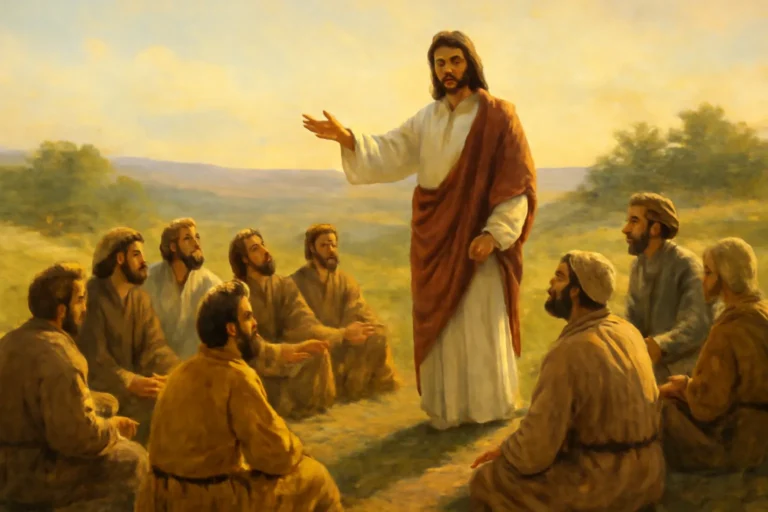
The exhortation to go into all the world and preach the gospel is one of the most enduring imperatives in Christian scripture. It is a call that transcends geography, culture, and era, inviting followers to share the transforming message of Jesus Christ with people who have never heard it or whose experience of faith has grown cold. In this guide, we explore a balanced, practical approach to fulfilling that commission in a way that is respectful, culturally aware, spiritually grounded, and sustainably effective. We will use a broad vocabulary of phrases—go to every nation, proclaim the good news to all peoples, carry the message to distant shores, announce the gospel to every tribe—to reflect the breadth of the mission while keeping the core purpose intact: to witness to Christ with integrity and love.
This article is designed for individual missionaries, church missions teams, and those discerning how best to mobilize resources for mission. It covers purpose, preparation, partnerships, practical planning, and ongoing assessment. While the emphasis is biblical and missionary in orientation, the principles translate well into any context where sharing a transformative message with others is part of your calling.
Historical Roots and Contemporary Relevance
The mandate to reach all nations has deep roots in the biblical narrative. From the Great Commission in the Gospel of Matthew to the early church’s expansion, the impulse to take the good news to others has shaped centuries of mission practice. In the modern world, globalization, technology, and cross-cultural communication have transformed how we engage with distant communities. Yet the fundamental challenge remains: how can we communicate a timeless truth in ways that are intelligible, respectful, and meaningful in diverse contexts?
A forward-looking mission strategy blends fidelity to scriptural ideals with humility toward human diversity. It recognizes that the gospel does not arrive in a vacuum; it intersects languages, histories, economic realities, and social structures. Therefore, the path to proclaiming the gospel globally must be adaptable, partnership-minded, and committed to long-term presence rather than short-term spectacle.
Key historical milestones
Early Christian expansion across the Mediterranean basin and Asia Minor.
Monastic and missionary movements that preserved and spread the faith in challenging contexts.
Modern mission agencies that foster cross-cultural partnerships and humanitarian service.
The advent of mass media and digital platforms that extend reach beyond geographic boundaries.
Clarifying the Vision: What It Means to Go and Proclaim
At its core, the mission to go and preach the gospel is not merely a transfer of information; it is an invitation to encounter Christ and participate in a transforming relationship with God. This involves both proclamation and demonstration—announcing the good news and embodying it through acts of love, justice, mercy, and service. A principled approach balances verbal witness with lived integrity.
Variations of this call—to all nations, to every tribe, to the ends of the earth, to the corners of the world—capture the breadth of the assignment. The underlying aim remains consistent: to present the gospel in language that is accessible, culturally aware, and spiritually compelling, while respecting the dignity and agency of the people you seek to serve.
Preparing Your Heart: Prayer, Discernment, and Commitment
Preparation begins long before luggage and itineraries. It starts in a quiet place where a person or a team invites God to align motives, heart posture, and expectations with the realities of cross-cultural engagement. Prayerful discernment helps identify readiness, gifting, and the specific contexts in which a person can be most effective.
Spiritual foundations for mission
Commitment to living with integrity and transparency in all relationships.
Dependence on the Holy Spirit for wisdom and courage in uncertain environments.
Receptivity to feedback from local partners and communities.
Practical discernment steps
Clarify your calling: What has God uniquely equipped you to contribute?
Identify contexts where your gifts can serve and empower others.
Establish guardrails for ethical engagement, including consent, safety, and cultural respect.
Training and Competencies: Equipping for Service
A robust mission effort rests on solid preparation across several dimensions: theological clarity, communication effectiveness, cultural humility, and practical problem-solving. Training should be ongoing and collaborative, drawing from mentors, sending churches, and local partners.
Core competencies for the field
Cross-cultural communication: learning to listen carefully, speak simply, and avoid jargon.
Evangelistic clarity: presenting the gospel with honesty about what it means to follow Christ.
Discipleship and follow-up: helping new believers grow in faith and community.
Conflict resolution and reconciliation skills in diverse settings.
Healthcare and safety awareness: basic first aid, risk assessment, and emergency preparedness.
Learning pathways
Pre-field coursework on mission theory, anthropology, and linguistics.
Language study that prioritizes practical usage for evangelism and relationship-building.
On-site mentoring with experienced practitioners and local believers.
Strategic Planning: Where and How to Begin
A thoughtful plan increases the likelihood of meaningful impact while reducing burn-out and dependency. Strategic planning aligns spiritual goals with realistic timelines, available resources, and respectful engagement with communities.
Steps to effective mission planning
Define clear goals and measurable outcomes (conversion is not the only measurable objective; look for discipleship, community involvement, and sustainability).
Map potential partners: churches, NGOs, schools, and community organizations that share values and can offer mutual support.
Assess logistical considerations: visas, health requirements, housing, transportation, and security.
Develop a risk management plan, including contingency strategies for political or health-related disruptions.
In addition to practical considerations, plan for long-term continuity with local partners so that the work does not depend solely on a distant team. A sustainable approach emphasizes capacity-building among local leaders, ownership of initiatives, and gradual handoffs.
Logistics and Operational Realities
Mission work involves a constellation of logistical tasks. Efficient management can prevent avoidable stress and free up more energy for relational engagement and ministry.
Common logistical considerations
Travel arrangements: flights, visas, vaccination requirements, and entry permissions.
Accommodation planning and local transportation options.
Equipment and materials: Bibles, training materials, translators, and digital resources.
Communication channels: local SIM cards, data plans, and secure online collaboration tools.
Security and safety are essential. Do not underestimate the importance of cultural safety guidelines, local laws, and respect for local authority structures. Establish a clear chain of accountability and a protocol for emergencies. Training should include situational awareness, safeguarding practices, and appropriate responses to potential conflicts or disasters.
Proclaiming the Gospel: Methods that Honor Context
Proclamation is not a one-size-fits-all activity. The most effective methods adapt to context while preserving the core message. A respectful approach seeks to understand questions people are actually asking and to present the gospel in ways that connect with everyday life—family, work, health, and hope for the future.
Clarity in presenting the gospel narrative and its implications for daily life.
Contextualization that preserves truth while avoiding cultural offense.
Listening first: hearing people’s stories and doubts before offering answers.
Respectful dialogue that invites questions rather than coercion.
The language you use matters. Consider simplified, idiom-conscious communication and avoid heavy theological jargon when engaging new listeners. In many contexts, demonstrating the gospel through acts of service—feeding the hungry, caring for the sick, supporting education—often opens doors for meaningful conversations about faith.
Engaging Communities: Culture, Identity, and Relationships
To declare the gospel in a way that endures, you must engage with people as neighbors and co-laborers, not as projects. Building authentic relationships requires time, patience, and a willingness to learn from others. Cross-cultural humility is not passive; it is an active posture of valuing other voices, asking permission, and, when appropriate, adjusting plans to protect and honor local leadership.
Practical ideas for community engagement
Partner with local churches and organizations to identify needs you can meet together.
Offer services that complement local initiatives: literacy classes, medical clinics, or vocational training.
Invite local believers to lead Bible study and outreach efforts from the outset.
Attend community events to observe and learn cultural norms before initiating programs.
This approach reflects a broader gospel ethic: service integrated with proclamation tends to yield deeper trust and more fruitful conversations about faith.
Partnerships and Collaboration: The Strength of Many Voices
Mission is rarely a solo endeavor. Collaboration with local churches, ministries, and civil society organizations strengthens credibility and leverages diverse gifts. Partnerships should be built on mutual trust, shared goals, and transparent accountability. A multi-partner approach helps distribute risk, increase resilience, and expand reach.
Best practices for fruitful partnerships
Co-create goals with local partners to ensure relevance and ownership.
Share decision-making and governance responsibilities where possible.
Communicate openly about resource allocation, success metrics, and setbacks.
Invest in capacity-building: training, leadership development, and infrastructure.
When you collaborate effectively, you become a conduit for a broader movement rather than a single voice in isolation. The goal is not merely to spread information but to foster communities that embody the message over time.
Health, Safety, and Ethical Considerations
The physical and moral safety of teams and communities is non-negotiable. Ethical conduct includes safeguarding vulnerable populations, obtaining informed consent, and avoiding any form of manipulation. Mission workers should practice humility, resist sensationalism, and place people’s welfare at the center of all activities.
Core guidelines
Respect local laws, customs, and governance structures as far as possible without compromising core ethical standards.
Maintain transparent financial practices and clear reporting lines.
Prioritize safeguarding: protect minors and vulnerable adults, and establish a reporting mechanism for concerns.
Plan for health considerations, including vaccination, access to medical care, and emergency evacuation if needed.
In all things, humility and accountability should govern your actions. The aim is to serve with integrity and to model a faith that is compassionate, just, and rooted in grace.
Measuring Impact: Fruitful Assessment of Your Mission
Evaluation helps you learn, adapt, and multiply effectiveness. Measurements should balance qualitative and quantitative indicators and prioritize sustainability, not merely numbers. Consider both immediate outcomes (responses to the gospel, baptism, discipleship enrollment) and long-term indicators (church-planting, community transformations, empowerment of local leaders).
Possible metrics and practices
Number of new believers who begin a discipleship process.
Formation of local leadership teams and sustainable programs.
Depth of relationships and the level of community engagement.
Quality and continuity of partnerships with local organizations.
Always complement metrics with stories and testimonies. Numerical data tells part of the story, but lived experiences reveal the real impact of the mission on people’s lives and communities.
Long-Term Sustainability: From Short Visit to Enduring Presence
A durable mission strategy emphasizes continuity. Short-term trips without a plan for long-term engagement can yield limited results or even dependency. The healthiest models focus on local leadership development, ongoing mentorship, and the gradual handoff of responsibilities to capable partners. The goal is not to establish a single program on a transient foundation but to seed a growing, self-sustaining movement that persists across generations.
Principles of durable mission impact
Invest in local ownership and leadership pipelines.
Provide ongoing training and resources, not just one-off projects.
Prioritize contextualized approaches that respect local rhythms and priorities.
Maintain ongoing accountability and mutual learning across partners.
Communication Styles: Phrases and Rhetoric Across Cultures
The language you use to share the gospel matters as much as the message itself. Using inclusive, culturally aware phrasing helps your audience connect with the narrative in meaningful ways. Variations like announce the good news to all nations, proclaim salvation to every people, or carry the message to distant lands reflect different emphases while preserving core content.
Practice listening as a communication strategy. When you listen first and respond with clarity, you create space for authentic dialogue. This approach fosters trust, reduces miscommunication, and often leads to deeper engagement with the Christian message.
Case Studies: Illustrative Paths to the Mission
Real-world examples can illuminate how the principles described here translate into practice. The following hypothetical case studies illustrate varied contexts and how teams might approach the mission with sensitivity, effectiveness, and faithfulness.
Case Study A: Campus to Community Outreach
A university-based team engages with student clubs to discuss questions about meaning, purpose, and justice.
After starting thoughtful conversations, the team partners with a local ministry to host service projects in nearby neighborhoods.
Discipleship groups form on campus and in the community, with leadership rotations among students and local mentors.
Case Study B: Rural Village Engagement
A field team learns the local language basics, attends cultural events, and identifies pressing needs in health and education.
They collaborate with a grassroots church to design literacy classes and clean-water projects.
Over time, local believers emerge as leaders who guide ongoing outreach and Bible study groups.
Case Study C: Urban Outreach with Mercy and Message
In a bustling city neighborhood, a coalition offers food assistance, healthcare access, and job-skills training.
In the midst of service, conversations about faith arise naturally, leading to intentional follow-up and congregational growth.
The focus shifts from event-based activity to sustained relationships and community development.
Ethos of the Mission: How to Stay True to the Core Calling
Across all contexts, the mission to go into all the world and preach the gospel should be anchored in a consistent ethos: humility, integrity, service, and love. This means listening more than speaking at times, valuing local leadership, and recognizing that the gospel’s power rests in the Spirit’s work within people, not solely in human effort.
In practice, this ethos translates into concrete habits: regular debriefs after field experiences, transparent financial stewardship, and ongoing personal and team spiritual disciplines that sustain endurance for the long arc of mission.
Persevering in the Mission with Hope and Joy
The journey to go to all nations and proclaim the gospel is a lifelong calling for many. It requires vision, planning, teamwork, and a posture of lifelong learning. When done with reverence for local contexts, accountability to partners, and a steadfast reliance on divine guidance, this mission can yield fruit that outlasts the moment and contributes to a broader, gospel-centered transformation in communities around the world.
As you consider your own path—whether as an individual, a family, or a whole church—remember that the aim is not merely to deliver a message but to share a transformative relationship that invites others to know Christ, to grow in faith, and to participate in a community of hope. The invitation remains open: to step out in faith, to serve with love, and to carry the message to distant lands with courage, generosity, and humility.
Go Ye to the World: A Timeless Call to Global Evangelism Across centuries and continents, countless voices have echoed a single imperative: to carry a message of hope beyond borders. This article explores the enduring summons to go ye to the world and preach the gospel, tracing its foundations, examining its methods, and considering its…
Overview: The Bible Verse Great Commission in Matthew 28:19-20 The Great Commission is one of the central passages in the New Testament that shapes the mission of the church across generations. In Matthew 28:19-20, Jesus entrusts his followers with a divine mandate that blends evangelism, discipleship, baptism, and teaching into a single, orchestrated missional rhythm….