Making Disciples Bible Verse: The Great Commission Explained
The phrase “making disciples” is more than a historical moment in the Gospels. It is a
continuous invitation to participate in the missional work begun by Jesus. In the pages of Scripture known as the Great Commission, Jesus
entrusts his followers with a calling that spans generations, cultures, and languages. This article explores what it means to make disciples, why the Great Commission matters today, and practical ways to translate
this divine directive into everyday life for individuals, families, churches, and communities.
Why this topic matters now
In many Christian communities, the term disciple-making is used to describe the process of helping people become
followers of Christ who think biblically, live biblically, and reproduce themselves in others. The Great Commission is not only about
conversion; it is about transformation and multiplication—a shift from one person trusting Christ to a
multi-generational movement that expands outward to the nations.
The Great Commission in Scripture: A brief overview
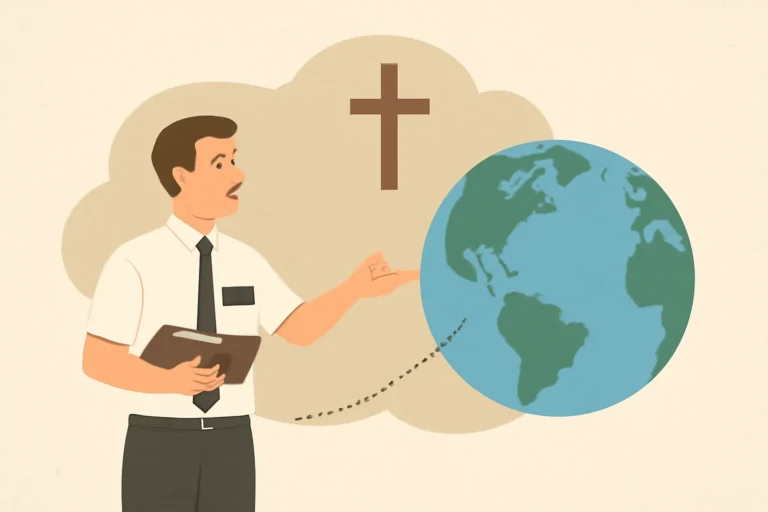
The Great Commission is often summarized by phrases like “Go and make disciples of all nations” and “teaching them to observe all that I have commanded you”. Across the Gospel narratives, Jesus is sending his
earliest followers to continue his work with authority, power, and purpose.
“Go ye therefore, and teach all nations.” — Matthew 28:19 (KJV)
“And lo, I am with you alway, even unto the end of the world.” — Matthew 28:20 (KJV)
These two verses encapsulate the missional heartbeat of the Great Commission: a call to move outward with the gospel, establish
new disciples, and remain assured of Christ’s presence in every step of the journey.
Key Bible passages on making disciples: a compact study
To understand the breadth of disciple-making, it helps to consider several core passages together. Below are brief
quotes that highlight essential elements of the biblical vision, followed by short reflections on their meaning for today.
Mark 16:15 — “Preach the gospel to every creature.”
Reflection: The gospel must reach all people. The instruction emphasizes proclamation as an essential seed in the process
of becoming a disciple, which then leads to deeper formation.
Luke 24:47 — “repentance and remission of sins should be preached in his name among all nations.”
Reflection: Discipleship begins with a clear call to repentance and the forgiveness found in Christ, extending beyond the
Jewish community to every nation.
John 20:21 — “As the Father hath sent me, even so send I you.”
Reflection: The sending of Jesus’ followers mirrors the Father’s mission. Discipleship is not a private hobby but a mission
with purpose and authority.
Acts 1:8 — “But ye shall receive power, after that the Holy Ghost is come upon you.”
Reflection: The ability to make disciples is rooted in divine empowerment, enabling believers to bear witness with boldness
and reach across boundaries.
What is a disciple? A biblical definition and broadening understanding
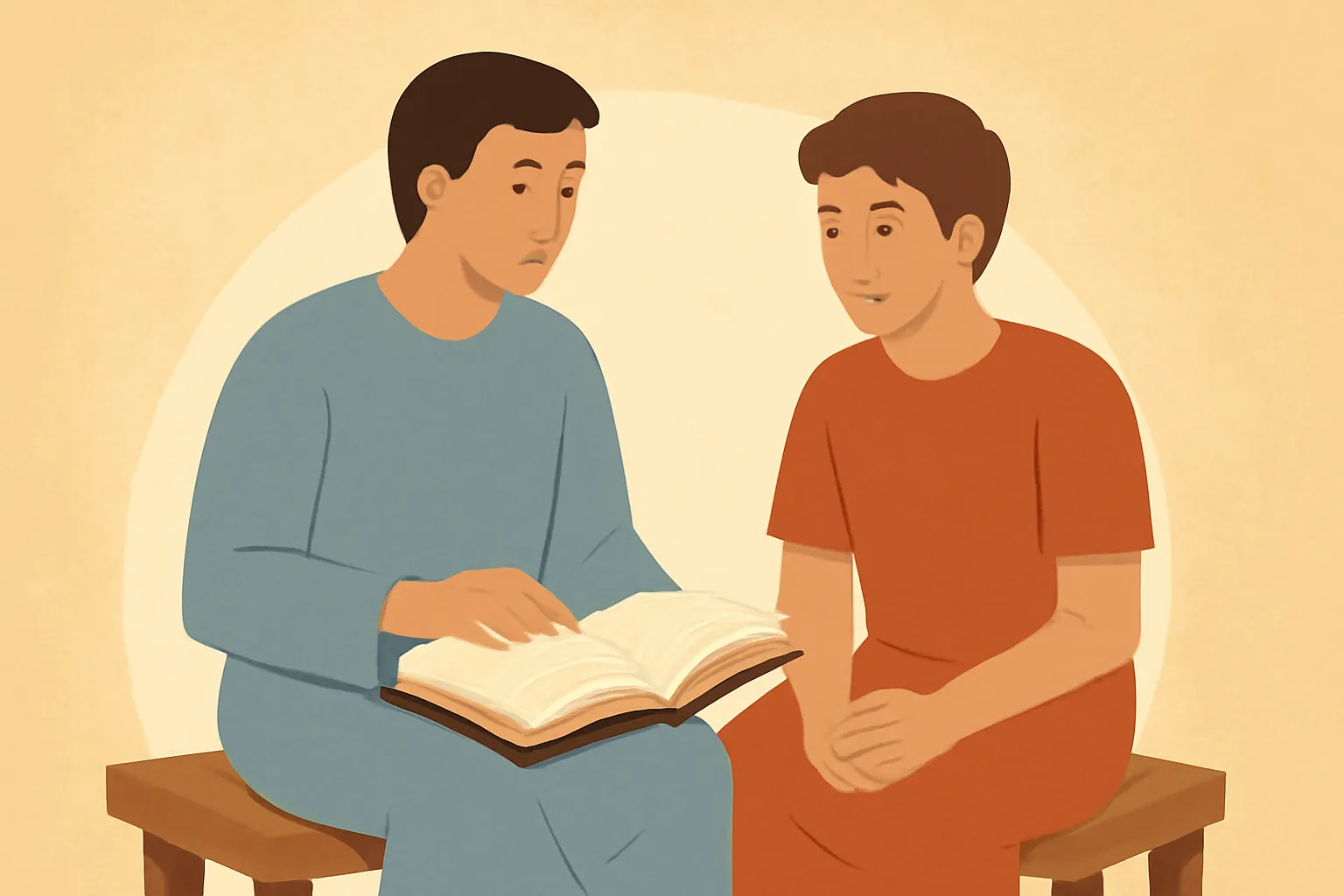
In Scripture, a disciple is more than a person who believes a set of truths. A disciple is someone who
follows Jesus, embraces his teaching, and begins to live in a way that reflects his character. The transformation is both
interior (renewed heart and mind) and outward (obedience in daily life and a life of mission).
Follower: A learner who prioritizes Jesus’ leadership in every area of life.
Adherent: Someone who aligns beliefs with practice—truth shaping behavior.
Ambassador: A person who represents Christ’s values in family, work, and community.
The Bible repeatedly links discipleship with community. A disciple is formed within the people of God and then sent to form
more disciples. This cycle of formation and multiplication is what Jesus commissions his followers to participate in.
Disciple-making framework: inviting, equipping, and sending
A practical way to organize the Great Commission in a local context is to think in three movements: invite, equip, send.
Each stage is essential and can be pursued at individual, family, and community levels.
Invite: introducing people to Jesus and the community of his followers
The first step in disciple-making is hospitality—creating spaces where people can encounter Christ and witness the
integrity of a Christ-centered life. This includes personal invitation, serving others, and demonstrating the love of Christ in tangible
ways.
Equip: teaching, mentoring, and modeling a life of faith
Discipleship involves intentional teaching and modeling—helping people understand Scripture, practice spiritual disciplines, and learn
to live out the gospel in daily routines. This is where the phrase “teaching them to observe all things” becomes
central.
Send: empowering people to multiply what they have learned
The final stage is sending believers into various spheres of life so they can reproduce the pattern of disciple-making themselves.
This may mean mentoring others, starting small groups, or participating in mission projects—always with the aim of multiplying
disciples who eventually become disciple-makers.
Disciple-making in practice: practical steps for individuals and families
Implementing the Great Commission in daily life involves concrete habits and routines. The following lists provide practical
pathways that can be adapted to different cultures, churches, and life stages.
Personal rhythm: daily Bible reading, prayer, and reflection; journaling what God is teaching in Scripture.
Mentor relationships: pairings or small circles where more mature believers intentionally invest in newer believers.
Family discipleship: family devotions, shared meals with spiritual conversation, and exposure to service opportunities.
Small-group discipleship: a structured setting for reading Scripture, asking hard questions, and practicing spiritual disciplines together.
Service and mission: engaging in acts of mercy and outreach as part of character formation, not merely as programs.
Multiplication mindset: intentionally training others to disciple others, creating a chain reaction of growth.
Discipleship pathways in a local church: building a sustainable model
Churches that pursue disciple-making well often adopt a clear pathway that guides people from first contact to
mature, multiplying disciples. A typical pathway might include entry points for seekers, next steps for new believers, and
an ongoing track for leadership development.
Entry point: invitation to explore faith, with practical steps to connect with a community.
Foundational track: basic Bible understanding, essential spiritual disciplines, and core identity in Christ.
Growth track: deeper doctrine, theological literacy, and ministry involvement.
Leadership track: training in mentoring, preaching, teaching, and overseeing others.
It is important to emphasize that a disciple-making pathway should be flexible, culturally appropriate, and
powered by the Holy Spirit. The goal is not merely to produce a program but to cultivate lives that are captivated by Christ and
compelled to share him with others.
Common misunderstandings and clarifications about the Great Commission
As churches and individuals wrestle with how to apply the Great Commission in contemporary contexts, several misunderstandings
often arise. Addressing these transparently helps keep the focus on Jesus, not on a method.
Discipleship is not merely conversion. It involves ongoing growth and the formation of a Jesus-centered life.
Discipleship is not about control. It is about invitation, empowerment, and partnership with the Holy Spirit.
Discipleship is not a one-size-fits-all program. It requires discernment, cultural relevance, and adaptability.
Another common question is whether the Great Commission is only for pastors or church leaders. The biblical vision is
communal and inclusive: every follower of Christ has a role in disciple-making, whether in formal teaching
roles or everyday conversations that point others toward Jesus.
Theological reflections: the person, the plan, and the presence
To fully appreciate the Great Commission, it helps to consider three intertwined dimensions: the person of Christ, the plan
of God for the nations, and the presence of the Holy Spirit empowering the church.
The Person: Jesus’ identity as Lord, Savior, and Teacher grounds the mission in relational connection and trust with him.
The Plan: God’s redemptive plan unfolds through a community of faith that multiplies across generations and borders.
The Presence: The Holy Spirit equips, guides, and sustains discipleship and mission in every context.
The interplay of these dimensions means that discipleship is both a doctrinal formation and a
practical lifestyle—a life of dependence on Christ, obedience to Scripture, and generosity toward others.
Missional implications: making disciples in diverse contexts
The Great Commission is not limited to a particular era or culture. It speaks to churches and believers who live in
different languages, socio-economic settings, and historical moments. Here are some missional implications to consider.
Cross-cultural disciple-making: embrace linguistic, cultural, and social realities while staying anchored in gospel truth.
Contextualized proclamation: present the gospel in ways that resonate with local questions and life situations without compromising the core message.
Reproducible patterns: create scalable methods for training others so that disciples become trainers of disciples.
In practice, this means equipping believers to adapt the core elements of disciple-making—invitation, teaching,
mentorship, and mission—to their own environments, whether in urban centers, rural settings, or international contexts.
Historical perspectives: how the early church understood disciple-making
The early Christian movement grew rapidly not through big events alone but through countless small communities that
multiplied life-on-life discipleship. In the book of Acts, we see ordinary believers forming communities that
cared for the vulnerable, taught one another, and extended hospitality to outsiders. Their model was simple yet radical:
Submit to the risen Christ as Lord.
Commit to the teaching of the apostles (Scripture-rich life).
Practice everyday love, service, and mission in their neighborhoods.
This historical pattern mirrors what Jesus called his followers to in the Great Commission: a movement built on
relationships, rooted in Scripture, and outward in its reach.
Addressing skepticism: responding with clarity and love
Some people are wary of the idea of disciple-making, associating it with coercion or coercive control. A healthy approach
keeps several guardrails in view:
Freedom in response: people respond to the gospel and to discipleship in their own time and season.
Gentle persuasion: the goal is invitation, not coercion; persuasion happens in the context of trust and relationship.
Humility: recognize that growth is God’s work and that we are instruments, not saviors.
When discipleship is exercised with humility, patience, and service, it becomes a powerful sign of the gospel’s
transformative work in a community.
The Great Commission remains a living invitation. Making disciples today means
partnering with Jesus in his mission to reach people, form them in the discipleship of Jesus, and send them to
reproduce that pattern in others. It is a circular, self-propagating movement that blesses the world as the church lives
out its identity in Christ.
As you reflect on the biblical verses that anchor this calling, consider three practical steps you can begin this week:
Identify one person you can invite into a deeper conversation about faith and life in Christ.
Start a simple study or devotional with a friend or family member, focusing on a manageable set of core truths about Jesus and salvation.
Pray for opportunities to share the gospel, mentor someone in Christian living, and engage in acts of service that demonstrate God’s love.
In a world of many voices, the enduring voice of the Great Commission calls the church to be a community that
embodies the gospel in word and deed. The Great Commission is not an event to be commemorated but a life
to be lived, a mission to be renewed, and a legacy to be multiplied for the sake of Christ and the coming kingdom.
The Eternal Call to Go into All the World The exhortation to go into all the world and preach the gospel is one of the most enduring imperatives in Christian scripture. It is a call that transcends geography, culture, and era, inviting followers to share the transforming message of Jesus Christ with people who have…
Overview: What is the Great Commission in Matthew 28? The Great Commission, as it appears in Matthew 28, is one of the most influential passages in the Christian Bible. It records Jesus’ final instructions to his disciples after the resurrection, positioning them for mission in a world wide beyond their immediate circle. This commission marks…
Go Ye to the World: A Timeless Call to Global Evangelism Across centuries and continents, countless voices have echoed a single imperative: to carry a message of hope beyond borders. This article explores the enduring summons to go ye to the world and preach the gospel, tracing its foundations, examining its methods, and considering its…
Overview: The Bible Verse Great Commission in Matthew 28:19-20 The Great Commission is one of the central passages in the New Testament that shapes the mission of the church across generations. In Matthew 28:19-20, Jesus entrusts his followers with a divine mandate that blends evangelism, discipleship, baptism, and teaching into a single, orchestrated missional rhythm….
In Christian teaching and practice, the command often labeled as the Great Commission is one of the clearest and most influential calls Jesus gave to his followers. The simple, urgent words “Go and make disciples” have shaped how churches think about mission, community life, and the spread of the gospel across cultures and continents. This…