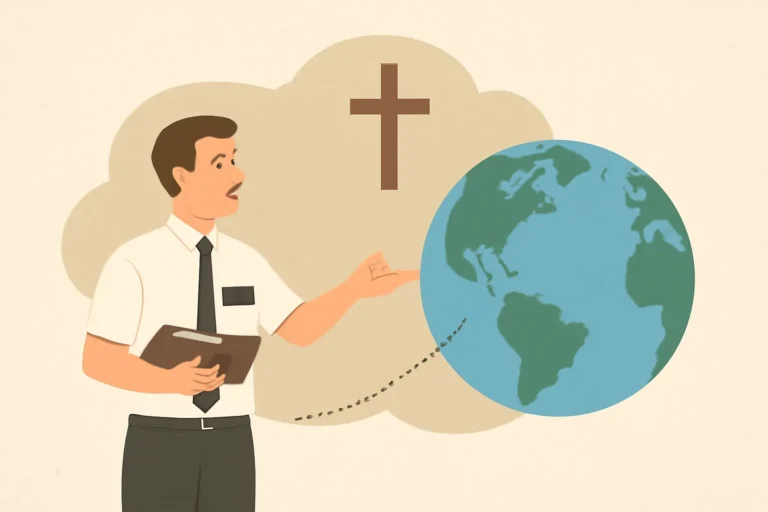
Go Ye to the World: A Timeless Call to Global Evangelism
Across centuries and continents, countless voices have echoed a single imperative: to carry
a message of hope beyond borders. This article explores the enduring summons to go ye to the world and preach the gospel, tracing its foundations, examining its methods, and considering its impact in diverse cultures. The phraseography of this mission has grown into a rich vocabulary—from Go ye into all the world to proclaim the good news, from share the gospel with every people to take the message to distant lands. Each variation signals a facet of the same core commitment: that the message of grace is not meant to be contained but shared.
In modern contexts, the call to evangelism is not a single event but a sustained process that blends proclamation, service, partnership, and cultural humility. It invites communities, churches, and individuals to participate in a global project—one that honors the dignity of every culture while offering a common hope. Whether framed in scriptural language or practical action, the aim remains clear: to announce the gospel to all nations and to do so in ways that bless rather than harm.
The urge to go forth and preach the gospel is more than a slogan; it is a narrative of formation. It shapes schools, mission agencies, local ministries, and dialogue across faiths. It invites us to consider how best to communicate the timeless truths of mercy, forgiveness, reconciliation, and eternal life in ways that resonate with people who live in very different places and circumstances.
Origins, Authority, and the Shape of the Mission
The mandate to go ye to the world has a scriptural core, most famously anchored in a directive that has guided Christian mission for two millennia. The core passage—often cited as a basis for global outreach—invites believers to go into all the world and to preach the gospel to every creature. This directive is not merely about geography; it is about posture—an orientation toward others, a readiness to listen, and a willingness to engage across differences.
Within this heritage, several core questions guide contemporary practice:
What does it mean to proclaim the gospel in a way that respects culture and conscience?
How can communities balance proclamation with service, justice, and mercy?
What forms of partnership build local ownership rather than dependency?
How do we measure impact without reducing faith to measurable metrics alone?
The answer to these questions is not monolithic. It evolves with time, context, and conversation. What remains invariant is the invitation to carry a message that speaks to the universal human longing for dignity, forgiveness, and belonging. In this sense, the call to go to the world is a call to witness, serve, learn, and collaborate toward the flourishing of all peoples.
Historical milestones and the growth of the mission
Early church outreach and the spread of the gospel through trade routes and pilgrimage paths.
Translation and literacy movements that opened sacred texts to new audiences.
Missionary societies and denominational networks that organized long-haul travel, education, and medical aid.
Indigenous leadership emerging within mission contexts, fostering local forms of proclamation and worship.
Modern global partnerships that emphasize mutual learning, equitable collaboration, and sustainable community development.
Strategies for Global Evangelism in the 21st Century
In today’s interconnected world, the call to go forth and preach the gospel is often realized through collaborative, context-aware strategies. Instead of a single, uniform approach, practitioners pursue a spectrum of methods designed to respect local realities while preserving message integrity.
Principles for effective proclamation
Contextualization: Adapt language, examples, and imagery to local life without altering core truths.
Service as a bridge: Demonstrate love through acts of mercy, justice, and practical aid, creating trust for words that follow.
Partnership and reciprocity: Work with local churches, NGOs, and communities in ways that build shared leadership.
Authenticity and integrity: Communicate with honesty, avoiding coercion or manipulation.
Sustainability: Focus on long-term empowerment and capacity-building rather than one-off events.
A robust evangelism program often blends preaching the gospel with discernment, discipleship, and local leadership development. The aim is not simply to convert individuals but to cultivate vibrant communities where faith can grow intelligibly and joyfully. In many places, the language has shifted from “mission trips” to “mission partnerships,” emphasizing ongoing relationships rather than isolated encounters.
Practical frameworks
Training locals as evangelists and pastors who understand their cultural milieu.
Using media and technology to share stories of transformation while honoring privacy and consent.
Engaging in interfaith dialogue as a component of respectful witness.
Encouraging holistic outreach that addresses education, health, and economic well-being alongside spiritual nurture.
The phrase go ye to all the world remains a verb of action—an invitation to move from contemplation to courageous practice. Whether through preaching, teaching, or storytelling, the gospel is shared in ways that invite dialogue, invite critique, and invite transformation.
Communication channels and modes
Public proclamation in local venues and urban centers
Small-group Bible studies and home gatherings
Digital outreach: podcasts, social media, and online courses
Partnership events: conferences, exchange visits, and joint service projects
Contexts, Cultures, and the Art of Respectful Sharing
A hallmark of modern evangelism is the respectful sharing of the gospel, which recognizes that not all audiences respond to the same presentation. The call to go to the world is also a call to humility: to listen first, to learn from insiders, and to honor diverse expressions of faith.
In many regions, the most effective evangelism emerges from partnerships with local leaders who understand the social dynamics, languages, and life rhythms of their communities. Proclaiming the gospel—whether in public spaces or through intimate conversations—occurs in dialogue as much as in declaration. The best communicators adapt their tone, linger over questions, and acknowledge uncertainty with honesty.
Adapting the message without diluting its core
Translate concepts rather than words—translate meaning into equivalent cultural frames.
Use imagery that resonates with local experience—metaphors that spring from daily life.
Acknowledge other spiritual paths and present the gospel with clarity and charity.
Highlight transformative stories—testimonies that demonstrate hope and resilience.
The double emphasis on truth and tenderness guides communicators toward a balance: to be faithful to foundational claims while being winsome in presentation. When the message is heard as good news rather than doctrine alone, communities are more likely to engage in genuine conversation and to explore what grace looks like in practice.
Ethical considerations in cross-cultural outreach
Respect for sovereignty and local leadership
Consent and safeguarding of communities
Transparency about funding, aims, and expectations
Sensitivity to cultural symbols, holidays, and social norms
Training, Equipping, and Building Sustainable Partnerships
To preach the gospel with lasting impact, investing in people is essential. Training is not only about doctrine but about equiping workers to navigate complex social realities, to heal wounds, and to foster enduring spiritual communities.
Scriptural literacy and hermeneutics so the gospel remains coherent across contexts
Apologetics and cultural engagement to address objections without hostility
Mission leadership and team dynamics for collaborative work
Discipleship pathways that support ongoing growth after initial proclamation
A modern training framework often prioritizes mentored leadership development, hands-on ministry experience, and cross-cultural competencies. Trainees learn to adapt, to listen, and to walk with communities over months and years rather than days or weeks. The result is a generation of evangelists who are rooted, resilient, and relational.
Partnership models that respect autonomy
Mutual learning agreements with local congregations
Shared ownership of projects and goals
Equitable exchange of resources, including financial and human capital
Joint evaluation and accountability that centers local benefit
Some partnerships emphasize short-term service projects that become bridges for longer commitments, while others focus on leadership development and theological education within local contexts. Both approaches can be legitimate if driven by mutual respect, shared vision, and a genuine desire to see communities flourish in all dimensions of life.
Stories of Impact: Real People and Real Places
While theories and strategies matter, the heart of the gospel is found in stories of transformation—stories where individuals move from estrangement to belonging, from fear to hope, and from isolation to community. Across cities and villages, the call to go ye to the world meets people in their daily routines and gives them a new vocabulary for hope.
Case study: Urban outreach in a global city
In a multicultural metropolis, a coalition of churches and nonprofit groups launched a program that combined language exchange, neighborhood meals, and street outreach. Participants learned to proclaim the gospel in a context where many residents spoke multiple languages and carried diverse beliefs. The initiative prioritized listening sessions, invited dialogue, and the sharing of stories of personal transformation. Within a year, a network of missional communities formed, each rooted in a specific neighborhood but connected to a wider vision for care and advocacy.
Case study: Rural partnership and sustainable development
In a rural region, an evangelism initiative partnered with local farmers to improve soil health, weather resilience, and access to markets. As communities benefited economically, trust deepened, and conversations about faith became natural and ongoing. This example demonstrates how going into the world can intersect with humanitarian service, creating a context in which the gospel is heard as good news that relates to real-life needs.
Case study: Educational outreach and interfaith dialogue
In areas with strong pluralistic communities, some evangelistic efforts focused on education and respectful dialogue. By offering seminars on history, ethics, and conservation, these groups created spaces for shared learning and measured conversations about faith that honored difference. When faith claims were presented with humility and backed by credible service, many participants engaged with the gospel in a way that felt credible and non-coercive.
Testimonies of transformation
A former skeptic describes a journey from doubt to engagement through neighborly acts of kindness.
A student who encountered the gospel in a campus ministry recounts how faith became a source of purpose and resilience.
A community leader shares how mercy projects opened doors for conversations about meaning and destiny.
Ethics, Respect, and the Courage to Listen
The call to share the gospel is inseparable from the ethics of mutual respect and sensitive listening. The best evangelistic work acknowledges the legitimacy of different spiritual paths while presenting the gospel as an invitation rather than a coercive mandate. This posture safeguards relationships and creates spaces where truth can be pursued together.
Ethical evangelism asks hard questions: Are we building dependency or empowering local leadership? Are resources used transparently? Do we honor the history and dignity of every community? When these questions guide practice, the result is not merely numbers—it’s the cultivation of trust, the opening of doors for honest conversation, and the possibility of lasting change.
Principles of respectful evangelism
Center relationships over results
Honor local authorities, traditions, and convictions
Offer service that addresses real needs and sustains community effort
Encourage critical thinking and freedom of response
Measuring Impact and Ensuring Sustainability
Assessing the success of a global evangelism effort is nuanced. While numerical growth—such as numbers of new believers or Bible study groups—can be informative, it should not be the sole measure. A broader portrait includes depth of discipleship, community health, social impact, and the vitality of leadership development.
Long-term sustainability emerges when local communities are empowered to carry forward the work with minimal external dependence. This requires deliberate investment in training, leadership pipelines, and local stewardship. It also involves building local capacity for conflict resolution, education, and care for the vulnerable.
Balanced metrics for a global mission
Discipleship depth: number of mature believers, small groups, and ongoing mentorship relationships
Leadership development: local pastors and lay leaders serving with autonomy
Community impact: improvements in health, education, and social well-being
Cultural humility: demonstrated respect for local customs and active listening in communities
The practice of proclaiming the gospel and the practice of service are not mutually exclusive but mutually enriching. When communities experience credible acts of love integrated with truthful proclamation, the doors for dialogue widen, and the possibility of conversion to faith becomes a more thoughtful, informed, and voluntary journey.
Closing Reflections: A Global Conversation about the Gospel
The ancient call to go into all the world continues to invite new generations to participate in a shared enterprise. The phrase go ye to the world and preach the gospel embodies both urgency and generosity: urgency that the message of grace should reach every corner of creation, and generosity that those who hear will be welcomed into a community of love and accountability.
As believers reflect on this mandate, they are urged to consider not merely the destination but the journey itself. The journey involves listening to speakers of many languages, walking with neighbors in times of need, and offering a hopeful vision that reorients lives toward what is true, good, and beautiful. Whether expressed as Go ye into all the world and preach the gospel, or as Go forth and proclaim the good news, or as Carry the message beyond borders, the essence remains the same: a call to share grace with generosity, truth with tenderness, and faith that bears fruit.
For readers who seek practical steps, a concise invitation follows: consider partnering with a local organization, volunteering your gifts where you are, or pursuing training in cross-cultural ministry. Start with listening, learn from those who live in other contexts, and then decide how best to contribute in ways that honor both the gospel and the people you seek to serve. In all things, let the aim be a flourishing neighbor and a shared trust in the One who calls us to go to the world.
Overview: The Bible Verse Great Commission in Matthew 28:19-20 The Great Commission is one of the central passages in the New Testament that shapes the mission of the church across generations. In Matthew 28:19-20, Jesus entrusts his followers with a divine mandate that blends evangelism, discipleship, baptism, and teaching into a single, orchestrated missional rhythm….
The Eternal Call to Go into All the World The exhortation to go into all the world and preach the gospel is one of the most enduring imperatives in Christian scripture. It is a call that transcends geography, culture, and era, inviting followers to share the transforming message of Jesus Christ with people who have…