Overview: What is the Great Commission in Matthew 28?
The Great Commission, as it appears in Matthew 28, is one of the most influential passages in the Christian Bible. It records Jesus’ final instructions to his disciples after the resurrection, positioning them for mission in a world wide beyond their immediate circle. This commission marks a turning point: from Jesus’ earthly ministry among a specific people in a particular place to a universal invitation to follow him, proclaim the good news, and form communities of learning and obedience across nations. In this sense, the Matthew 28 Great Commission is not merely a historical anecdote; it is a foundational mandate that has shaped ecclesiology, mission strategy, and everyday discipleship across two millennia.
In this article, we explore the Matthew 28 Great Commission from multiple angles: its meaning, the context in which it arose, and the broad mission it entrusts to followers of Jesus. We will use variations of the phrase to highlight the breadth of its implications—including the “commission in Matthew 28,” the “great sending,” the “Matthew 28:19–20 commission,” and the “final command of Jesus” to his disciples.
Context and literary setting: What comes before and after the commission?
To understand the Matthew 28 Great Commission fully, it helps to set it in context. The passage sits at the close of the Gospel of Matthew, after Jesus has been crucified, buried, and then risen. In Matthew’s narrative, Jesus appears to his disciples in Galilee, fulfills Messiah expectations, and then entrusts them with a mission that moves beyond Jerusalem, Judea, and even the early Christian community’s familiar boundaries toward the entire world.
Two contextual threads deserve emphasis:
Resurrection and revelation: The moment in which Jesus speaks the commission follows a resurrection appearance, signaling that God’s redemptive plan in Christ is moving into a new, global phase.
Missional design and ecclesial formation: The command to «go and make disciples» is not only about individual faith; it is about forming communities (churches) that learn, obey, and propagate Jesus’ teachings.
From a literary standpoint, Matthew ties the Great Commission to the prophetic arc of Israel’s story, in which blessing is extended to all nations. The disciples’ task is described in terms of authority, proclamation, baptism, and teaching. Each element serves as a pillar for how communities live in response to the risen Christ. This is the Matthew 28:19–20 commission in its full form, often quoted in shorthand as the Great Commission, but whose breadth includes both doctrinal proclamation and practical discipleship.
Verse-by-verse sense: a closer look at Matthew 28:16–20
Verse 16–17: The meeting in Galilee and worship
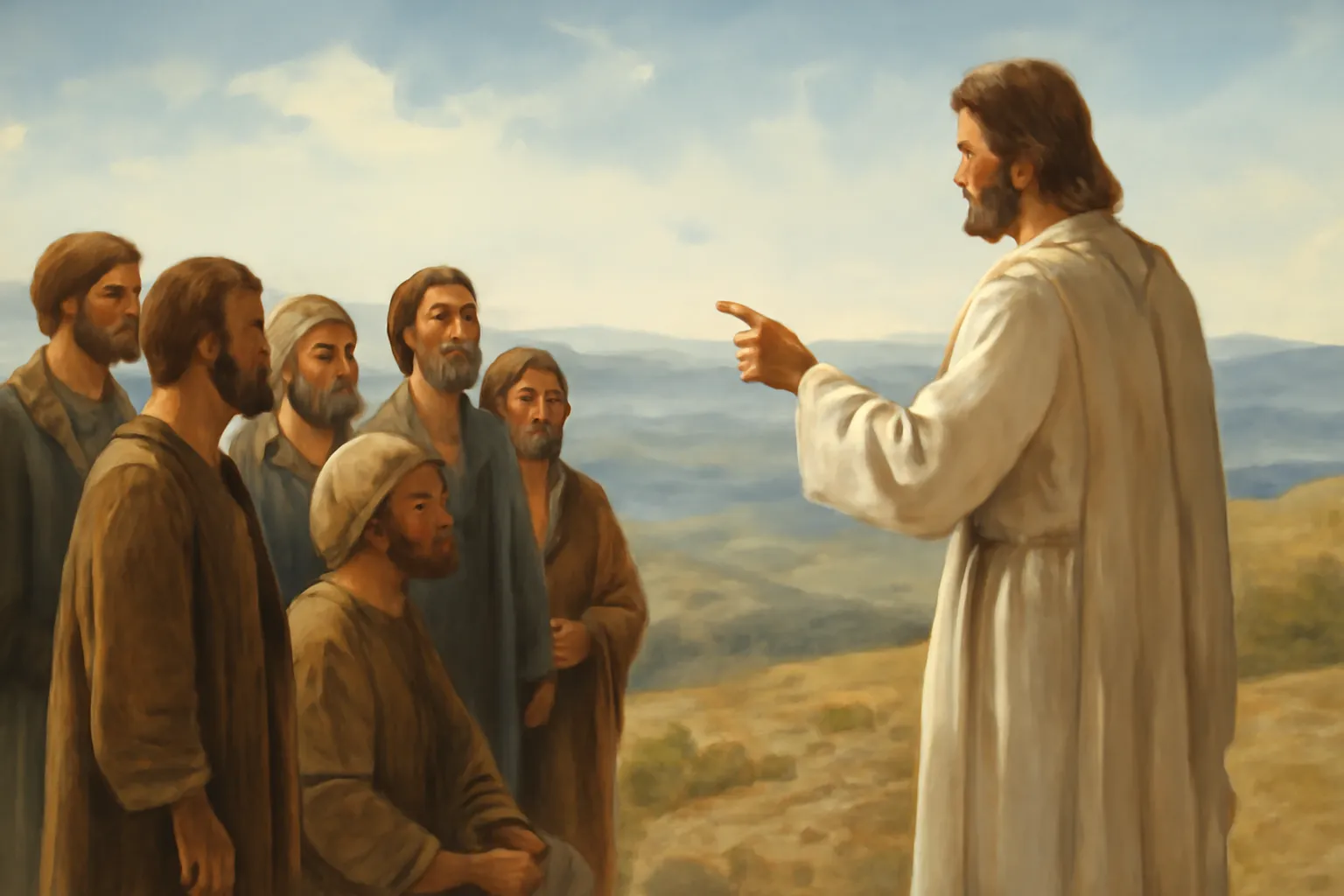
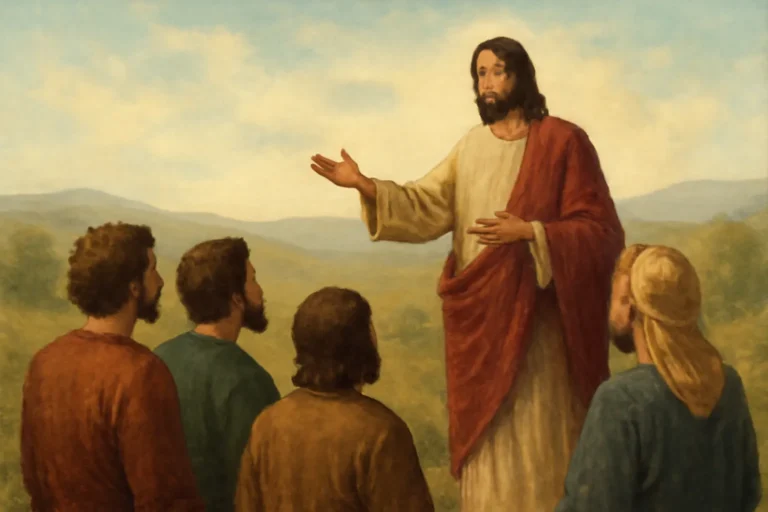
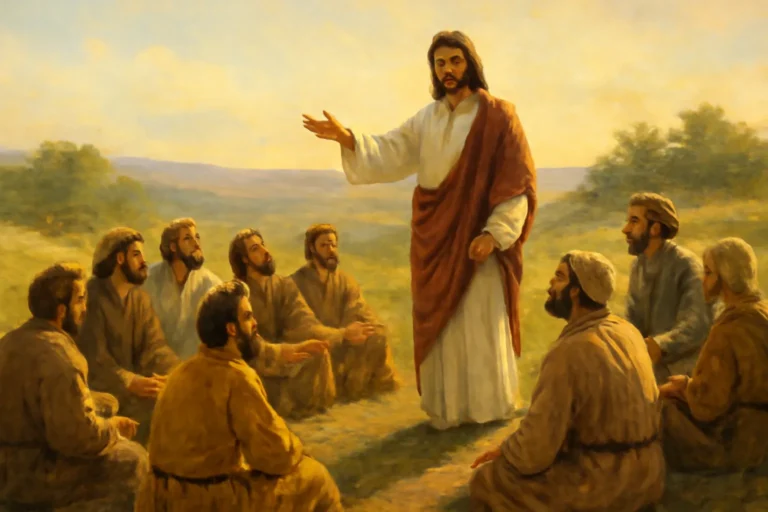
The narrative begins with the eleven disciples traveling to the mountain where Jesus had directed them. The scene culminates in a moment of worship and doubt among the crowd, reflecting real human experience as they encounter the risen Lord. In this moment, the tone shifts from anxious expectation to confirmed allegiance as they bow in reverent response. In the language of the text, “they worshiped him, but some doubted.”—a candid note that the witness of the resurrection sometimes coexists with lingering questions. This nuance matters because it frames the Great Commission not as a flawless perfect moment but as an authentic invitation to join a mission in which imperfect people participate in God’s purposes.
Verse 18–20: The content of the commission
All authority in heaven and on earth has been given to me. This is the source of the mission’s confidence. The risen Jesus asserts sovereignty over every realm, providing the basis for a universal task. The commission itself is multifaceted:
Go therefore—the moving imperative that initiates movement beyond the immediate circle of Jesus’ followers.
Make disciples of all nations—the universal scope of the mission, transcending ethnic, cultural, and geographic boundaries.
Baptizing them in the name of the Father and of the Son and of the Holy Spirit—the integral initiation rite of the church, rooted in Trinitarian faith.
Teaching them to observe all that I have commanded you—the ongoing process of discipleship, obedience, and formation.
Behold, I am with you always, to the end of the age—the promise of divine presence that accompanies the mission across generations and contexts.
The text often appears in translation as the Great Commissioning passage of Matthew, but it is also read as a mission mandate with a dual focus: bringing people into relationship with God through baptism and shaping their lives through the teaching of Jesus. In this sense, the command is not merely about evangelism as a one-time event; it is about ongoing discipleship and community formation that lasts until “the end of the age.”
Meaning and interpretation: What does the Matthew 28 Great Commission imply?
Scholars and readers throughout history have asked what the Great Commission in Matthew 28 means for belief, practice, and mission. The passage has inspired a wide range of interpretations, yet several core ideas are widely shared across traditions:
Universal mission: The charge to “make disciples of all nations” underscores a cosmopolitan vision that extends beyond the original followers to every tribe and tongue. This is the Matthew 28 Great Commission as a global invitation rather than a regional program.
Trinitarian baptism: The formula “in the name of the Father and of the Son and of the Holy Spirit” is a central feature for many Christian communities, anchoring baptism within a triune understanding of God and signaling union with the triune God in the life of the church.
Discipleship as instruction and obedience: The call to “teach them to observe all that I have commanded you” emphasizes not only belief but also ethical formation and obedience to Jesus’ teaching.
Divine presence: The assurance that Jesus is “with you always” reframes mission as a collaborative journey with the risen Christ, rather than a solitary human endeavor.
People of faith have approached this commission from multiple theological angles. Some emphasize the evangelistic dimension—sharing the good news and inviting response—while others stress the formative dimension—building communities where people grow in obedience to Jesus. Still others emphasize the social or justice-oriented implications of the mission, such as care for the vulnerable, peacemaking, and reconciliation. In all cases, the Matthew 28 sending remains a durable articulation of how the church participates in God’s redemptive work in the world.
Historical and theological context: How the Great Commission emerged
The Matthew 28 commission did not arise in isolation. It is tied to the broader arc of the Gospel of Matthew, which presents Jesus as the fulfillment of Jewish expectation and the bearer of God’s kingdom. The commissioning scene resonates with Old Testament themes of blessing to the nations and the sending of a people who embody God’s rule in the world. The language of authority, mission, baptism, and teaching reflects both ancient near eastern rhetoric about royal commission and early Christian expectations about the church’s confessional and missional identity.
Historically, this passage has served as a touchstone for the church’s self-understanding in every era. In the early church, the Great Commission was invoked to justify missionary activity, the expansion of Christian communities beyond Jewish boundaries, and the development of sacraments, catechesis, and communal life. Over the centuries, different ecclesial traditions have highlighted different aspects of the commission—from crusades of evangelism to monastic and contemplative forms of discipleship, from catechetical instruction to social action. Regardless of emphasis, the central claim remains: Jesus sovereignly sends his followers with a mission that cannot be confined to one place, one culture, or one era.
It is also worth noting that there is a scholarly discussion about the exact wording in the Greek manuscripts, particularly the baptism formula. Some textual witnesses use a more explicit “into the name of” and others use “in the name of.” The majority of modern translations render it as “in the name of the Father and of the Son and of the Holy Spirit”, aligning with a confessional understanding of the Trinity. This textual nuance leads to important theological and liturgical implications, particularly for views on baptism, the nature of God, and how the church confesses Trinitarian faith as part of its identity.
Theological significance: Trinitarian faith and the mission
The Great Commission in Matthew 28 is often read as a hinge theology moment because it explicitly grounds baptism in a triune God. The formula serves as more than a ritual instruction; it signals the church’s confessional identity. By naming the Father, the Son, and the Holy Spirit, the church confesses God as revealed in the Jesus story, while inviting new disciples into that relationship through baptism and teaching.
From a theological perspective, several themes stand out:
Authority of Christ: The statement that “All authority in heaven and on earth has been given to me” provides the basis for mission, conferring legitimacy and power on the church’s work.
Trinitarian baptism: The baptismal formula ties the church’s life to the triune God, shaping liturgy, catechesis, and identity across generations.
Discipleship as participation: Teaching “to observe all that I have commanded you” frames discipleship as active obedience and continued imitation of Jesus’ teachings.
Divine presence in mission: The eternal promise of Jesus’ presence sustains and empowers the church as it engages across cultures and eras.
Different Christian traditions emphasize distinct facets of this theological core. Some highlight evangelistic dynamism—cross-cultural proclamation and conversion. Others emphasize sacramental continuity—baptism and pastoral care as central to life in Christ. Yet across these differences, the Great Commission’s theological center remains a unifying claim: God invites the world to know Jesus, obey his teachings, and live within communities animated by his presence.
Implications for mission, evangelism, and discipleship today
In the contemporary world, the call of the Matthew 28 Great Commission speaks to churches and individuals in diverse contexts—urban centers, rural villages, online communities, and mission fields. The broad outline remains relevant, while the methods adapt to time and place. Here are several key implications for modern practitioners and communities:
Global reach with local roots: The command to make disciples of all nations implies a both/and approach—engaging cross-cultural mission while cultivating local communities of learning and worship.
Integrated discipleship: Discipleship today combines proclamation with instruction, spiritual formation, and practical service—teaching believers to live out Jesus’ commands in daily life.
Baptism as initiation and belonging: Baptism remains a public declaration of faith and inclusion into a faith community, marking entry into a life shaped by the gospel.
Teaching as lifelong process: The imperative to teach “all that I have commanded” signals ongoing formation—catechesis, study, mentorship, and denominational or local expressions of doctrine and practice.
Presence of Christ in mission: The promise of Christ’s continuous presence reorients motive and courage for the church’s work, especially in daunting contexts or marginalized communities.
Various practical expressions flow from the Great Commission, including:
Mission strategy that prioritizes relationships, contextualized communication, and culturally sensitive proclamation.
Discipleship pathways that start with foundational beliefs and expand into ethical instruction, spiritual disciplines, and community service.
Sacramental life and rites that anchor believers in the life of the church—especially baptism and teaching-oriented catechesis.
Ecclesial structures that empower leadership, mentorship, and missional cooperation across denominations and cultures.
For readers and congregations seeking to embody the Matthew 28 sending in today’s world, the tasks are not only to evangelize but to accompany people as they grow in faith, to foster inclusive communities, and to participate in transformative justice and mercy that reflect the gospel’s good news in practice.
Variants of language and breadth of meaning: different ways to frame the Great Commission
Because the core text has inspired centuries of reflection, scholars and pastors often speak of the Matthew 28 commission using various phrases to capture its breadth. Some common variants include:
Each of these labels highlights a different emphasis—be it the authority behind the command, the universal scope, the initiation of baptism, or the ongoing teaching necessary for life in Christ. The Great Commission in Matthew therefore functions as a dynamic, multi-dimensional text that can be read with different theological lenses without losing its core assertion: that followers of Jesus are sent into the world to proclaim the gospel, form new communities of faith, and nurture obedience to Jesus’ commands.
Common questions and debates around the Great Commission
As with any central biblical passage, readers bring questions about interpretation, application, and relevance. Here are a few frequently asked questions and concise notes on the debates they provoke:
What about the baptism formula? The phrase “in the name of the Father and of the Son and of the Holy Spirit” is part of the traditional rendering, reflecting a Trinitarian confession. Some textual variants and non-Trinitarian interpretations exist, but the mainstream scholarly and ecclesial consensus treats the Triune baptism formula as a theological core for Christian identity.
Is the Great Commission primarily about evangelism or social action? The passage combines proclamation, baptism, and teaching. Many communities emphasize one aspect more than others, but the strongest understanding sees evangelism and discipleship as inseparable—proclaiming the gospel and forming people into communities that embody its ethical call.
Does the Great Commission apply to all Christians equally? Most traditions affirm that the commission is binding on the entire church and on individual believers, though the ways in which people participate (local evangelism, long-term missions, vocational ministries, etc.) can differ widely.
What is the nature of “teaching” in Matthew 28:20? Teaching includes instruction in Jesus’ commands, moral formation, doctrinal instruction, and the practice of obedience within a community of faith. It is not merely cognitive learning but transformative living.
These debates are not merely academic; they influence how churches structure missionary training, catechesis, and cross-cultural outreach. The enduring value of the Matthew 28 Great Commission lies in its capacity to be interpreted in ways that preserve core commitments while addressing new contexts and new questions.
The ongoing impact of the Great Commission
The Matthew 28 Great Commission stands as a pivotal moment in Christian narrative—an invitation and mandate that propelled a movement beyond a single place and time toward a global, enduring mission. Its bold claim that Jesus has “all authority in heaven and on earth,” its commissioning of believers to go and make disciples of all nations, its baptismal instruction in the Triune name, and its call to teach obedience form a cohesive vision for a faith that is both proclamation and practice, both belief and behavior, both worship and service.
Today, as churches navigate rapid cultural change, digital communication, and shifting religious landscapes, the Great Commission continues to be a compass rather than a checklist. It invites believers to be marked by hospitality to strangers, ready to share the good news, and committed to nurturing communities where people can grow into the likeness of Christ. The presence of Christ with his people—“to the end of the age”—assures that the mission is not dependent on human strength alone but is carried forward by the Spirit who guides, equips, and sustains the church across generations.
Whether described as the Matthew 28 commission, the Great Sending, or the mission mandate of Jesus, its core message remains: a risen Lord invites his followers to participate in a world-transforming work that began with his life, death, and resurrection and continues through communities gathered in Jesus’ name. The article’s aim has been to illuminate the deeper layers of meaning—how the Great Commission in Matthew informs faith, shapes practice, and beckons the church toward a vibrant, compassionate, and courageous witness in every age.
Go Ye to the World: A Timeless Call to Global Evangelism Across centuries and continents, countless voices have echoed a single imperative: to carry a message of hope beyond borders. This article explores the enduring summons to go ye to the world and preach the gospel, tracing its foundations, examining its methods, and considering its…
Making Disciples Bible Verse: The Great Commission Explained The phrase “making disciples” is more than a historical moment in the Gospels. It is a continuous invitation to participate in the missional work begun by Jesus. In the pages of Scripture known as the Great Commission, Jesus entrusts his followers with a calling that spans generations,…
In Christian teaching and practice, the command often labeled as the Great Commission is one of the clearest and most influential calls Jesus gave to his followers. The simple, urgent words “Go and make disciples” have shaped how churches think about mission, community life, and the spread of the gospel across cultures and continents. This…
Overview: The Bible Verse Great Commission in Matthew 28:19-20 The Great Commission is one of the central passages in the New Testament that shapes the mission of the church across generations. In Matthew 28:19-20, Jesus entrusts his followers with a divine mandate that blends evangelism, discipleship, baptism, and teaching into a single, orchestrated missional rhythm….
The Eternal Call to Go into All the World The exhortation to go into all the world and preach the gospel is one of the most enduring imperatives in Christian scripture. It is a call that transcends geography, culture, and era, inviting followers to share the transforming message of Jesus Christ with people who have…