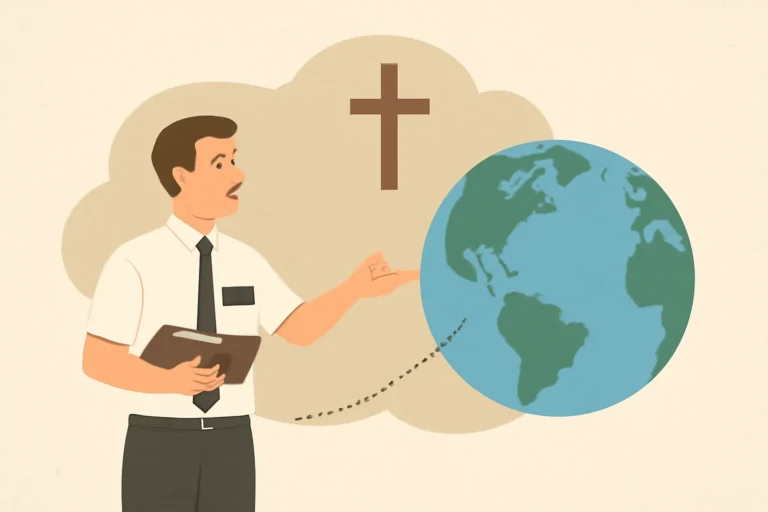
In Christian teaching and practice, the command often labeled as the Great Commission is one of the clearest and most influential calls Jesus gave to his followers. The simple, urgent words “Go and make disciples” have shaped how churches think about mission, community life, and the spread of the gospel across cultures and continents. This article explains what Jesus said, what it meant in his own first-century context, how the various Gospel writers frame the mission, and how believers today can live out the mandate in practical, meaningful ways. Throughout, you will see variations of the phrase “Jesus said go and make disciples” to reflect the broad spectrum of its formulation in Scripture and tradition, while keeping the essential call intact: to send, to teach, and to form followers of Christ who live out his teaching in the world.
The Great Commission is the label given to Jesus’ final instructions to his followers after his resurrection, recorded in the Gospel of Matthew as a formal commissioning. It synthesizes a number of strands of Jesus’ teaching: authority belonging to the risen Lord, the scope of the mission to all nations, the witnesses who will carry the message, the initiation of new believers through baptism, and the ongoing instruction that equips disciples to live in obedience to Jesus. The core passage in Matthew 28:18–20 reads with emphasis on four movements: authority, go and make disciples, baptism, and teaching. A fuller sense of the commission also appears in other Gospel accounts and in other New Testament writings, creating a robust, multi-faceted picture of Jesus’ sending of his followers.
Key verbs and their meanings: Go, Make disciples, Baptizing, Teaching
The command centers on four dynamic actions. Each one carries a distinct sense and a distinct set of responsibilities for the church and for individual believers:
Go — A mobilizing verb that pushes beyond the safety of familiar spaces. It invites movement, crossing boundaries, and engaging people who may be outside our immediate circle. In modern life this means sharing the message in local neighborhoods, in workplaces and schools, and across cultures through travel, migration, or digital outreach.
Make disciples — This is not merely converting someone to a set of beliefs; it is forming learners, apprentices who grow in obedience, trust, and Christlike character. The process includes invitation, mentoring, modeling, accountability, training, and the cultivation of spiritual disciplines that sustain growth over a lifetime.
Baptizing — Baptism is the rite of initiation into the community of faith, signifying identification with the Triune God and entrance into the life of the church. It marks a public affirmation of belonging and a commitment to live as a disciple under Jesus’ lordship.
Teaching — The ongoing instruction that equips disciples to observe all that Jesus commanded. This is not limited to academic teaching; it includes catechesis, sermons, small-group study, mentorship, and the practical instruction that shapes daily decisions and ethical behavior.
These four elements together describe a holistic mission: go with intentional purpose, disciple new followers, baptize them into the faith community, and teach them to live in obedience to Jesus’ commands. The repetition of these ideas across biblical texts emphasizes that mission is not a one-time event but a continuous, life-long process of formation in the gospel.
Historical and theological background: what the language teaches
The Great Commission sits at the intersection of history and theology. In its Greek phrasing, the commission emphasizes action with consequences: followers are to go forward, to make disciples of all nations, and to participate in the transformative acts of baptism and teaching. The phrase “make disciples”—a translation of the Greek matheteuein—conveys not simply a transfer of facts but a formation of people who commit to a new way of life under Jesus as their teacher and lord. The command to baptize in the name of the Father, the Son, and the Holy Spirit points to a Trinitarian understanding of God and to the identity of the church as a people belonging to that Triune God.
Context matters. Jesus spoke these words after his resurrection, when he was preparing his followers for a mission that would extend beyond Judea and Samaria into the entire world. The reference to “all nations” (panta tas ethnē) carries a broad, inclusive scope that includes Gentiles and peoples across cultures and languages. The commission thus has a universal horizon: the gospel is meant to travel to every people group, every culture, and every language under heaven so that a multitude from every tribe and tongue would become disciples of Jesus.
Variations across the Gospel accounts: different phrasings of the sending
While Matthew’s version is the most famous articulation of the Great Commission, other Gospels present complementary forms of Jesus’ sending and mission mandate. These variations help readers see the breadth of the call and the consistent theme of discipleship as the core outcome of mission. Here are representative phrasing variations and their emphasis:
“Go into all the world and preach the gospel to all creation.” (Mark 16:15-16) — This form highlights proclamation and proclamation as a pathway to salvation and transformation, underscoring evangelism as the entry point to discipleship.
“Thus it is written, that the Christ should suffer and rise from the dead on the third day, and that repentance for forgiveness of sins should be proclaimed in his name to all nations.” (Luke 24:46-49) — Luke emphasizes the role of repentance and forgiveness, with the Spirit empowerment that follows as essential for mission.
“As the Father has sent me, even so I am sending you.” (John 20:21) — John frames sending as a continuity of Jesus’ own mission, underscoring authority, relational mission, and the empowerment of the Spirit for witness.
“You will be my witnesses in Jerusalem, and in all Judea and Samaria, and to the ends of the earth.” (Acts 1:8) — Though not a verbatim Gospel quote, this Acts passage reflects the ongoing expansion of mission from local to global, driven by the Spirit’s power.
Together, these variations illuminate a single, multidimensional calling: to announce the gospel, to form disciples, and to do so with the aid of divine authority and presence. A common refrain across these texts is the confidence that Jesus supplies the necessary authority, presence, and power to carry out the mission: “All authority has been given to me”, and “I am with you always” (Matthew 28:18, 20). This confidence sustains the mission across generations and cultures.
How the command has been understood historically: church life and mission
Throughout Christian history, the Great Commission has been read as both a personal calling and a corporate mandate. For individuals, it has inspired personal evangelism, mentorship, and daily discipleship. For churches, it has driven the development of catechesis, baptismal initiation, mission agencies, and cross-cultural mission partnerships. The balance between proclamation (evangelism) and formation (discipleship) has tended to shape different traditions and practices across church history. Some communities stress the harvest of souls through evangelism, while others emphasize the slow, patient work of making disciples through teaching, accountability, and community life. A healthy reading keeps both elements in focus, recognizing that salvation involves conversion, growth, and community belonging within the body of Christ.
The directive “Go” transcends geographic movement. It includes:
Cross-cultural evangelism: sharing the gospel across language and cultural barriers, learning new forms of communication, and respecting cultural contexts while remaining faithful to the gospel.
Local mission: outreach within neighborhoods, workplaces, schools, and online spaces where relationships can form and trust can be built.
Missional lifestyles: a pattern of daily living that embodies the ethics of Jesus, so that neighbors encounter disciples who live differently because of their faith.
Digital and multimedia outreach: using online platforms to share stories, Scripture, and encouragement that invite response and discipleship.
To go is to adopt a posture of invitation and engagement, always grounded in love for the people one aims to reach and in fidelity to the gospel one proclaims.
What does “make disciples” require in practice?
To make disciples is to engage in a process that fosters growth from inquiry to belief to obedience and maturity. This process includes:
Invitation and welcome: inviting others into relationship with Jesus and into the life of a faith community.
Raising mentors and peers: pairing newcomers with mature believers who can model faith, answer questions, and provide accountability.
Spiritual formation: encouraging practices such as prayer, Scripture study, worship, and service that deepen the believer’s knowledge and obedience to Christ.
Ethical formation: shaping character so that beliefs translate into actions—justice, mercy, humility, and integrity in daily life.
Multiplication: equipping disciples to disciple others, creating a ripple effect that expands the reach of the gospel through successive generations.
In this sense, make disciples is not simply a one-time event (conversion) but a sustained process of growth and multiplication, with every believer called to be both a learner and a teacher in the warmth of community and mission.
Baptism and teaching: two recurring pillars of the Great Commission
Baptism and teaching are not afterthoughts but integral partners to the act of making disciples. Baptism marks entry into the community of faith, signaling allegiance to Jesus and acceptance of the responsibilities that come with discipleship. Teaching, meanwhile, is ongoing formation that equips believers to live as Jesus taught, demonstrating in deeds and decisions what it means to follow him.
Baptizing in the name of the Father, and of the Son, and of the Holy Spirit — This phrase underlines a Trinitarian identity and the communal nature of discipleship. It signals not only a personal commitment but also entry into a people who worship the Triune God.
Teaching them to observe all that I have commanded you — Discipleship includes obeying Jesus’ commands, living by his example, and passing on that instruction to others in a teachable, dependent relationship with the Holy Spirit.
In many Christian communities, these aspects are practiced through baptismal preparation, catechesis, confirmation, and ongoing small-group or mentorship structures. The repetitive emphasis on teaching shows that transformation is not a one-off experience but a lifelong process of aligning life with the lordship of Jesus.
Living out the Great Commission today: practical pathways for churches and individuals
How can a church live out the Great Commission in contemporary settings? Here are several practical pathways that reflect the four-key-action framework: go, make disciples, baptize, and teach.
Local evangelism and outreach: Create welcoming spaces for seekers, host parties or service projects in the community, and offer practical help alongside gospel conversations.
Mentoring and discipleship programs: Develop a tiered mentorship system where new believers receive guidance, and more mature believers are trained to teach and multiply.
Baptism preparation: Provide clear, compassionate baptism classes that explain belief, commitment, and the meaning of entering the church through water.
Discipleship-rich worship and study: Build routines around Scripture reading, prayer, worship, and service that reinforce the life of a Jesus follower.
Global and cross-cultural missions: Partner with mission organizations, support international workers, and engage in cross-cultural training to foster respectful and effective witness abroad.
Use of technology for discipleship: Leverage online courses, forums, and multimedia resources to reach people who are geographically dispersed or otherwise unable to attend in person.
In every case, the aim is not merely to increase the number of Christians but to cultivate a community of followers who demonstrate the ethics of Jesus, live in humility, pursue justice, and extend mercy. The phrase “Go and make disciples” becomes an everyday rhythm—one that informs planning, budgeting, and leadership development in churches and ministries.
Challenges and misinterpretations: keeping the focus on Jesus
Like any significant biblical command, the Great Commission has faced challenges and misinterpretations over the centuries. A few recurring concerns include:
Reductionism: Reducing mission to one aspect—either evangelism without discipleship or discipleship without mission beyond one’s own circle.
Intimidation and cultural insensitivity: Facing fear or stereotyping different cultures when sharing the gospel, or imposing one’s own cultural preferences as universal standards.
Competing loyalties: Balancing mission with internal church needs, governance, and the wellbeing of congregants.
Exclusivity vs. hospitality: Maintaining a clear Christian identity while fostering genuine welcome for outsiders and seekers.
Healthy engagement with the Great Commission keeps the focus on Jesus’ authority and presence: “All authority in heaven and on earth has been given to me,” followed by the promise, “I am with you always, to the end of the age.” These phrases remind followers that mission is not undertaken in human strength alone but in dependence on the risen Christ who sends, accompanies, and empowers his people.
Theological reflections: the commission as a missional identity
Beyond strategy and program, the Great Commission shapes the church’s sense of identity. It reframes the church not as a stagnant assembly but as a sent people—a community that participates in God’s mission to renew the world. The call to go and make disciples is a call to form a people who bear witness to Jesus’ life, death, and resurrection through words, deeds, and community life. The integration of baptism and teaching means that new believers are welcomed into a living tradition of interpretation and practice—one that is faithful to Scripture, nourished by the Spirit, and accountable to the wider body of Christ.
In this sense, the Great Commission is not merely about individual salvation; it is about the creation of a multi-ethnic, Spirit-empowered community that lives as a sign and foretaste of God’s coming kingdom. The gospel moves with the power of the Spirit from Jerusalem to the ends of the earth, a trajectory that requires both bold proclamation and patient formation—an invitation to become more deeply formed as followers of Jesus.
The phrase often echoed in churches—“Jesus said go and make disciples”—remains a living, dynamic invitation. It is a call to go with courage and compassion, to make disciples through nurturing faith and obedience, to baptize as a public testimony of allegiance, and to teach so that believers can live out Jesus’ commands in every area of life. The Great Commission is not a finished chapter but the opening of a continuing story—one that involves communities, cultures, and individuals across the globe, joined by the Spirit who empowers, guides, and sustains mission in every season.
As you reflect on the call, you may encounter multiple ways to express the same essential truth. You might hear, or say, “Jesus commissioned us to go and disciple the nations,” or “He sent us to proclaim and to teach all that he commanded,” or even “We are sent as witnesses to the ends of the earth.” Each variation points back to the same ancient charge and promises: authority with Jesus, presence alongside Jesus, and a mission that matters for the world. In every generation, believers are invited to answer the invitation in faith, growth, and service—so that the world may know the good news, discover the joy of following Jesus, and become part of a community that lives by his guidance and grace.
Go Ye to the World: A Timeless Call to Global Evangelism Across centuries and continents, countless voices have echoed a single imperative: to carry a message of hope beyond borders. This article explores the enduring summons to go ye to the world and preach the gospel, tracing its foundations, examining its methods, and considering its…
Overview: What is the Great Commission in Matthew 28? The Great Commission, as it appears in Matthew 28, is one of the most influential passages in the Christian Bible. It records Jesus’ final instructions to his disciples after the resurrection, positioning them for mission in a world wide beyond their immediate circle. This commission marks…
Making Disciples Bible Verse: The Great Commission Explained The phrase “making disciples” is more than a historical moment in the Gospels. It is a continuous invitation to participate in the missional work begun by Jesus. In the pages of Scripture known as the Great Commission, Jesus entrusts his followers with a calling that spans generations,…
Overview: The Bible Verse Great Commission in Matthew 28:19-20 The Great Commission is one of the central passages in the New Testament that shapes the mission of the church across generations. In Matthew 28:19-20, Jesus entrusts his followers with a divine mandate that blends evangelism, discipleship, baptism, and teaching into a single, orchestrated missional rhythm….
The Eternal Call to Go into All the World The exhortation to go into all the world and preach the gospel is one of the most enduring imperatives in Christian scripture. It is a call that transcends geography, culture, and era, inviting followers to share the transforming message of Jesus Christ with people who have…