Moses and the Promise Land: Exploring the Biblical Journey
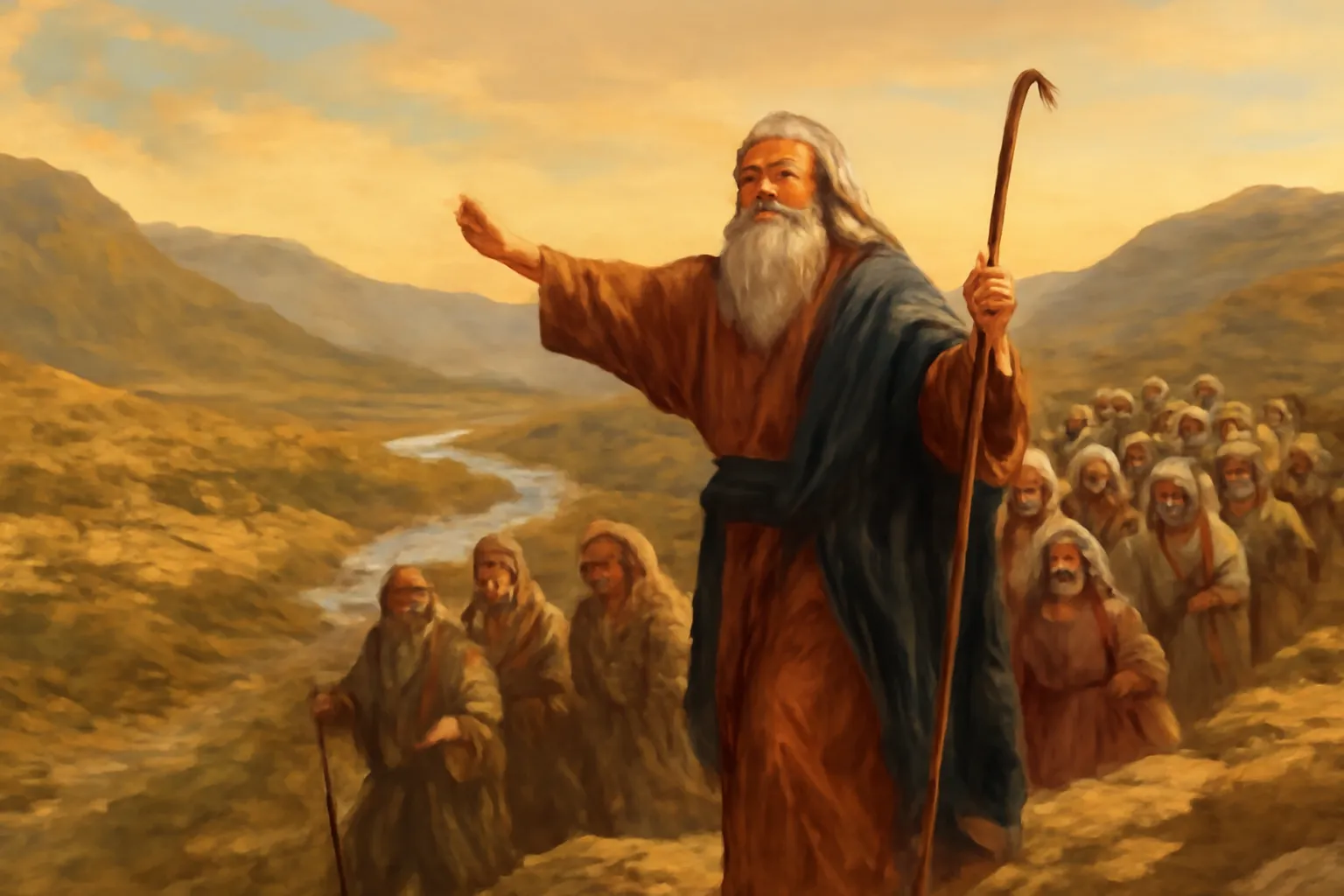
The saga of Moses stands as one of the most influential narratives in the biblical canon. It weaves together themes of liberation, covenant, leadership, law, and a people pressing toward a future promised by God. Across generations and traditions, the story of the Promised Land—also known as Canaan, the land of Eretz Yisrael in Jewish tradition, and a focal point in Christian and Islamic retellings—continues to shape faith, ethics, and imagination. This article surveys the arc from the Exodus from Egypt to the moment when the land is in sight, and beyond: the death of Moses on Mount Nebo, the entry under Joshua, and the enduring meanings of that journey for readers today.
The Call and Mission of Moses: A Leader Emerges from Within the Water and the Winds
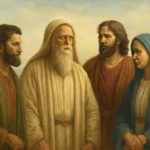
In the opening chapters of the story, the hero known as Moses is found at the crossroads of two worlds: Egyptian royalty and Hebrew suffering. Raised in the house of Pharaoh yet drawn to his people, he becomes a figure of paradox—a liberator who will grow into a teacher of law. The pivotal moment comes with a theophany, a direct encounter with God, in which the divine name is revealed and a mission is given. The encounter is often remembered as the burning bush experience, a turning point in which the future deliverer learns that his strength is not in personal prowess but in obedience to the One who calls him.
Key elements of this phase include:
The calling at the burning bush and the commission to confront Pharaoh.
Reluctance and reassurance: Who am I? is answered with the promise, I will be with you.
The emergence of a leader who will guide a people through crisis toward a new covenant.
Variations of the figure appear across faiths. In Islamic tradition, the same leader is known as Musa, and while some details differ, the core narrative—calling, liberation, and the path toward a homeland—resonates. The idea of a prophetic figure who mediates between God and a community, and who bears the covenant, recurs across the Abrahamic stories, giving the Moses tale a broad interfaith resonance.
The Exodus from Egypt: Liberation and the Red Sea Crossing
The central event of the journey is the liberation of the Hebrew people from centuries of bondage. The process begins with a sequence of dramatic plagues and culminates in the night of the Passover, when the households of the faithful mark their doors and the angel of death passes over. The liberation is not merely political but theological: it marks the birth of a people bound to a divine promise to inherit a land.
The voyage toward the Promised Land is punctuated by remarkable milestones, including the crossing of the Red Sea and the formation of a new social order around the divine statutes given at Sinai. The narrative emphasizes both divine action and human response: God acts to deliver, and human leaders and communities respond with faith, fear, trust, and occasional rebellion.
The Ten Plagues demonstrate divine power over the Egyptian empire and set the stage for deliverance.
The Passover meal becomes a yearly reminder of freedom and the covenantal relationship with God.
The miraculous Red Sea crossing inaugurates a wilderness journey that will last forty years.
After the dramatic exit from Egypt, the people arrive at Sinai, where a pivotal event unfolds: God gives the Law through Moses, establishing a covenantal identity for the fledgling community. This moment is not simply about rules; it is about forming a people who will live as a holy nation, distinct in character and devoted to the God who called them into being.
The reception of the commandments—the foundational ethics of the tradition—shapes social life, religious practice, and political expectation. The instructions cover worship, civil behavior, justice, and care for the vulnerable, linking daily life to a larger teleology: to be a people through whom divine purposes unfold in history.
Key components of this phase include:
The Ten Commandments and the broader Mosaic Law given at Sinai.
Instructions for the Tabernacle and the ritual life of the community, including offerings, priesthood, and sacred time.
The renewal of the covenant, with promises tied to obedience and the consequences of faithlessness.
In this way, the narrative links geography (a land to be inhabited) with theology (a covenant to be kept) and ethics (a way of living that honors the divine will). The Promised Land is not a mere real estate goal; it is the stage for a covenantal people to flourish under God’s guidance.
The Wilderness Years: Faith Tested, Patience Refined
The decision to send spies into the land of Canaan sets the stage for a long period of wandering. The journey through the wilderness is portrayed as a time of testing and formation, in which a generation must learn governance, trust, and cooperation with both God and neighbor. The 40-year duration becomes a symbolic frame for transformation—from infancy to maturity as a community—so that the next generation can enter the land ready to keep the covenant in its fullness.
Important features of this era include:
The incident of the spies and the people’s response—often framed as a crisis of trust and fear versus faith.
Revelations of daily manna from heaven and the water that issues from the rock, signs of divine provision amid hardship.
Renewals of covenants and laws as the people learn to organize themselves around a shared religious identity.
Throughout the wandering, Moses remains a central leader, mentor, and mediator. The role of the prophet and lawgiver is foregrounded as essential for a people who are learning to live under a divine plan in a challenging landscape.
The Promised Land in Sight: Geography, Hope, and Controversy
As the wanderings continue, the land that God promised comes into view. The narrative emphasizes not just a place but a future—the realization of a covenantal dream in which a people live in relation to God and neighbor in a land that yields abundance. The phrase “a land flowing with milk and honey” serves as a poetic summary of what this homeland offers: sustenance, security, and a setting for worship and justice.
Geography matters in the telling: the land includes hills and valleys, rivers and borders, and a landscape that will shape the national story. The boundary lines become contested as different tribes settle, delineate territory, and cultivate a distinct identity. The Promised Land thus functions on multiple levels: as a political objective for a people who long to govern themselves, as a spiritual destiny in which obedience to the covenant yields blessing, and as a setting for the worship life that defines the tradition.
In this phase, readers encounter the tension between aspiration and limits, between human ambition and divine timing. The story makes space for questions about the nature of faith, the costs of leadership, and the ways a community can reflect justice within a land that remains imperfect and contested.
The Transition of Leadership: From Moses to Joshua
With the land in view but not yet securely possessed, the leadership transition is set in motion. Joshua, the successor named by God and affirmed by Moses, becomes the new agent through whom the people will enter and establish themselves in the homeland. The transfer of authority is accompanied by a series of commissions, blessings, and strategic instructions that emphasize obedience, courage, and communal fidelity to the covenant.
Succession planning that preserves continuity with the prophetic/moral tradition.
The explicit call to remember and renew the covenant as the land becomes a political and spiritual center.
The moral arc of the narrative in which the land is not finally secure until the people remain faithful to the divine law.
The tale thus moves from a desert pilgrimage into a land-based, organized society, yet the memory of Moses as liberator, teacher, and intercessor continues to shape how the people understand power, authority, and stewardship of the land.
The Death of Moses on Mount Nebo and the Legacy that Endures
One of the most poignant moments in the narrative is the death of Moses on Mount Nebo, where he views the Promised Land from afar but does not enter it. This paradox—leader who guides a people to the threshold of the land yet does not tread its soil—becomes a powerful meditation on faith, humility, and the limits of human power. The biblical record preserves the idea that mortality and fidelity are entwined; leadership is a trust given by God, and the ultimate entry into the homeland is part of a divine plan larger than any individual’s life.
Even in death, the Moses figure remains a guardian of memory and law. His legacy includes:
The establishment of enduring laws that continue to guide later generations.
A prophetic model that anticipates the need for steadfastness in faith and courage under pressure.
A narrative bridge to Joshua, who leads the conquest and settlement in the land, fulfilling the generational promise.
Interpreting the Journey: Jewish, Christian, and Islamic Perspectives
The story of Moses and the Promised Land has been a touchstone across multiple faiths, each tradition reading the episode with its own emphases and questions. Understanding these perspectives helps illuminate how the same texts have inspired different spiritual grammars and ethical commitments.
In Jewish Thought
For Jews, the land of Canaan is a fulfilled covenant that shapes national memory, liturgy, and identity. The wilderness years become a pedagogical arc about obedience, justice, and community life. The land is a place where Torah can be lived openly, and where festivals, ritual purity, and the calendar crystallize into a shared life of worship and service.
In Christian Theology
Christians have often read the Exodus and the journeys as types and foreshadowings of redemption in Christ. The Israelites’ passage through the sea and their reception of the law are seen as foundational events that point forward to the gospel’s theme of deliverance and new life. The Promised Land can symbolize the ultimate fulfillment of salvation—not only a geographic home but a spiritual homeland found in faith, hope, and the community of believers.
In Islamic Narrative
Within Islamic tradition, Musa is revered as a mighty prophet who confronts tyranny, guides his people, and delivers divine messages. The Qur’anic retellings emphasize moral resilience, reliance on God, and the importance of steadfast faith in the face of opposition. The notion of a homeland is refracted through the lens of divine guidance and the ongoing call to live righteously within a broader cosmology of monotheism.
Beyond the literal terrain, the Promised Land carries profound symbolic weight. The language of abundance—“a land flowing with milk and honey”—frames a dream of abundance, peace, and justice. Yet the narrative also teaches that possession of the land requires fidelity: when the people stray from the covenant, the land’s blessings can be undermined or delayed. Geography and theology are braided together, so the land becomes a test, a reward, and a stage for the drama of fidelity.
Key ideas include:
Land as a divine gift tied to covenant fidelity.
Land as a place for communal worship, justice, and the administration of law.
Land as an arena where leaders must govern with humility and dependence on God.
Lessons for Today: Leadership, Faith, and Community
The Moses narrative offers enduring lessons for readers who seek to understand leadership under pressure, the role of law in community formation, and the ethical dimensions of journeying toward a goal that requires courage, perseverance, and trust. Some takeaways include:
Humility in leadership: Even a towering figure must listen, adapt, and submit to divine guidance.
Faith under pressure: The people’s response to fear and doubt reveals the delicate balance between trust and caution.
Law as love in action: The Mosaic statutes are not merely rules but frameworks for justice, mercy, and care for the vulnerable.
Community resilience: A wandering people becomes a cohesive body through shared ritual life, covenant memory, and mutual accountability.
Hope and patience: The delay between promise and fulfillment invites humility and steadfastness, reminding readers that some journeys take longer than a single lifetime.
Art, Literature, and Cultural Echoes: The Moses Narrative Across Media
From classical paintings to contemporary novels, stage productions to film, the journey of Moses and the Promised Land has inspired countless works of art. The narrative’s emotional cores—freedom, covenant, desert hardship, and ultimate entrance—translate powerfully into storytelling about human longing and divine accompaniment. Artists and writers frequently use this arc to explore themes of justice, leadership, and justice-in-action in diverse contexts.
Ways the journey has resonated in culture include:
Representations of the Exodus as a metaphor for liberation movements and social justice.
Literary reframing of the wilderness as a space of testing and transformation for individuals and communities.
Discussion of the responsibilities that come with leadership and the responsibilities of a community toward its most vulnerable members.
The story of Moses and the Promised Land is not a single epic but a mosaic of moments that illuminate the relationship between God and humanity. It begins with a calling, moves through signs of liberation, rests within a covenant of law, passes through a long period of testing, and finally enters into a homeland where a people seek to live out the divine will. The death of the great leader on Mount Nebo does not close the book but rather marks a transition that invites readers to reflect on what it means to inherit a land through faith and obedience. The journey continues in the person of Joshua, who leads the people into the land and who, in turn, adds new layers to the story of what it means to dwell in a place blessed by God and governed by covenantal principles.
For readers across traditions, the Moses narrative remains a guide to courage, fidelity, and hope. It teaches that land and law, freedom and responsibility, are interwoven in a divine project larger than any single generation. And it invites each reader to consider how a journey—whether through deserts, cities, or contemporary life—can become a path toward justice, truth, and shared humanity. In this sense, the legacy of Moses and the Promised Land lives on as a living conversation about how communities approach destiny, how leaders lead, and how faith sustains a people as they walk toward a future that God has promised and prepared.
Are Jews still God’s chosen people? This question has echoed through centuries of theology, history, and lived faith. It raises not only doctrinal concerns but also questions about identity, mission, and how a people sustains its covenant in a pluralistic world. This article offers a comprehensive guide to the topic, presenting Jewish perspectives, historical developments,…
Bible Verses Supporting Israel: A Biblical Foundation for the Land, the People, and the Covenant This article gathers fifteen key Bible verses that many readers, theologians, and scholars understand as foundational to the biblical case for Israel—the people, the land, and the divine Covenant that God established with Abraham, Isaac, and Jacob. While interpretations vary…
Understanding the Theme of Blessing Israel in Scripture Blessing Israel is a phrase that appears throughout the biblical narrative, from the early promises given to Abraham to the prophetic visions of a future restoration. In this article, we explore not just the verses themselves, but the deeper meaning behind the language of blessing, how it…